FDA 510(k) for Surgical Instruments: Registration Guide
FDA 510k surgical instruments rules: Class I exemptions, establishment registration, the 2026 QMSR change and when clearance is required.
 Made in Sialkot · Since 1980
“Our instruments are FDA approved.”
You will see that line on supplier websites, in tender submissions, and printed on catalogue covers. For a Kelly clamp or a Metzenbaum scissors it is almost always wrong — and a US distributor who knows the rules will read it as a warning sign rather than a credential.
The FDA does not approve most surgical instruments. It clears some of them, exempts the majority from premarket review entirely, and requires all of them to be registered and listed. Those three words — approved, cleared, exempt — mean three different things, and using the wrong one on a label is itself a labelling violation under 21 CFR 807.97.
Here is how the system actually works for hand-held reusable instruments, and what changed in February 2026.
Start With the Classification, Not the Submission
Every device sold in the US belongs to a classification regulation with a three-letter product code. That code determines everything downstream. Anyone researching FDA 510k surgical instruments requirements should find their product code before reading anything else.
For general hand-held instruments the governing regulation is 21 CFR 878.4800 — Manual surgical instrument for general use. It covers a long list by name: clamps, forceps, retractors, scissors, scalpel handles, chisels, curettes, rongeurs, needle holders, elevators, dilators and more. Devices under this regulation are Class I and exempt from premarket notification, subject to the limitations in 21 CFR 878.9.
| Class | Typical Instrument Examples | Premarket Requirement |
|---|---|---|
| Class I, 510(k) exempt | Hemostats, tissue forceps, retractors, scissors, needle holders, scalpel handles, curettes | None — registration and listing only |
| Class I, not exempt | A small number of specialty items where the exemption limits apply | 510(k) |
| Class II | Electrosurgical instruments, powered orthopedic drills and saws, arthroscopic shavers, most endoscopic accessories | 510(k) with special controls |
| Class III | Implants and high-risk devices; almost no hand instruments | PMA |
Roughly three-quarters of Class I device types are exempt from premarket notification. That is a large share of any general surgery catalogue, which is why the “FDA approved” claim is both unnecessary and inaccurate — the correct statement for an exempt device is that it is listed with FDA under 21 CFR 878.4800.
Where the Exemption Runs Out
21 CFR 878.9 sets the limitations, and they catch more products than people expect. The exemption does not apply if the device:
- Has an intended use different from the generic type described in the classification regulation
- Operates using a different fundamental scientific technology than the legally marketed predicate type
- Is a reprocessed single-use device
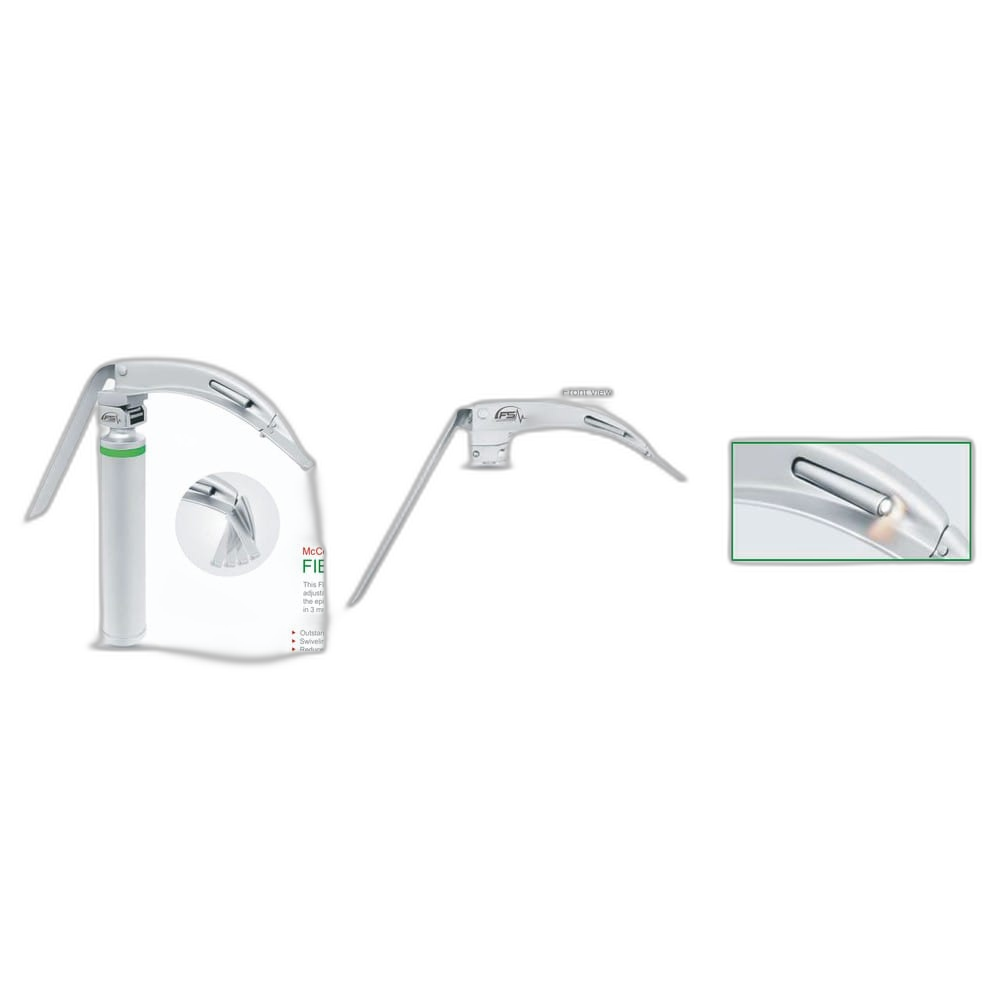
Two practical examples. A stainless steel Langenbeck retractor is exempt. The same retractor with an integrated fibre-optic light channel is arguably a different fundamental technology and needs a determination before you assume exemption. A standard tissue forceps is exempt; the same forceps marketed with an antimicrobial surface coating and a claim about reducing surgical site infection has a different intended use and will need a 510(k) — the coating claim is the trigger, not the steel.
When the boundary is unclear, the mechanism is a 513(g) Request for Information. FDA gives a written classification determination for a fee. It is not fast, but it is far cheaper than a warning letter.
What Is Required Even When 510(k) Is Not
This is the part smaller manufacturers get wrong. Exempt from premarket notification does not mean exempt from FDA.
Establishment Registration and Device Listing
Mandatory under 21 CFR Part 807 for every manufacturer, contract manufacturer, sterilizer, repackager and relabeler — foreign or domestic — whose devices enter US commerce. Registration is annual, submitted electronically through FURLS/DRLS, and carries a user fee that has run above $9,000 in recent fiscal years. There is no small-business waiver for the establishment registration fee.
Device listing is separate from registration. You list each device by product code against your registration number. Miss the listing and the registration alone does not make the product legal.
US Agent
A foreign establishment must designate a US Agent with a physical US address — not a PO box — who acts as the communication channel with FDA and assists with scheduling inspections. The agent’s details are part of the registration record.
Labelling
21 CFR Part 801. Name and place of business of the manufacturer, packer or distributor; adequate directions for use, or a prescription-device exemption under 801.109 with the Rx-only statement. For instruments supplied non-sterile and intended to be reprocessed before use, the labelling must say so plainly, and validated reprocessing instructions must be provided per FDA’s 2015 reprocessing guidance.
Unique Device Identification
21 CFR Part 830 and 801.20. Class I devices carry UDI obligations, though 801.30 provides exceptions — including for Class I devices that are exempt from good manufacturing practice requirements. Check the exception list against your specific product code rather than assuming either way. Reusable devices requiring reprocessing between uses are also subject to direct part marking under 801.45.
Medical Device Reporting
21 CFR Part 803. Applies to exempt devices. If your instrument may have caused or contributed to a death or serious injury, or malfunctioned in a way that would be likely to cause one on recurrence, it is reportable — with complaint handling records to match.
The February 2026 Change: QSR Became QMSR
The most significant recent shift for anyone exporting to the US.
On 2 February 2026, 21 CFR Part 820 was replaced by the Quality Management System Regulation. The QMSR incorporates ISO 13485:2016 by reference rather than restating requirements in FDA’s own language. Part 820 is now much shorter; most of it points to the corresponding clause of ISO 13485, with FDA-specific supplemental requirements retained in Subparts A and B — including labelling and packaging controls, and the definitions and record requirements FDA did not want to lose.
FDA also retired the Quality System Inspection Technique on the same date, moving inspections to the updated Compliance Program 7382.850.
What this means in practice for an instrument manufacturer already certified to ISO 13485:2016: the gap is narrower than it was, but it is not zero. ISO 13485 certification is not FDA compliance — FDA does not accept a notified body certificate in place of its own inspection, and the Subpart A and B supplements sit on top of the standard. What has changed is that a single well-run quality system can now serve both the EU and US regimes with far less duplicated documentation than before.
Note also which class of device the QMSR reaches. Class I devices that are exempt from GMP under their classification regulation remain exempt; most Class I general-use manual surgical instruments are not GMP-exempt, and the complaint file and records requirements apply regardless.
When You Do Need a 510(k)
For the Class II end of an instrument catalogue — powered, energised, or endoscopic — premarket notification is unavoidable. This is the narrow band where FDA 510k surgical instruments submissions genuinely apply, and the submission establishes substantial equivalence to a legally marketed predicate device.
The mechanics as they stand:
- eSTAR is mandatory. Since 1 October 2023, 510(k) submissions must use FDA’s electronic Submission Template and Resource. Paper and eCopy submissions are refused at the technical screening stage.
- Predicate selection drives everything. The predicate must be legally marketed, have the same intended use, and either the same technological characteristics or differences that do not raise new questions of safety and effectiveness.
- Performance data follows the applicable recognised consensus standards and any device-specific guidance — bench testing, biocompatibility to ISO 10993, sterilisation validation to ISO 17665 or ISO 11135, and reprocessing validation for reusable devices.
- Review timeline. The MDUFA goal is 90 FDA review days, but total calendar time routinely reaches five to nine months once Additional Information requests stop the clock.
- User fee. Standard fee with a substantially reduced small business rate for firms qualifying under the Small Business Determination programme — worth applying for before submitting, since it cannot be applied retroactively.
A cleared device is “FDA cleared,” never “FDA approved.” Approval is the language of the PMA pathway, and misusing it in promotional material is precisely what 21 CFR 807.97 prohibits.
A Realistic Sequence for a Non-US Manufacturer
- Identify the classification regulation and product code for each catalogue family — 21 CFR 878.4800 covers most hand instruments.
- Screen every product against the 878.9 limitations. Coatings, integrated light, powered elements and infection-control claims are the usual triggers.
- Bring the quality system to ISO 13485:2016 plus the QMSR Subpart A and B supplements.
- Appoint a US Agent with a physical address.
- Register the establishment and list every device in FURLS; pay the annual fee.
- Finalise labelling to Part 801, including reprocessing instructions and Rx-only where applicable.
- Assess UDI and direct part marking obligations against your product codes.
- Stand up complaint handling and MDR procedures before first shipment, not after.
- File 510(k)s only for the products that genuinely need them.
Step 9 is the one worth emphasising. Filing an unnecessary 510(k) for an exempt device wastes a user fee and months of calendar time, and it does not confer any marketing advantage — an exempt device is fully legal without one.
Fizza Surgical manufactures under ISO 13485 in Sialkot and supplies distributors across regulated markets. Our general surgical instrument range is documented for both US and EU pathways, and current certificate scope is listed on our certifications page. For the European side of the same question, see our companion guide to EU MDR compliance for surgical instruments.
Frequently Asked Questions
Are surgical instruments FDA approved or FDA cleared?
Neither, in most cases. The FDA 510k surgical instruments pathway simply does not apply to the bulk of a hand-instrument catalogue. Hand-held reusable instruments under 21 CFR 878.4800 are Class I and exempt from premarket notification — they are registered and listed, not cleared. “Cleared” applies to devices that went through a 510(k); “approved” applies only to PMA devices. Using “FDA approved” for an exempt instrument is a misbranding risk under 21 CFR 807.97.
Does a 510(k)-exempt instrument still need FDA registration?
Yes. Establishment registration and device listing under 21 CFR Part 807 apply to every manufacturer whose devices enter US commerce, exempt or not. Registration renews annually and carries a user fee with no small-business waiver.
What changed with the FDA quality system rules in 2026?
On 2 February 2026, 21 CFR Part 820 became the Quality Management System Regulation, incorporating ISO 13485:2016 by reference with FDA-specific supplements in Subparts A and B. FDA also retired the QSIT inspection technique in favour of Compliance Program 7382.850.
Does an ISO 13485 certificate satisfy FDA?
No. FDA conducts its own inspections and does not accept a notified body certificate as a substitute. Since the QMSR took effect the underlying requirements are closely aligned, which reduces duplicated documentation, but the certificate itself is not a compliance credential with FDA.
When does a hand instrument lose its 510(k) exemption?
When it has an intended use beyond the generic type in the classification regulation, or uses a different fundamental scientific technology — per the limitations in 21 CFR 878.9. Antimicrobial coatings with infection-reduction claims, integrated illumination and powered elements are the common triggers. A 513(g) request will get a written determination from FDA when the answer is genuinely ambiguous.
Regulatory information provided for general guidance. Verify current requirements directly with FDA or a qualified US regulatory consultant before making submission or marketing decisions.
Need precision surgical instruments?
Configure complete instrument sets with our team — ISO 13485 certified, CE marked, made in Sialkot since 1980.
Related Guides
View all articles →
Where We Serve
Fizza Surgical exports to 50+ countries. Browse our country-specific pages with local regulatory guidance and pricing: