Snook Spay Hook and Small Animal Neuter Pack Guide
Snook spay hook sizes, tip styles and technique, plus a complete small animal neuter pack list for canine and feline spays and castrations.
A three-centimetre ventral midline incision on a six-month-old bitch. Linea alba opened, and the uterine horns are nowhere in view. This is the moment the spay hook earns its place in the pack: one sweep along the body wall, a gentle lift, and the left horn comes up through the incision without the surgeon ever widening the wound.
The Snook ovariohysterectomy hook is the most common version of that instrument in small animal practice. It is simple enough that buyers often treat it as an afterthought, yet a poorly finished hook is one of the fastest ways to turn a routine spay into a longer, more traumatic procedure. Below we cover how the hook is built, which sizes suit which patients, how it is used, and what else belongs in a working neuter pack.
What the Snook Hook Actually Is
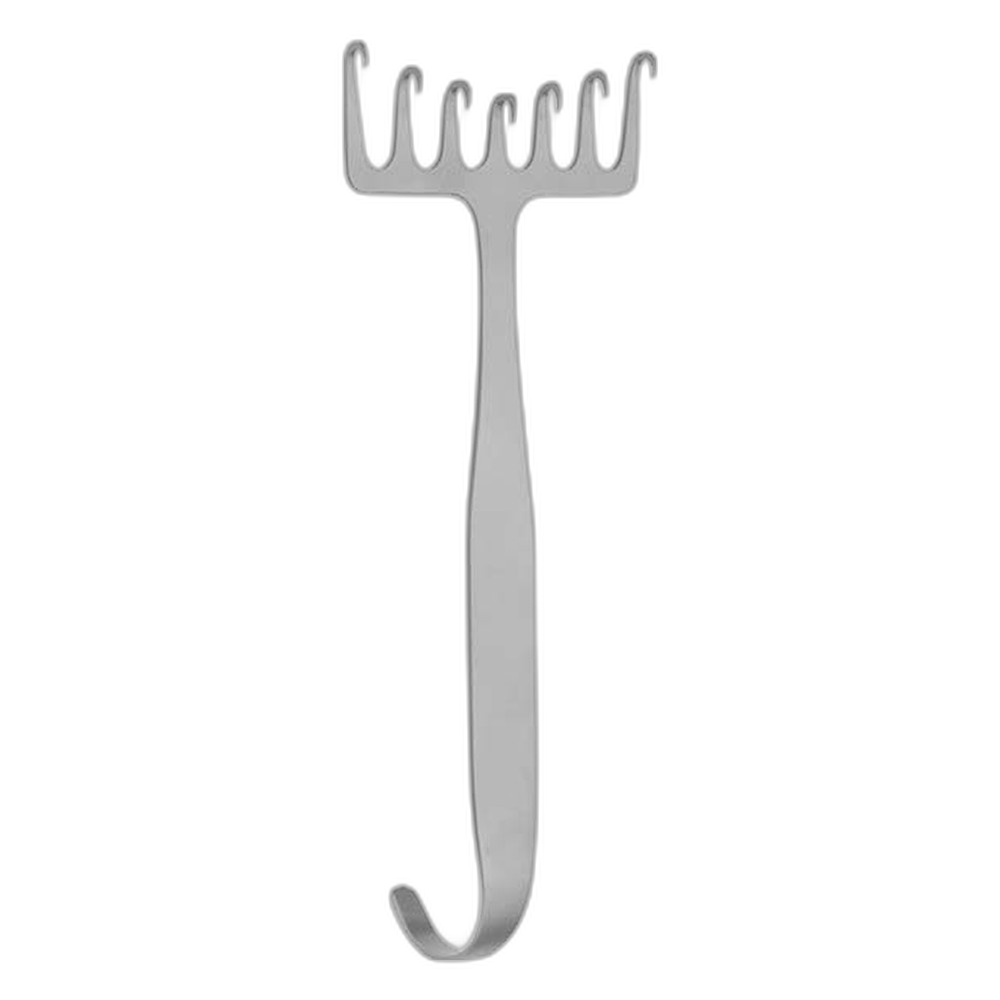
The instrument is a straight, round shank with a flattened grip at one end and a small, blunt, recurved hook at the other. There is no cutting edge anywhere on it. Its entire job is to slide along the inside of the abdominal wall, pass beneath the uterine horn or its broad ligament, and lift that tissue into the incision.
Because it works blind, the geometry of the tip matters more than anything else. A good snook spay hook has:
- A fully rounded, polished tip with no burr — it must glide over peritoneum rather than catch on it.
- A hook depth shallow enough that it cannot enclose a loop of bowel, but deep enough to hold a uterine horn while it is lifted.
- A shank that is rigid in normal use but springs slightly rather than snapping if levered hard.
- A flattened handle that shows the surgeon which way the hook faces without looking.
That last point is underrated. During the sweep the hook is out of sight inside the abdomen, so the surgeon orients it by feel. A handle flattened in the same plane as the hook curve gives that orientation instantly.
Sizes, Tip Styles and Related Patterns
Catalogue listings vary between manufacturers, but most hooks fall into a narrow range. The table gives typical dimensions we see requested by veterinary distributors.
| Pattern | Typical overall length | Tip | Best suited to |
|---|---|---|---|
| Snook, standard | 20–21 cm | Small blunt hook | Medium and large dogs |
| Snook, short / feline | 14–16 cm | Small blunt hook | Cats, toy breeds, flank spays |
| Snook with button end | 20 cm | Ball or button on hook tip | Surgeons who prefer extra tip protection |
| Covault | 19–20 cm | Flat, spatulated hook | Surgeons wanting a broader lifting surface |
The Covault pattern is the main alternative. Its flat, wider hook spreads the lifting force over more tissue, which some surgeons prefer for friable uteri in older bitches. Others find the flat blade harder to slip beneath the horn through a very small incision. Neither is wrong; clinics that train new graduates often stock both so each vet can settle on a preference.
For cats, length is the deciding factor. A 20 cm hook works in a cat, but the extra shank makes the sweep less controlled in a small abdomen. A short feline pattern keeps the hand closer to the incision.
How the Hook Is Used During an Ovariohysterectomy
Technique differs slightly between surgeons, but the core movement is consistent:
- The hook enters the incision with the tip facing the body wall, usually on the patient’s left side.
- It is advanced dorsally and caudally along the inside of the abdominal wall, roughly toward the kidney region, keeping contact with the wall the whole time.
- At depth, the handle is rotated so the tip turns medially, and the hook is withdrawn slowly.
- The structure it brings up is identified before anything else happens. The uterine horn is followed to the ovary and the bifurcation confirmed.
Step four is the one that matters. A hook can bring up the broad ligament, the horn, fat, or occasionally a loop of small intestine or the bladder ligament. Nothing is clamped until the tissue is positively identified.
Blind repeated sweeping is where trauma happens. If two careful passes fail, most experienced surgeons extend the incision slightly rather than keep fishing. A polished, correctly shaped hook reduces the number of passes; it does not replace anatomy.
Building a Small Animal Neuter Pack
The hook is one item in a pack that also covers routine canine and feline castration. A practical general-practice spay/neuter pack looks like this:
| Instrument | Qty | Typical size | Role |
|---|---|---|---|
| Scalpel handle No. 3 | 1 | — | Skin and linea incision (No. 10 or 15 blade) |
| Metzenbaum scissors | 1 | 14 cm | Fine dissection, subcutaneous tissue |
| Mayo scissors, straight | 1 | 14–15 cm | Suture and ligament cutting |
| Olsen-Hegar needle holder | 1 | 14 cm | Suturing with built-in scissors |
| Brown-Adson thumb forceps | 1 | 12 cm | Skin and linea handling |
| Rat-tooth thumb forceps | 1 | 14 cm | Firm fascial grip |
| Crile or Kelly haemostats | 4–6 | 14 cm | Small vessel control |
| Rochester-Carmalt forceps | 2–3 | 16–18 cm | Ovarian pedicle and uterine body clamping |
| Backhaus towel clamps | 4 | 9–13 cm | Drape fixation |
| Snook spay hook | 1 | 15 or 20 cm | Locating the uterine horn |
The Carmalt clamps deserve a second look when you assemble a pack. The three-clamp technique on the ovarian pedicle depends on their longitudinal serrations holding without slipping; we cover jaw patterns in our Rochester-Carmalt forceps guide. For a broader look at the general soft-tissue tray, see our small animal surgical instruments kit article.
High-volume spay/neuter clinics usually trim this list. Many run a pared-back pack of eight to ten items and keep extra haemostats in a separate peel pouch, which shortens counts and reprocessing time between patients.
Materials and Finish
Hooks and the rest of a neuter pack are normally made from martensitic stainless steel — AISI 410 or 420 — specified under ISO 7153-1. For the hook, hardness is a balance. Too hard and the shank can crack if a surgeon levers against it; too soft and it bends out of shape after a few dozen cycles. A properly tempered shank should return to straight after light flexing.
Surface finish matters more on the hook than on most instruments in the pack. A satin or mirror polish is fine, but the tip and the inside of the curve must be free of grinding marks. Tissue drags across that curve on every sweep, and a rough patch there shows up as more serosal irritation.
Veterinary instruments sit outside the EU Medical Device Regulation, but most distributors still ask for manufacture under an ISO 13485 quality system. You can see ours on the certifications page.
Inspection and Care
The hook is easy to reprocess — no box joint, no ratchet, no lumen. The checks that matter are visual and quick:
- Tip: run a gloved fingertip or a gauze swab over it. Any catch means a burr or nick; retire or refinish it.
- Straightness: roll it on a flat bench. A bent shank changes the sweep path and should be replaced rather than straightened by hand.
- Corrosion: pitting inside the curve is common where blood dries before cleaning. Clean promptly and dry fully before sterilisation.
Because it is a single solid piece, the hook tolerates ultrasonic cleaning and standard steam cycles without special handling.
One more point for busy clinics: keep one spare hook of each length in stock. It is a cheap item, and a pack sent back for a dropped hook costs far more in theatre time than the instrument itself.
Frequently Asked Questions
What is a snook spay hook used for?
It is used during canine and feline ovariohysterectomy to locate the uterine horn through a small ventral midline or flank incision and lift it into view, without enlarging the wound.
What size spay hook is best for cats?
A short pattern of roughly 14–16 cm gives better control in the small feline abdomen. A standard 20 cm hook works but is less precise.
What is the difference between a Snook and a Covault hook?
The Snook has a small, round, blunt hook. The Covault has a flatter, wider hook that spreads lifting force over more tissue. The choice is mostly surgeon preference.
Can a spay hook damage other organs?
Yes, if it is used with repeated blind sweeps or has a burred tip. Any tissue lifted should be identified before clamping, and the incision extended if two careful passes fail.
Need precision surgical instruments?
Configure complete instrument sets with our team — ISO 13485 certified, CE marked, made in Sialkot since 1980.
Related Guides
View all articles →
Where We Serve
Fizza Surgical exports to 50+ countries. Browse our country-specific pages with local regulatory guidance and pricing: