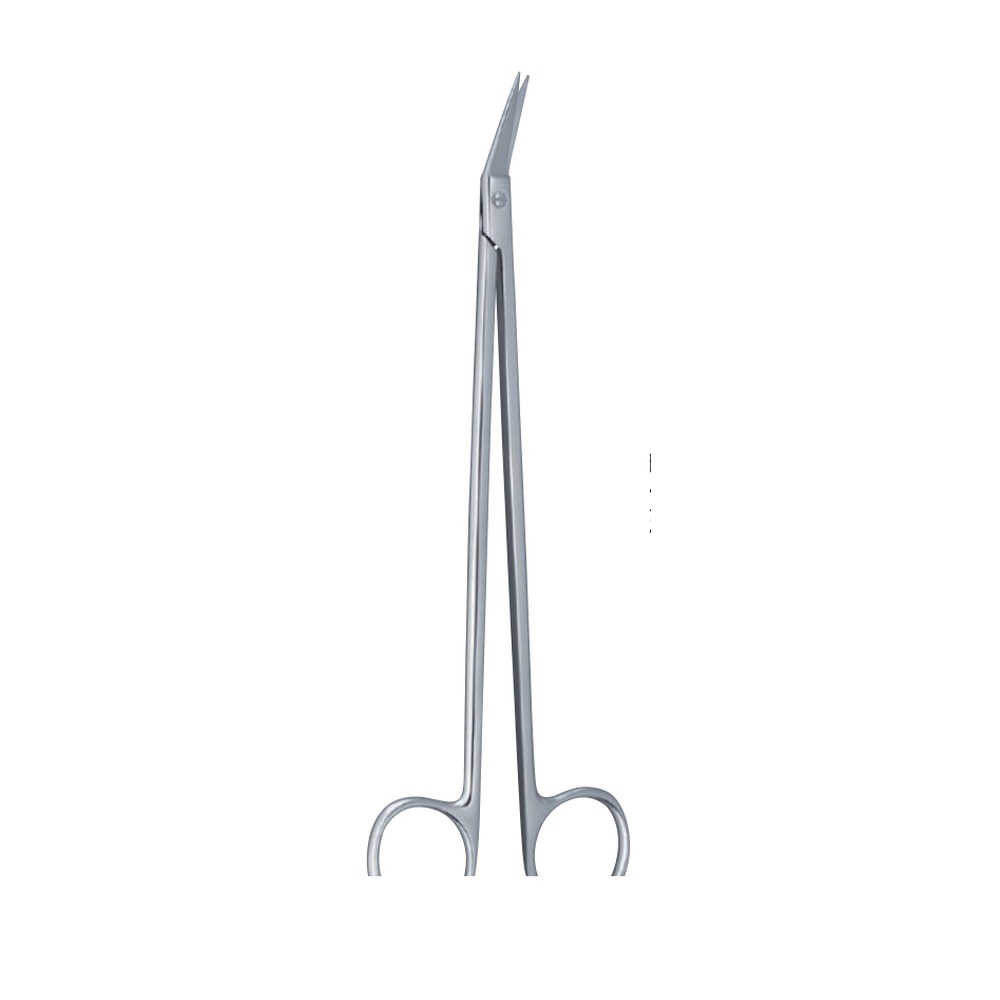
Fizza Surgical supplies the Potts-de Martel Artery Scissors — 45°, 19 cm (Ref SC 02-315-02) as a standard catalogue line to hospitals and distributors.
Willis John Potts was a paediatric cardiothoracic surgeon at Northwestern who developed the angled scissors for cutting vessels during cardiac surgery — specifically the Blalock-Taussig and Potts shunts in early treatment of cyanotic congenital heart disease. Modern Potts scissors are used wherever angled vascular cuts are needed: vascular anastomosis, aortic surgery, vessel harvesting for coronary bypass, and trauma vascular repair. The defining feature is the angled blade — 25°, 45°, 60°, and 90° angles are all manufactured — letting the surgeon cut a vessel at any required angle without rotating the instrument. Most common in 18–20 cm overall length. Tungsten carbide tips are standard in modern vascular and cardiac sets.
| Reference / SKU | SC 02-315-02 |
| Pattern | Potts |
| Working length | 19 cm (190 mm) |
| Material | AISI 420 martensitic stainless steel (tungsten-carbide insert variants on TC SKUs) |
| Sterilization | Steam autoclave to 134 °C · EtO compatible |
| Quality system | ISO 13485:2016 · CE-marked under EU MDR 2017/745 · FDA establishment-registered |
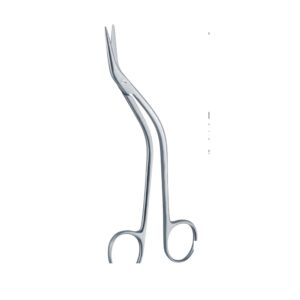
- Potts-de Martel Artery Scissors — 25°, 19 cm (SC 02-315-01)
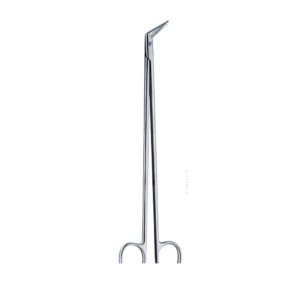
- Potts-de Martel Artery Scissors — 60°, 19 cm (SC 02-315-03)
Every instrument is forged, machined, and finished at the Sialkot facility from German-origin stainless billet — austenitic 304 / 316 grades for non-cutting, mucosal-contact, and hollow-ware lines where corrosion resistance is the priority, martensitic 420 / 440 grades for cutting and edge-retention patterns where heat-treatable hardness matters, and 17-4 PH precipitation-hardened stainless for high-load orthopedic and implant-handling applications. Polishing, passivation, and final inspection are performed in-house under documented quality procedures aligned with ISO 13485:2016.



Reviews
There are no reviews yet.