Bone chisels and gouges are fundamental orthopedic surgical instruments — essential in every bone surgery procedure from hip arthroplasty to spinal fusion to maxillofacial reconstruction. Yet procurement teams often struggle with the sheer variety: what’s the difference between a Lambotte chisel and a Cobb gouge? When do you use Smith-Petersen vs Stille? How many sizes does a trauma OR need?
This guide is written for hospital procurement officers, orthopedic department managers, and medical device distributors who need a clear framework for selecting and stocking bone chisels and gouges.
Chisels vs Gouges: the basic distinction
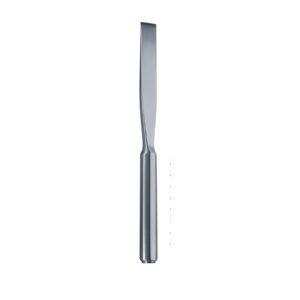
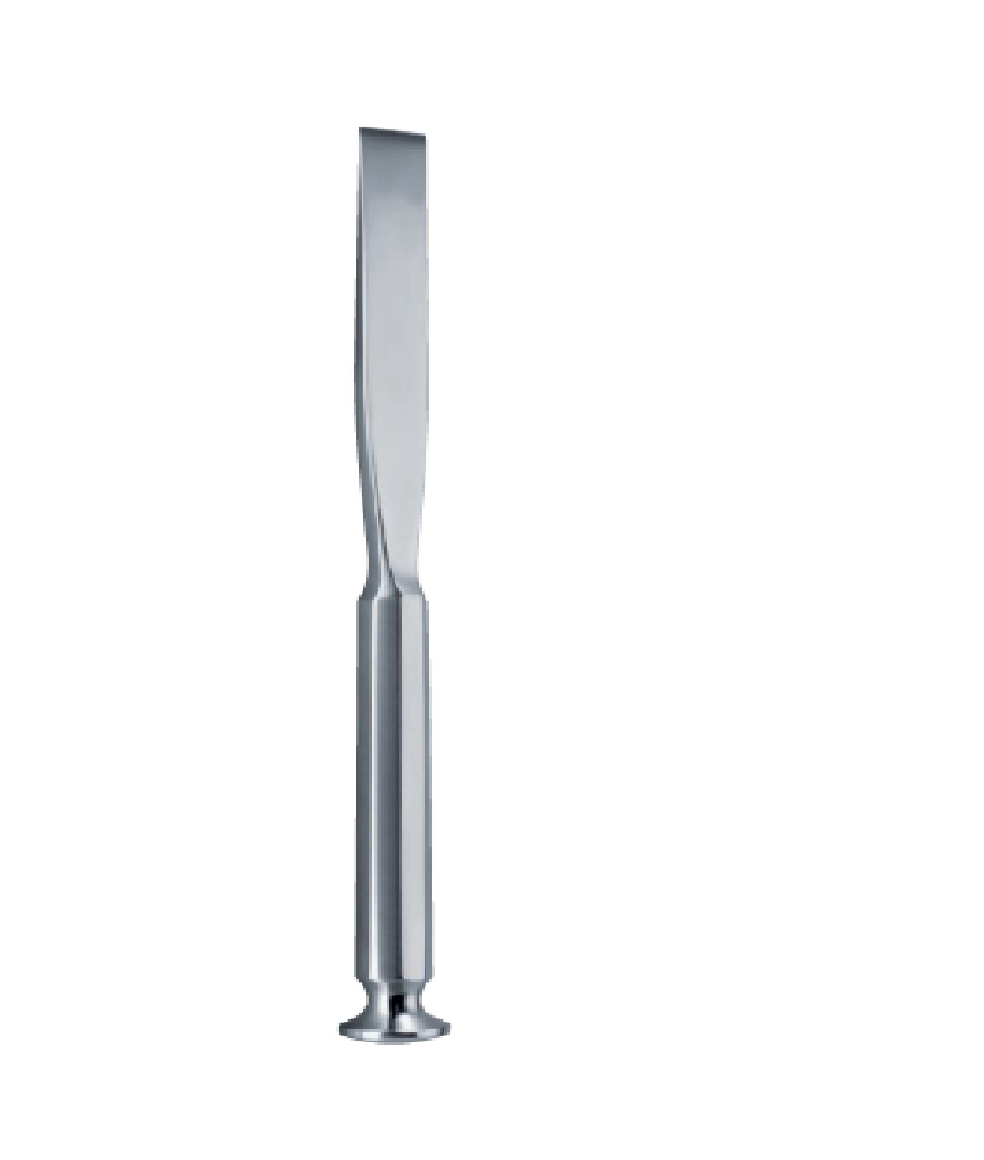
Chisels have a straight (flat) cutting edge. They’re used for controlled, linear bone cuts — osteotomies, flat surface removal, bone shaping along straight planes. Typical applications: hip femoral head osteotomy, spinal decortication, dental ridge preparation.
Gouges have a curved (concave) cutting edge. They remove bone along a curved profile — scooping out bone cavities, shaping rounded surfaces, creating contoured bone beds for implants. Typical applications: acetabular preparation, bone graft harvesting, removing femoral canal bone spurs.
Both are struck with a bone mallet to drive through bone. Both require AISI 420 stainless steel with cutting edges hardened to HRC 55+ for sustained edge life across thousands of autoclave cycles.
Major chisel patterns — which to stock
Lambotte Chisels
The workhorse chisel in general orthopedics. Straight blade, flat cutting edge, balanced handle. Available in blade widths from 6mm to 30mm. Every orthopedic OR should stock Lambotte 10, 15, 20, and 25mm at minimum. For trauma and arthroplasty centers, also stock 6mm and 30mm.
Smith-Petersen Chisels
Curved chisels designed for hip and knee arthroplasty. The slight curve allows the chisel to follow the femoral or acetabular contour during bone preparation. Essential for any OR performing hip replacements. Typical sizes: 10, 15, 20, 25mm.
Mini Chisels
Sizes 3–8mm for maxillofacial, hand surgery, and pediatric orthopedics. Small, fine-tipped chisels for delicate bone work where standard Lambotte would be too coarse. Maxillofacial departments stock 3, 4, 5, 6mm at minimum.
Trephine Chisels
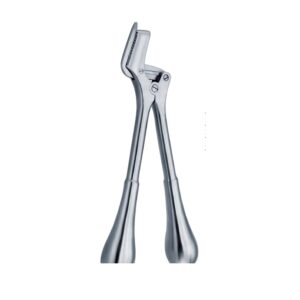
Cylindrical chisels for removing circular bone segments. Used in spinal decompression, dural opening, and bone graft harvesting. Specialty instrument. stock based on your case volume.
Major gouge patterns
Stille Gouges
The classic orthopedic gouge. Curved blade with deep cup shape for efficient bone removal. Widths from 6mm to 25mm. Stock 10, 15, 20mm for general orthopedic use.
Cobb Gouges
Heavy-duty gouges for spinal procedures and large-bone applications. Available with ferrozell (phenolic resin) handle for orthopedic heat shielding during prolonged procedures.
Dawson Gouges
Fine-tipped gouges for pediatric and maxillofacial use. Lighter weight, smaller blade sizes.
Osteotomes, a specialized chisel
Osteotomes are thin, beveled chisels designed for controlled bone splitting rather than cutting. They’re used in procedures like:
- Lambotte osteotomes. general orthopedic osteotomy
- Cottle osteotomes, rhinoplasty nasal bone cuts
- Cinelli osteotomes. lateral nasal bone out-fracture
- Aufricht osteotomes, nasal dorsum reduction
Every facility performing hip arthroplasty should stock Lambotte osteotomes 10, 15, 20mm. Plastic/rhinoplasty surgery centers need Cottle, Cinelli, and Aufricht sets.
Minimum recommended inventory for orthopedic OR
| Instrument | Sizes | Qty per OR |
|---|---|---|
| Lambotte chisels | 6, 10, 15, 20, 25mm | 2 of each |
| Smith-Petersen chisels | 10, 15, 20mm | 1 of each |
| Lambotte osteotomes | 10, 15, 20mm | 2 of each |
| Stille gouges | 10, 15, 20mm | 1 of each |
| Cobb gouges | 13, 19mm | 1 of each |
| Bone mallets | Small + Medium | 2 of each |
Quality matters. what separates good from excellent
Steel grade & hardness
AISI 420 surgical stainless steel with cutting edges hardened to Rockwell C 55-58. Lower grades will dull after a few autoclave cycles and require frequent replacement.
Cutting edge precision
A quality chisel should split a single sheet of paper cleanly with light pressure. Under magnification, the cutting edge should be a continuous razor line, no chips, waves, or dull spots.
Handle balance
Well-balanced handles allow the surgeon to generate force from the shoulder rather than the wrist, reducing fatigue during long procedures. Fluted, hollow, and round handle styles each have their advocates. the key is balance, not style.
Corrosion resistance
Repeated autoclaving at 134°C exposes instruments to thermal stress and chloride-containing condensate. Quality instruments show no pitting after 1,000+ cycles.
Sourcing bone chisels from Fizza Surgical
Fizza Surgical manufactures the complete bone chisel and gouge range from Sialkot, Pakistan. Our chisels feature:
- AISI 420 surgical stainless steel with HRC 55+ cutting edges
- Hand-ground cutting edges verified under magnification
- Balanced handles (fluted, hollow, or round, specify at order)
- Laser-marked size/pattern identification that survives autoclaving
- ISO 13485:2016, CE Marked, FDA Registered
- Lifetime warranty on the chisel body
- OEM manufacturing with custom branding from 100-unit orders
- 30-50% lower than premium European brand equivalents
Browse our complete bone chisel & gouge range or request a factory quote with your required sizes and volumes.
Related Resources
FAQ
How often do bone chisels need sharpening?
Quality AISI 420 chisels with HRC 55+ hardness should maintain their cutting edge for 100-500 surgical uses before requiring professional sharpening. Avoid using chisels to pry bone fragments. this damages the edge much faster than normal cutting.
Can chisels and osteotomes be used interchangeably?
No. Chisels are designed for cutting bone (perpendicular force from above). Osteotomes are designed for splitting bone along a predetermined line (angled force). Using a chisel as an osteotome may damage the edge; using an osteotome as a chisel may bend the blade.
What’s the difference between ferrozell and stainless steel handles?
Ferrozell (phenolic resin) handles provide better thermal insulation during autoclaving and better vibration damping during mallet impact. Stainless steel handles are more durable long-term but transmit more vibration. Surgeon preference determines choice.
Where We Serve
Fizza Surgical exports to 50+ countries. Browse our country-specific pages with local regulatory guidance and pricing: