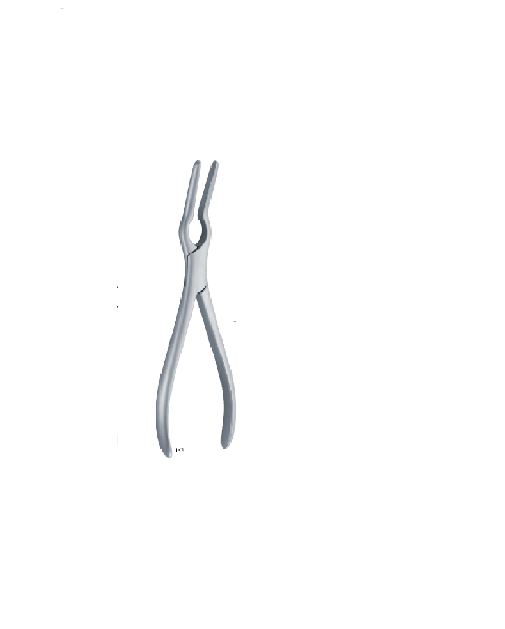
Asch-Walsham Septum Forceps — Combined Crush Pattern
Morris Asch, New York rhinologist of the late nineteenth century who pioneered the surgical correction of septal deviation through cartilage-crushing rather than excision, contributed his crush-jaw geometry to a forceps combined with William Walsham’s separate forceps design. The Asch-Walsham combination produces a crush forceps that straightens cartilaginous deviation without removing tissue — the cartilage “remembers” the new straight position after the crush, and the L-strut support is preserved.
The cartilage-preservation philosophy
Nineteenth-century septoplasty technique often involved aggressive cartilage excision (the Killian SMR) which produced a thin floppy septum and a long-term saddle-deformity risk. Asch’s crush approach preserved the cartilage entirely — the deviation was un-sprung by crushing, the perichondrial envelope was repositioned, and the cartilage healed in the new straight position. The Asch-Walsham forceps is the instrument by which this technique is delivered.
Modern revival
Modern conservative septoplasty has rediscovered the value of cartilage preservation, and the Asch-Walsham (and the related Cottle-Walsham covered earlier) remain in the senior rhinology surgeon’s tray for cases where straightening rather than excision is the right move.

Reviews
There are no reviews yet.