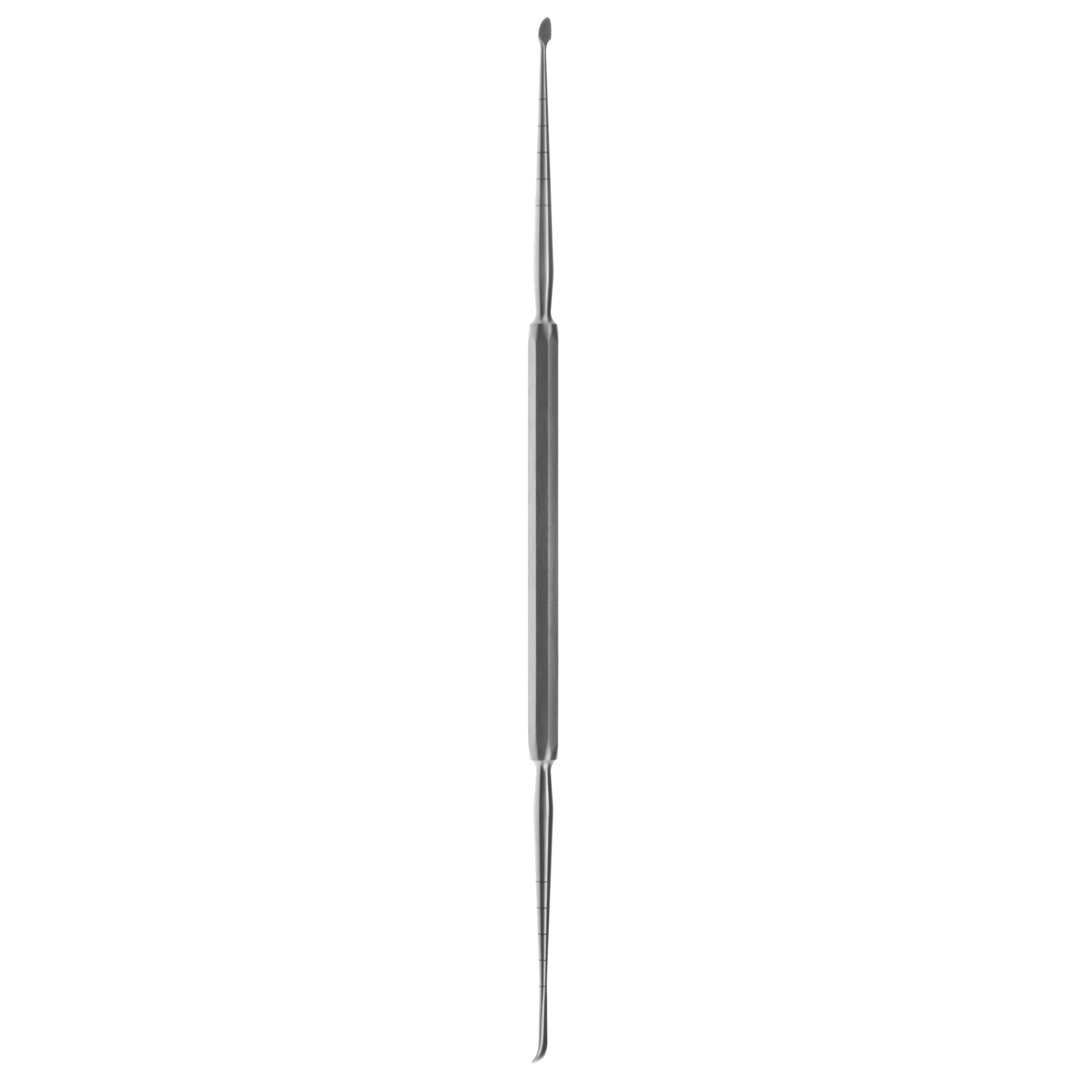
Cottle Septum Elevator — Narrow Blade for the First Pocket
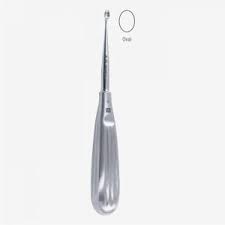
The narrow-blade Cottle elevator (approximately 4 mm working face) is the instrument with which the operator opens the right-sided mucoperichondrial pocket after the hemitransfixion incision. Its sharp leading edge engages perichondrium without lifting cartilage with it; the round handle gives the rotation that a flat handle does not, so the operator can ride the cartilage contour rather than push through it.
The rule of staying on cartilage
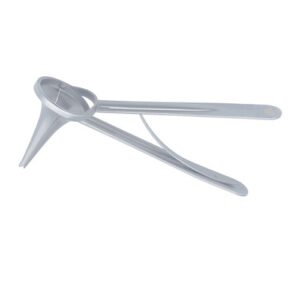
The line between perichondrium and cartilage is the surgical plane that defines a clean septoplasty. The narrow Cottle, advanced under direct vision through the long-blade speculum, finds that plane at the caudal septum and follows it posteriorly to the vomer-cartilage junction. If the elevator lifts cartilage shreds the plane has been crossed and the flap will tear; if it slides cleanly with the white perichondrium peeling off the green-blue cartilage the plane is correct.
Versus the Freer
The Freer’s double-ended sharp/blunt design is the most-taught elevator, but the round-handle Cottle gives more rotational control once trainees have built the muscle memory.


Reviews
There are no reviews yet.