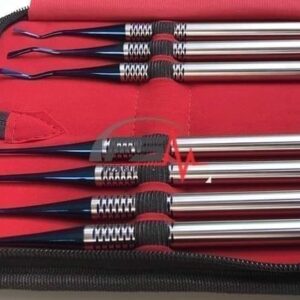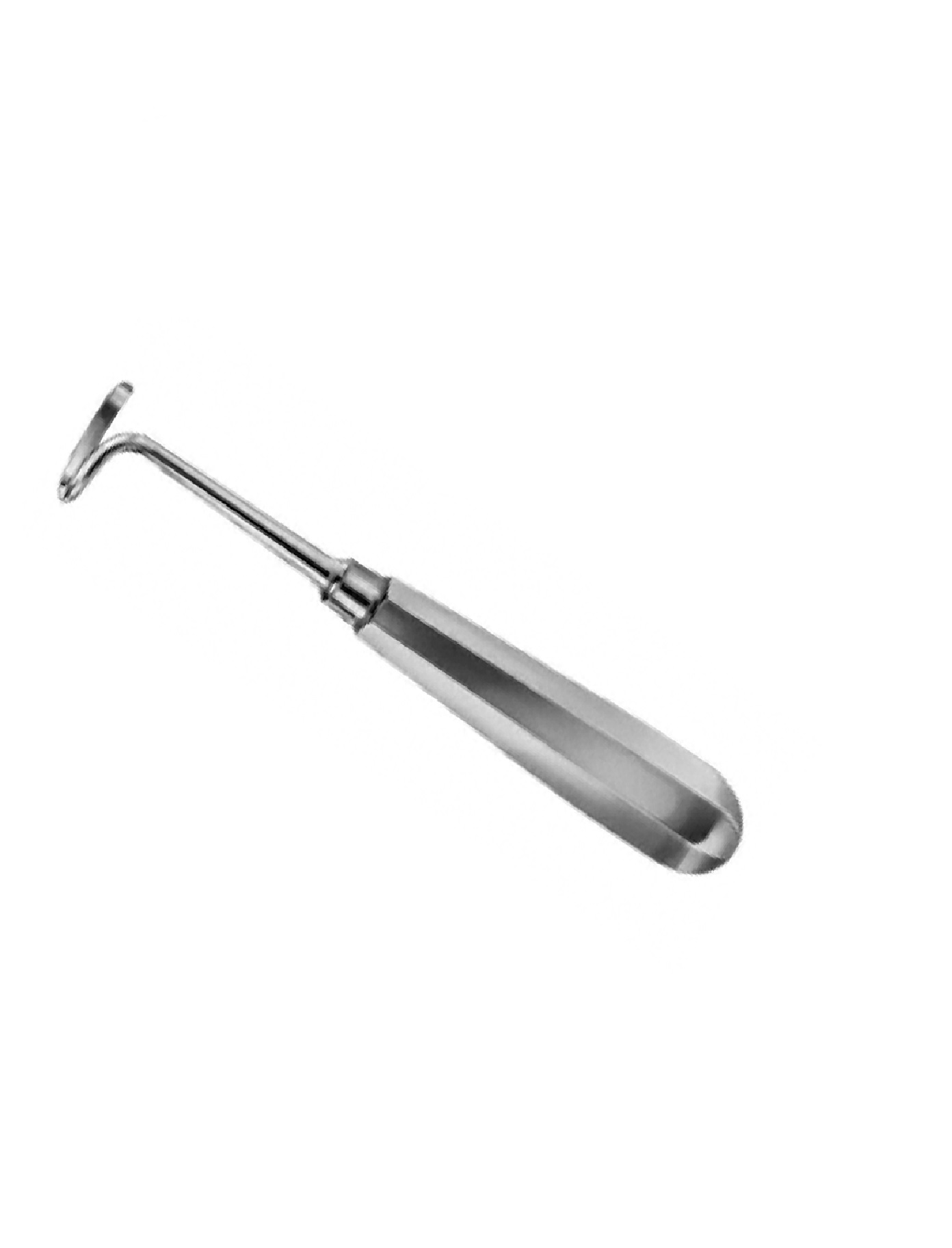
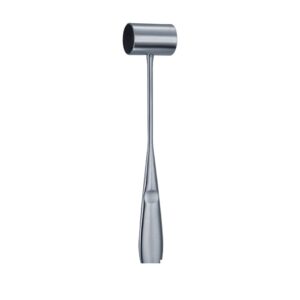
Farabeuf Periosteal Raspatory Curved

$ 0

DOYEN left for child 170 mm – 6 3/4 – Periosteal Raspatories – Elevators

MOQ: 50 pieces
Lead time: 18–22 working days
Sample order: 10 units · sample fee credited against first PO
OEM private label: Private-label from 300 units per SKU
Materials: AISI 304 austenitic surgical-grade stainless steel
Sterilization: Steam autoclave to 134 °C · EtO compatible
Certifications: ISO 13485:2016 · CE-marked under EU MDR 2017/745 · FDA establishment-registered
Shipping: DHL Express · UPS · FedEx · sea freight · all Incoterms

Need a different size, custom branding, or volume pricing?
Request a quote →

Categories ,
Regulatory Nomenclature
EMDN (EUDAMED): V02050110
GMDN Code: 35374
Periosteal raspatory/elevator

The curve angles the working tip away from the line of sight, the standard geometry for dissection in confined fields. Supplied from the Fizza Surgical instrument catalogue as the Farabeuf Periosteal Raspatory Curved.

PatternFarabeuf
ShapeCurved
MaterialAISI 304 austenitic surgical-grade stainless steel
SterilizationSteam autoclave to 134 °C · EtO compatible
Quality systemISO 13485:2016 · CE-marked under EU MDR 2017/745 · FDA establishment-registered

Louis Hubert Farabeuf, a nineteenth-century French anatomist and surgeon, lent his name to the simple double-ended hand retractor that remains a workhorse of general and orthopaedic surgery. Farabeuf retractors are sold in pairs — a left and right with identical curved blades on each end of a flat handle. Sizes are described by blade length: 12 cm, 14 cm, 15 cm. An assistant holds the retractor to expose superficial tissues during wound exploration, hernia repair, vascular access, and orthopaedic open reduction. The Farabeuf’s elegance is its simplicity: no ratchets, no springs, no moving parts to fail. Just two ergonomic blades on a sturdy stainless handle that outlasts most other instruments in the tray.

Other Farabeuf sizes in our catalogue:

Every instrument is forged, machined, and finished at the Sialkot facility from German-origin stainless billet — austenitic 304 / 316 grades for non-cutting, mucosal-contact, and hollow-ware lines where corrosion resistance is the priority, martensitic 420 / 440 grades for cutting and edge-retention patterns where heat-treatable hardness matters, and 17-4 PH precipitation-hardened stainless for high-load orthopedic and implant-handling applications. Polishing, passivation, and final inspection are performed in-house under documented quality procedures aligned with ISO 13485:2016.
Which orthopedic procedures are your bone-surgery instruments designed for?
General orthopedic surgery, ORIF (Open Reduction Internal Fixation), spinal surgery, joint replacement, trauma surgery, and veterinary orthopedic applications. Catalogue includes bone holding forceps, cutters, gouges, chisels, ronguers, periosteal elevators, and rasps.
What stainless steel grade is used for bone-surgery instruments?
AISI 440 or 17-4 PH (precipitation-hardened) stainless steel for high-stress instruments such as bone cutters, gouges, and chisels. Tungsten-carbide inserts on instrument tips where additional edge retention is required.
Are bone-surgery instruments compatible with steam autoclave sterilization?
Yes — all bone-surgery instruments are designed for repeat steam autoclave cycles at 134 °C and are also EtO compatible. Tungsten-carbide inserts are autoclave-safe.
What is the MOQ for orthopedic instrument private-label?
Standard MOQ is 300 units per SKU for catalogue items, or 50 sets for complete orthopedic kits. Custom designs require 500 units per SKU minimum.

Reviews

There are no reviews yet.

Only logged in customers who have purchased this product may leave a review.

Serving 50+ countries in 7 languages View Global Markets
Scroll to Top
WhatsApp
Fizza Surgical
Fizza Surgical ● Online — typically replies instantly