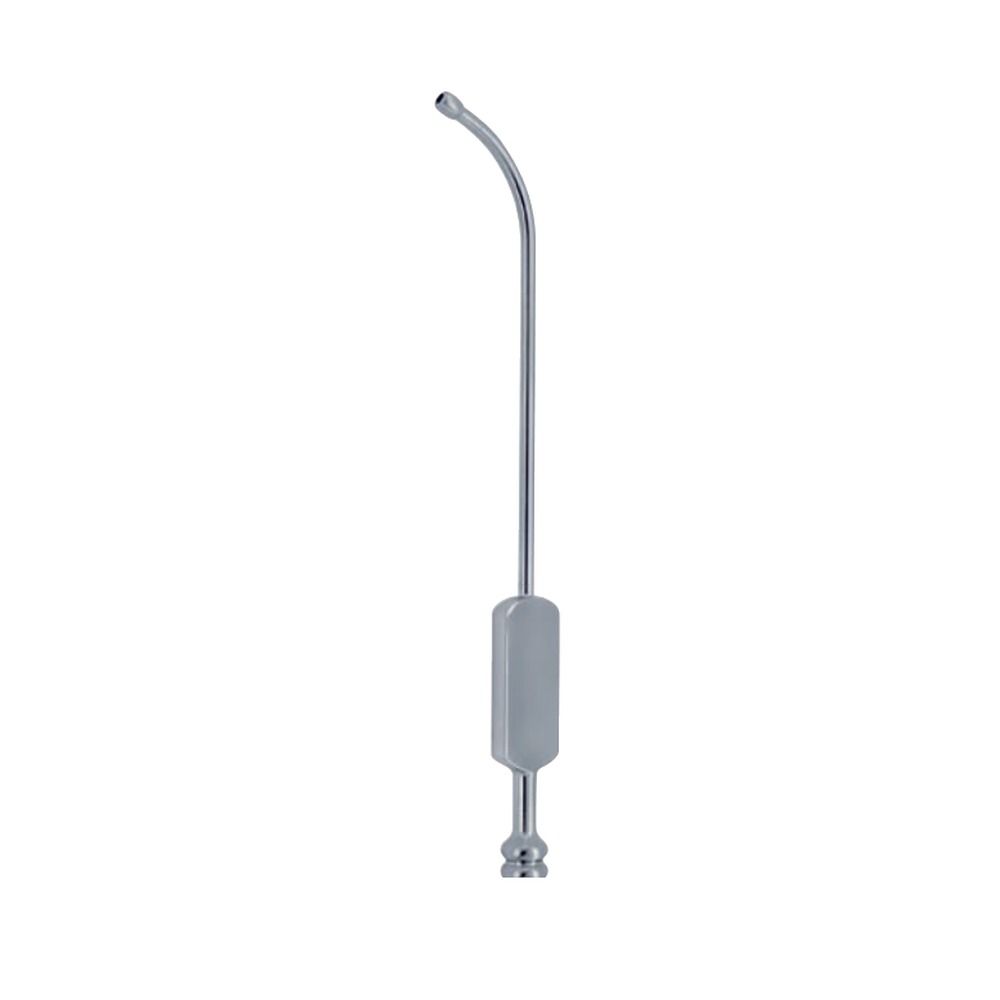
| Reference / SKU | DI 01-555-00 |
| Material | AISI 304 / AISI 316 austenitic surgical-grade stainless steel |
| Sterilization | Steam autoclave to 134 °C · EtO compatible |
| Quality system | ISO 13485:2016 · CE-marked under EU MDR 2017/745 · FDA establishment-registered |
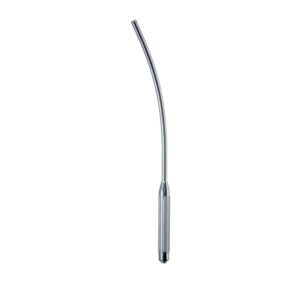
Eicken Suction Tube — Berlin Laryngology Pattern · SKU DI 01-555-00 — manufactured to ISO 13485:2016.
- Plester Suction Tube — Tübingen TORP/PORP Era (DI 01-535-00)
- Tonsil Needle Suction Tube — Tonsillar-Fossa Haemostasis (DI 01-570-00)
- House Suction Tube — Los Angeles Cochlear-Era Pattern (DI 01-525-00)
Specialty surgical instruments cover the patterns developed for specific anatomical regions or procedures: ophthalmic micro-instruments, cardiac vascular clamps, neurosurgical micro-dissectors, plastic-surgery skin handling tools, ENT precision instruments, and paediatric variants of standard patterns. The defining characteristic across the category is dimensional precision: tolerances are tighter, working tips are finer, and the metallurgy is often optimized for specific tasks — titanium for microsurgery where weight matters, tungsten-carbide for sustained sharpness in vascular work, and high-polish finishes for ophthalmic instruments used under microscope. Fizza manufactures specialty patterns under ISO 13485:2016 with material and finish options configurable per OEM specification.
OEM private-label production is available from 300 units per SKU, with custom laser etching for distributor codes, hospital procurement IDs, and sterilization-cycle tracking marks. Custom packaging — peel pouch, blister, fabric-wrap kits, or co-branded boxes — is configured to distributor specification. Bulk-order pricing tiers are available on request for hospital group purchasing organizations and national procurement entities.

Reviews
There are no reviews yet.