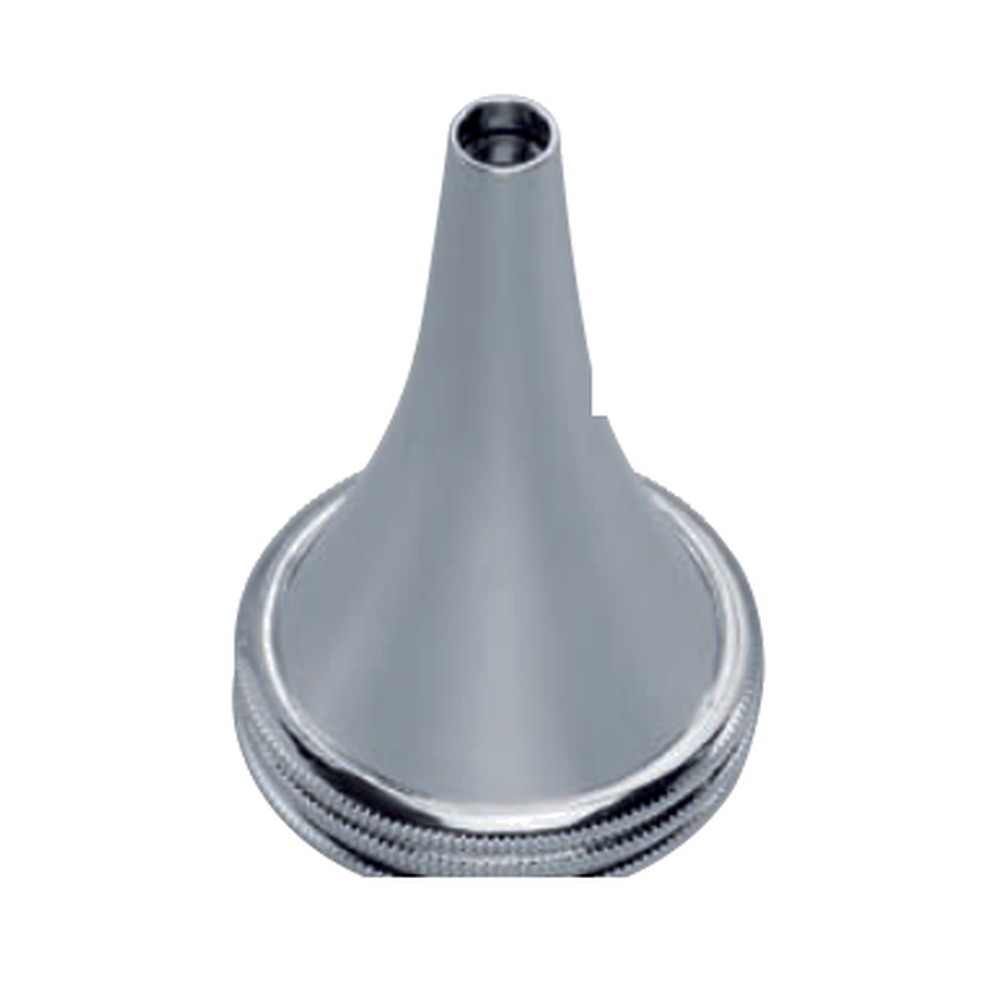
Catalogue reference ES 15-50-00 — Hartmann Ear Speculum — Small Conical, supplied to hospitals, distributors, and OEM partners.
Hartmann is associated with several distinct surgical instruments depending on specialty — most commonly the Hartmann ear forceps used in otologic surgery and the Hartmann nasal forceps used in rhinology. The pattern’s hallmarks are fine curved or angled tips designed for the confined anatomy of the ear canal or nasal cavity. Both variants have a small overall length (typically 14 cm) and fine pointed jaws. Used during foreign-body removal, biopsy, and septal surgery. Modern variants are made from medical-grade stainless steel; some include tungsten carbide insert tips for cutting variants. The Hartmann ear forceps remain standard in ENT examination and procedure sets.
| Reference / SKU | ES 15-50-00 |
| Pattern | Hartmann |
| Material | AISI 304 / AISI 316 austenitic surgical-grade stainless steel |
| Sterilization | Steam autoclave to 134 °C · EtO compatible |
| Quality system | ISO 13485:2016 · CE-marked under EU MDR 2017/745 · FDA establishment-registered |
- Hartmann Ear Speculum — Medium for Myringotomy Access (ES 15-55-00)
- Hartmann Ear Polypus Forceps — CSOM Granulation Removal (EP 15-120-00)
Fizza Surgical International has manufactured surgical instruments at its Sialkot, Pakistan facility since 1980 — more than four decades of continuous operation under one family ownership. The factory holds ISO 13485:2016 certification for medical devices and CE marking under EU MDR 2017/745, the regulatory baseline European hospitals and distributors require. FDA establishment registration covers exports to the United States.


Reviews
There are no reviews yet.