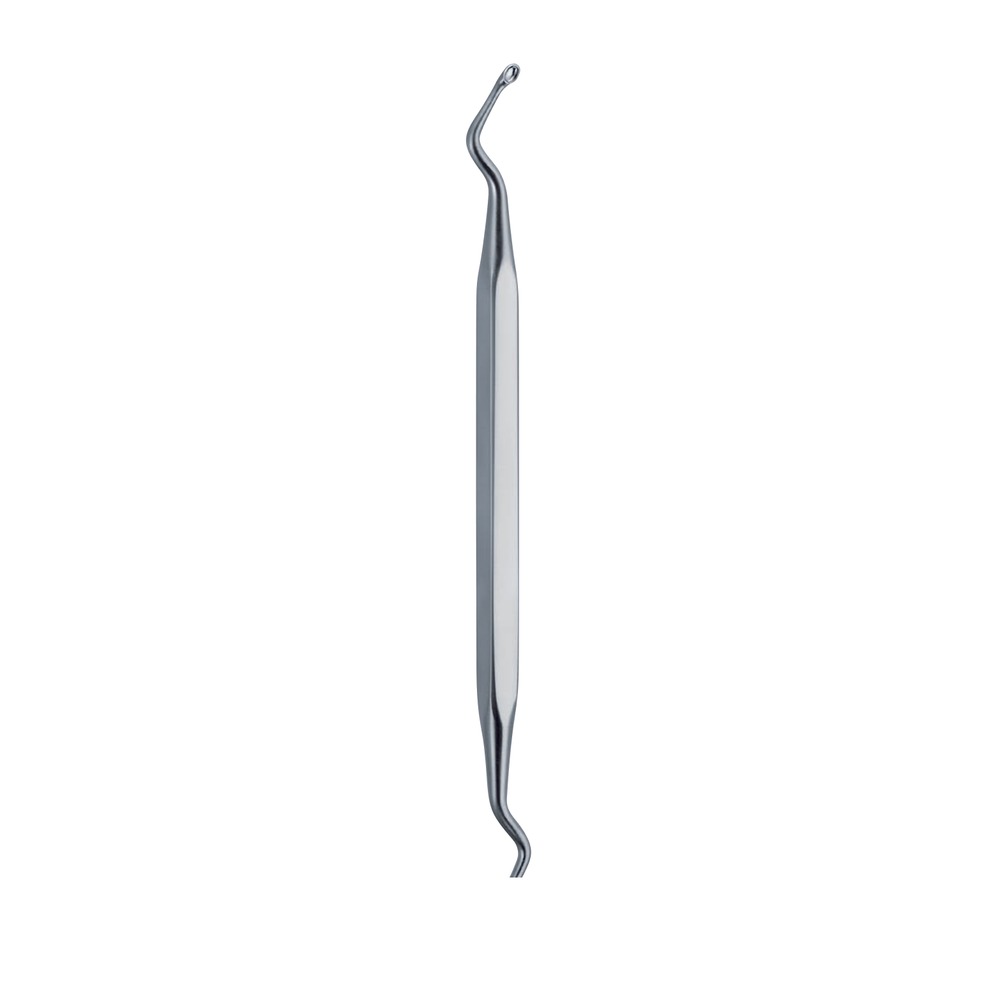
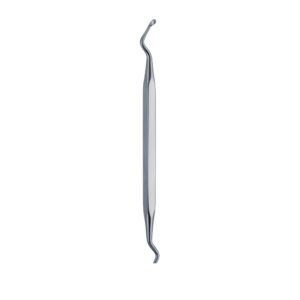
The Langenbeck Ear Curette — Heavy-Duty Bone Curette (SKU EC 15-30-00) is part of the Fizza Surgical catalogue.
In the rhythm of an operating-room procedure, forceps move between the surgeon’s hand, the scrub nurse, the Mayo stand, and the tissue field hundreds of times. That workflow shapes the design priorities: a forceps must seat positively in the surgeon’s grip without finger-ring fatigue, the ratchet must lock and release cleanly with a single motion, the jaws must close on tissue without sliding, and the surface finish must withstand repeated cycles through autoclave and chemical disinfection without pitting. The dominant patterns — Halsted, Crile, Kelly, Kocher, Allis, Babcock, Mayo — emerged at the close of the nineteenth century and remain essentially unchanged because the underlying anatomy and surgical requirements haven’t changed. Fizza manufactures the full range under ISO 13485:2016.
| Reference / SKU | EC 15-30-00 |
| Material | AISI 304 austenitic surgical-grade stainless steel |
| Sterilization | Steam autoclave to 134 °C · EtO compatible |
| Quality system | ISO 13485:2016 · CE-marked under EU MDR 2017/745 · FDA establishment-registered |
- Buck Ear Curette — Blunt Variant (EC 15-20-00)
- Jansen Ear Curette — Simple Mastoidectomy (EC 15-35-00)
- Gross Ear Curette — Loop Variant for Granulation (EC 15-45-00)
Sialkot has been the world’s primary cluster for surgical-instrument manufacturing since the late nineteenth century, when local steel workshops began supplying instruments to British military and civilian hospitals. Fizza Surgical’s facility continues that tradition, combining workshop craftsmanship with the metallurgy and quality systems modern medical regulation requires. Fizza products are exhibited at international medical-device trade fairs in Europe, the Middle East, and North America.

Reviews
There are no reviews yet.