
Lempert Septum Elevator — Endaural Adaptation
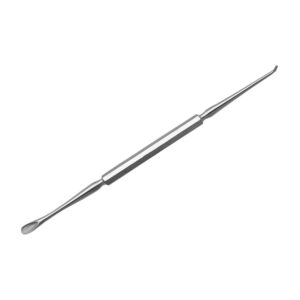
Lempert adapted the standard septum-elevator design — typically Freer or Cottle pattern — for endaural use in the fenestration operation. The Lempert septum elevator has a sharper distal curve and a longer narrow shaft sized to reach the periosteum over the lateral mastoid through the endaural incision, where the standard nasal-septum elevator’s geometry would not fit. The instrument is occasionally also used for septoplasty in patients whose vestibular anatomy demands a sharper curve than the Freer offers.
Why a separate elevator for endaural work
The endaural approach reaches the mastoid through a corridor that is narrow at the entry and widens internally — a straight-shafted nasal elevator hits the lateral cartilage of the auricle before reaching the bone. The Lempert’s curved shaft clears the cartilage and engages the periosteum at the depth that the operator’s eye sees through the endaural retractor.
Crossover use in modern septoplasty
Some senior surgeons reach for the Lempert septum elevator in unusual septal-deviation cases where the standard Freer cannot reach a high-and-anterior deviation — the same curvature that suited endaural fenestration suits this particular nasal anatomy.


Reviews
There are no reviews yet.