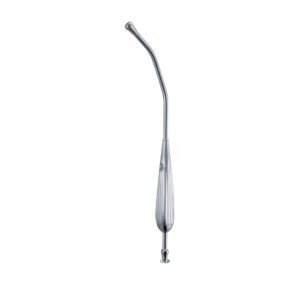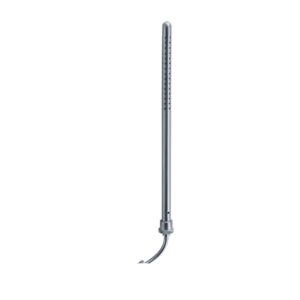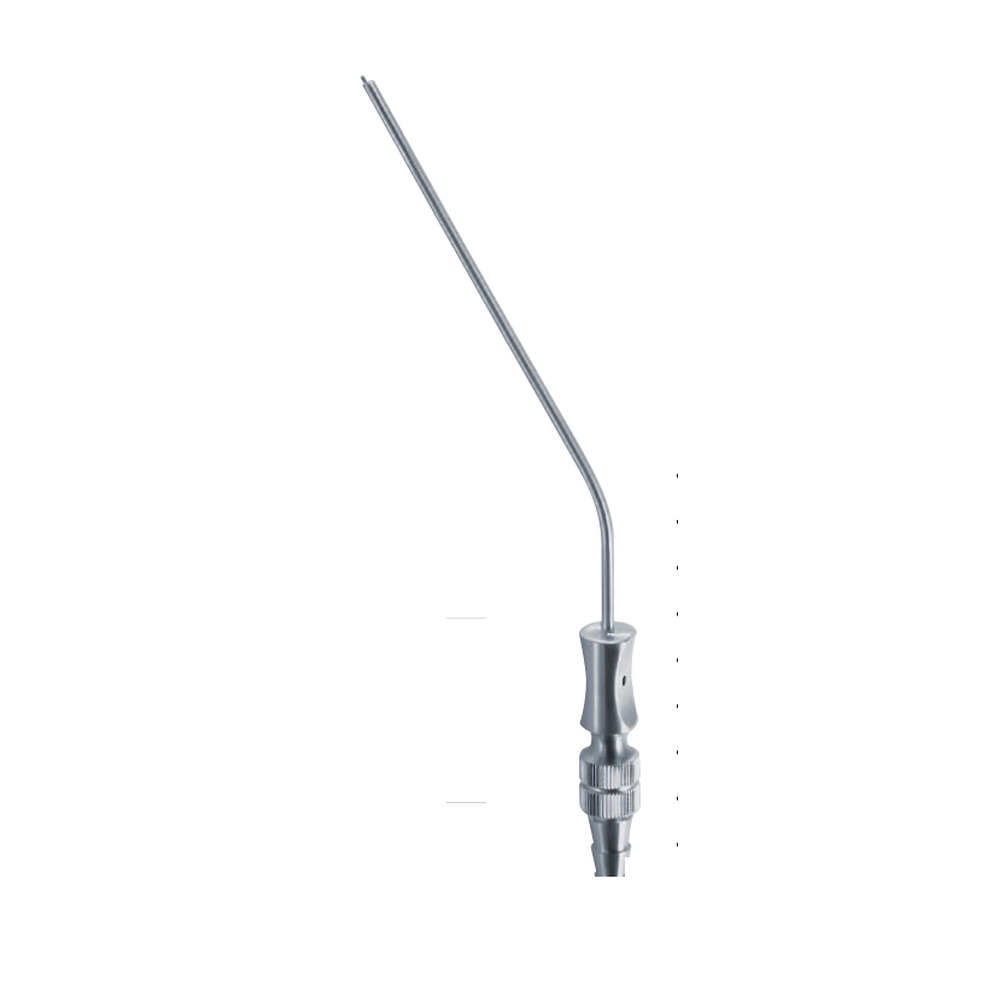
Plester Suction Tube — Tübingen TORP/PORP Era

$ 0

Plester Suction Tube

MOQ: 50 pieces
Lead time: 18–22 working days
Sample order: 10 units · sample fee credited against first PO
OEM private label: Private-label from 300 units per SKU
Materials: AISI 420 / AISI 440 / 17-4 PH stainless steel · tungsten-carbide inserts where applicable
Sterilization: Steam autoclave to 134 °C · EtO compatible
Certifications: ISO 13485:2016 · CE-marked under EU MDR 2017/745 · FDA-registered
Shipping: DHL Express · UPS · FedEx · sea freight · all Incoterms

Need a different size, custom branding, or volume pricing?
Request a quote →

SKU DI 01-535-00 Categories ,
Regulatory Nomenclature
EMDN (EUDAMED): V02
GMDN Code: 47555
Surgical instrument

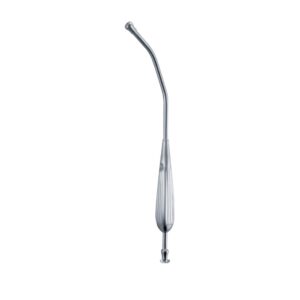
Plester Suction Tube — Tübingen TORP/PORP Era

The Plester suction tube is Dieter Plester’s (1923-2001) design (Tübingen otology) for the ossicular-reconstruction era of tympanoplasty surgery — the period in the 1970s-1990s when synthetic total ossicular replacement prostheses (TORPs) and partial ossicular replacement prostheses (PORPs) replaced autograft cartilage as the standard ossiculoplasty material. The Plester suction is sized for the prosthesis-positioning field, with a slightly different bore-to-length ratio than the Rosen pattern.

The Plester-versus-Rosen choice

Both Plester and Rosen suctions serve micro-otologic surgery; the differences are subtle — slightly different tip geometry, different ergonomic balance between length and bore. Surgeons trained in the Plester (German) tradition often preferentially use Plester suction; the Rosen (American) tradition preferentially uses Rosen suction. Outcomes are equivalent; the choice reflects training-school heritage.

The TORP/PORP placement context

Synthetic ossicular reconstruction (TORP for absent stapes superstructure, PORP for intact stapes) demands precise prosthesis positioning between the malleus handle (or tympanic membrane graft) and the stapes head or footplate. The Plester suction supports this precise placement by keeping the field clear without disturbing the prosthesis-positioning area.

What is the minimum order quantity (MOQ) for OEM private-label surgical instruments?
The MOQ is 300 units per SKU for catalogue items and 500 units per SKU for fully custom designs. Mixed-SKU orders aggregating 1,000+ units across a single product family qualify for the private-label tier. Sample orders of 10 units per SKU are available; the sample fee is credited against the first production order.
Are Fizza Surgical instruments CE-marked and FDA-registered?
Yes. All instruments are manufactured under an ISO 13485:2016 Quality Management System, CE-marked under EU MDR 2017/745, and our manufacturing facility is registered with the U.S. FDA as a Foreign Establishment for Class I exempt surgical instruments. Specific certificate numbers and downloadable PDFs are available on our Certifications page.
What stainless steel grades are used?
Medical-grade AISI 420 for general surgical instruments, AISI 440 or 17-4 PH for high-stress applications, and tungsten-carbide inserts on needle holders and high-precision scissors. Mill test certificates are available on request with every order.
How long is the lead time and what shipping methods are available?
18–22 working days for catalogue items, 28–35 days for fully custom designs. Shipping options include DHL Express (4–5 business days to most EU and US destinations), UPS, FedEx, and sea freight on all standard Incoterms (EXW, FCA, FOB, CIF, DAP).
Can I visit the Sialkot factory for an audit?
Yes. Distributor and audit visits are welcome and we arrange transport from Sialkot or Lahore airport. Email our quality team to schedule.

Reviews

There are no reviews yet.

Only logged in customers who have purchased this product may leave a review.

Serving 50+ countries in 7 languages View Global Markets
Scroll to Top
WhatsApp
Fizza Surgical
Fizza Surgical ● Online — typically replies instantly