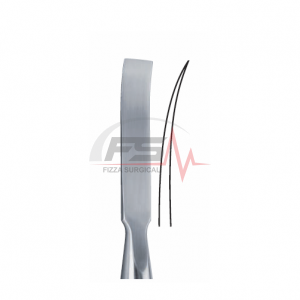
Marius Smith-Petersen, a Norwegian-American orthopaedic surgeon at Massachusetts General, developed the hip nail for femoral neck fracture fixation in the 1920s — a technique that defined modern hip fracture surgery for fifty years. His name attaches to a family of orthopaedic instruments including bone gouges, chisels, and osteotomes used today in hip arthroplasty, fracture fixation, and bone graft harvest. Smith-Petersen patterns are heavy robust instruments designed for cortical bone work; they remain standard in orthopaedic open-procedure sets. Tungsten carbide or hardened stainless cutting edges are standard in professional-grade variants.
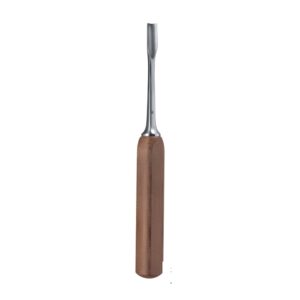
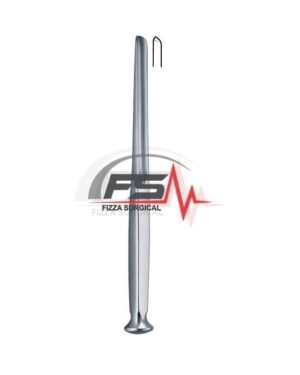
The SMITH-PETERSEN x =6 mm 200mm 20cm (Ref BS 14-256-01) is part of the Fizza Surgical instrument catalogue, manufactured under ISO 13485:2016.
| Reference / SKU | BS 14-256-01 |
| Pattern | Smith-Petersen |
| Working length | 6 mm (0.6 cm) |
| Material | AISI 440 / 17-4 PH precipitation-hardened stainless steel |
| Sterilization | Steam autoclave to 134 °C · EtO compatible |
| Quality system | ISO 13485:2016 · CE-marked under EU MDR 2017/745 · FDA establishment-registered |
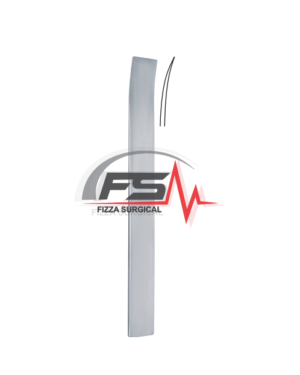
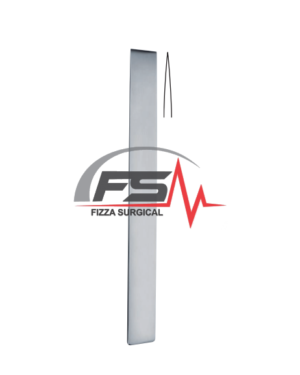
- SMITH-PETERSEN x =6 mm 200mm 20cm (BS 14-255-01)
- SMITH-PETERSEN x =6 mm 200mm 20cm (BS 14-258-01)
- SMITH-PETERSEN x =6 mm 200mm 20cm (BS 14-257-01)
Every instrument is forged, machined, and finished at the Sialkot facility from German-origin stainless billet — austenitic 304 / 316 grades for non-cutting, mucosal-contact, and hollow-ware lines where corrosion resistance is the priority, martensitic 420 / 440 grades for cutting and edge-retention patterns where heat-treatable hardness matters, and 17-4 PH precipitation-hardened stainless for high-load orthopedic and implant-handling applications. Polishing, passivation, and final inspection are performed in-house under documented quality procedures aligned with ISO 13485:2016.

Reviews
There are no reviews yet.