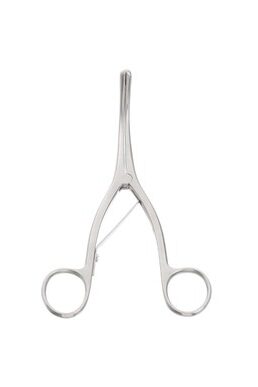
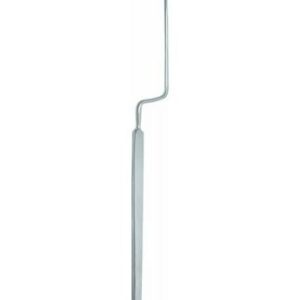
Trousseau Tracheal Dilator — Two-Bladed Classic
Armand Trousseau (1801-1867), professor of clinical medicine at the Hôtel-Dieu in Paris and one of the founders of the diphtheria-tracheotomy intervention, designed his two-bladed tracheal dilator in the 1830s as the original instrument for opening the tracheal incision after the surgical cut had been made. The Trousseau predates the Laborde by half a century and remains the standard simpler dilator in tracheotomy kits worldwide.
The Trousseau name in medicine
Trousseau is remembered for multiple eponymous medical signs — the Trousseau sign of malignancy (migratory thrombophlebitis in occult cancer), the Trousseau sign in hypocalcaemia (carpopedal spasm on cuff inflation), the Trousseau sign in latent tetany. His tracheotomy intervention is less widely cited but historically more significant: he was among the first physicians to publish series of successful diphtheria tracheotomies in children, opening the procedure to international adoption.
Modern role
The Trousseau two-bladed dilator is the basic kit-item in any tracheotomy tray. The Laborde three-bladed variant is the more refined alternative; both are produced and both belong in emergency-airway carts.

Reviews
There are no reviews yet.