Septoplasty Instrument Set: Nasal Surgery Instruments Complete Guide
A complete septoplasty instrument set guide: Killian speculum, Cottle and Freer elevators, Jansen-Middleton forceps, steel grades and tray care.
 Made in Sialkot · Since 1980
The moment that separates a clean septoplasty from a bloody, frustrating one usually happens in the first ninety seconds — when the surgeon raises the mucoperichondrial flap off the cartilage. Get into the right submucoperichondrial plane with a sharp Cottle elevator and the flap lifts in a near-bloodless sheet. Miss the plane, tear the mucosa, and the rest of the case is spent chasing bleeding through a torn flap. Almost everything that follows in the tray exists to protect that plane and the L-strut of cartilage you must leave behind.
This guide walks through every category of instrument in a working septoplasty set — what each tool does, the sizes that matter, the steel they should be made from, and how the set differs from a sinus or rhinoplasty tray. It is written for theatre managers, ENT registrars building a personal kit, and procurement teams specifying a nasal surgery instruments set for a new list.
What a septoplasty set actually has to do
A septoplasty corrects a deviated nasal septum — the cartilage-and-bone partition between the two nasal cavities. Unlike open rhinoplasty, the work happens through the nostril (an endonasal or hemitransfixion approach), in a corridor 12–15 mm wide and several centimetres deep, often under headlight or endoscopic illumination. That geography dictates the instruments: long, slim shanks; bayoneted or angled handles that keep the surgeon’s hand out of the line of sight; and tips fine enough to work between two mucosal flaps without shredding either one.
Every septoplasty instruments set is built around four jobs done in sequence: expose (speculum and suction), elevate (raise the flaps off cartilage and bone), resect (remove the deviated segment while preserving the dorsal and caudal struts), and finish (trim, crush, reposition, and close). Read the tray that way and the instrument list stops looking like a random pile of steel.
Exposure: speculum and suction
The Killian nasal speculum is the workhorse. Its long blades — commonly 50 mm, 75 mm, and 90 mm — reach deep into the nasal cavity to open the operative corridor while the elevator works between them. A good set carries at least two blade lengths because the depth of work changes as the dissection moves from caudal to posterior septum. The shorter Cottle nasal speculum and the screw-fixated Vienna speculum handle the more anterior steps and the initial incision.
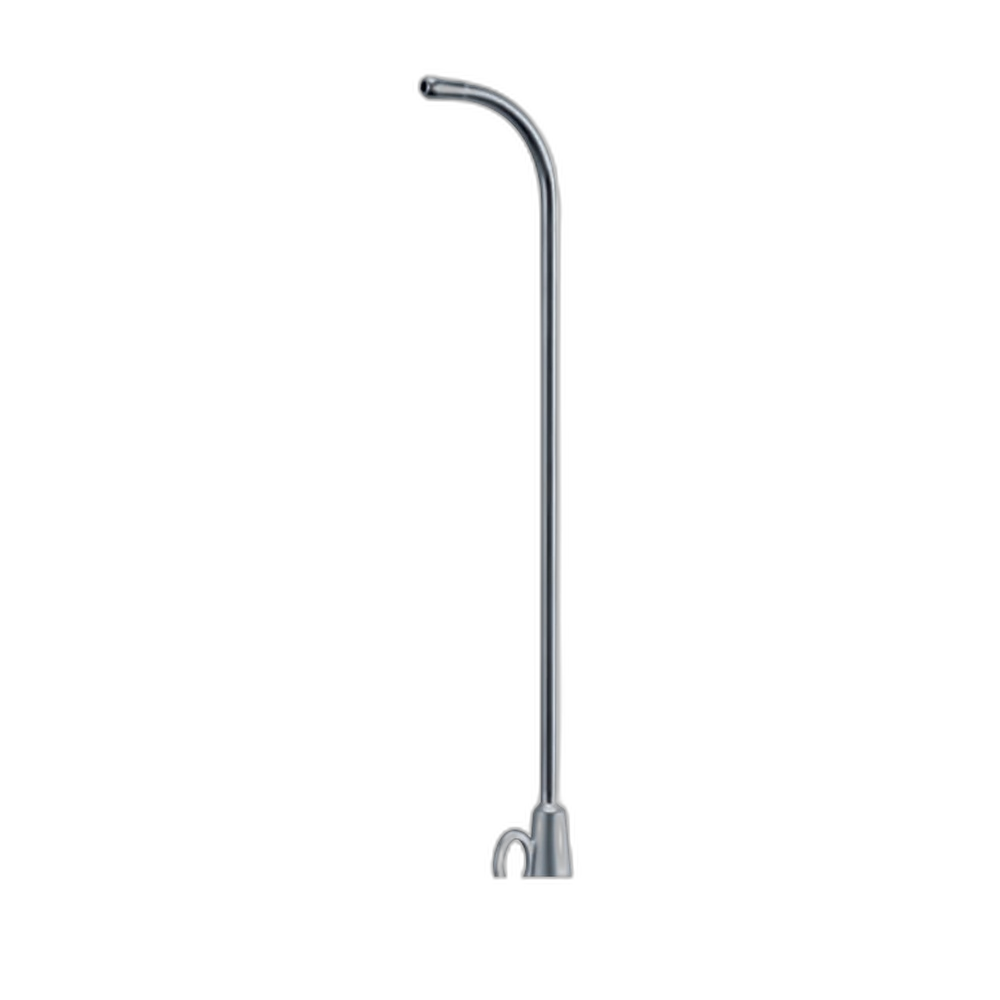
For day-case examination and the simplest anterior work, a Thudichum-pattern speculum still earns its place; we cover that distinction in our guide to the Thudichum nasal speculum. Suction is provided by a Frazier suction tube, typically 7 Fr to 10 Fr, with a thumb-port to modulate suction so a fresh flap is not pulled into the tip.
Elevation: the Cottle and Freer family
If one instrument defines septal surgery, it is the Cottle elevator. The double-ended design pairs a sharp, angled blade for the initial submucoperichondrial lift with a blunt, rounded end for advancing the dissection without perforating mucosa. The sharp end starts the plane; the blunt end carries it.
The Freer elevator — double-ended, one sharp and one blunt, roughly 19 cm overall — does the finer separation, especially at the bony-cartilaginous junction where the quadrangular cartilage meets the perpendicular plate of the ethmoid and the vomer. Many surgeons reach for it again during flap repositioning. The same elevator pattern appears across ENT, spine and orthopaedic trays; our Freer periosteal elevator guide covers its full range of uses. A McKenty elevator and a D-knife (Cottle knife) round out the elevation group, the D-knife scoring cartilage cleanly so the flap can be raised on the contralateral side.
Resection: getting the deviation out
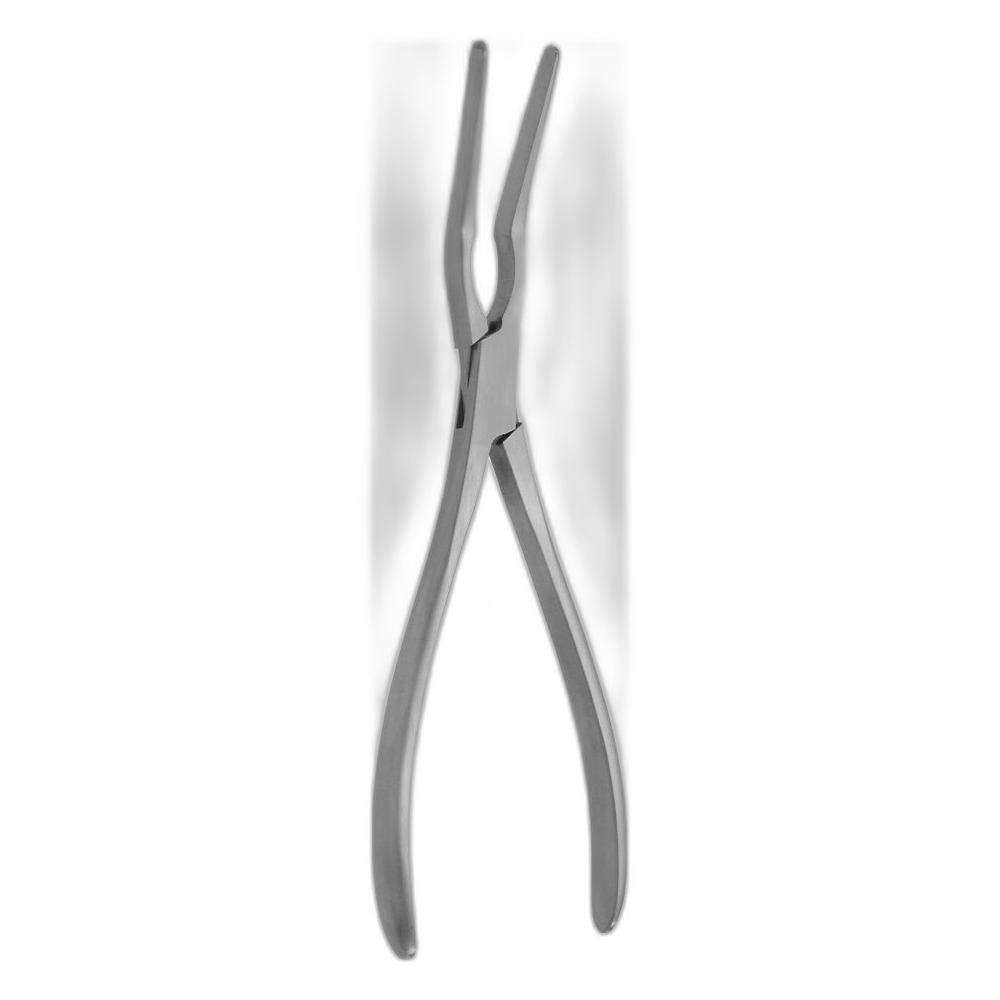
Once both flaps are raised, the deviated cartilage and bone come out. The swivel knife (Ballenger swivel knife) resects a strip of cartilage in a controlled pass, its swivelling blade following the contour of the septum. A Jansen-Middleton forceps (through-cutting septum forceps) bites and removes deviated bony septum — perpendicular plate and vomer — with crushing-and-cutting jaws that prevent fragments from springing back.
The Takahashi forceps, with its small straight cup jaws, removes loose bony and cartilaginous fragments and is shared directly with sinus trays. A 4 mm and 7 mm osteotome with a light mallet addresses a bony spur or a deviated maxillary crest at the floor. Restraint is the rule here: a dorsal strut of at least 10 mm and a caudal strut of at least 10 mm of cartilage (the classic L-strut) must stay in place, or the nasal tip and dorsum lose support and the patient develops a saddle deformity months later.
Finishing: crush, trim, reposition, close
Removed cartilage is rarely discarded outright. A cartilage crusher morselises it for grafting, and Fomon scissors or fine angled scissors trim the caudal end. A Cottle columella clamp stabilises tissue for a caudal repositioning. Closure of the hemitransfixion incision uses a fine needle holder — a Castroviejo needle holder for delicate work — loaded with 4-0 chromic or 5-0 plain on the mucosa, often followed by a trans-septal quilting suture. Doyle splints or silastic sheets are placed before the speculum comes out.
Core septoplasty instrument set: a working tray list
| Instrument | Typical size / pattern | Primary role |
|---|---|---|
| Killian nasal speculum | 50 / 75 / 90 mm blades | Deep exposure of operative corridor |
| Cottle nasal speculum | Short blade | Anterior exposure, initial incision |
| Cottle elevator (double-ended) | ~21 cm, sharp + blunt | Raise mucoperichondrial flap |
| Freer elevator | ~19 cm, sharp + blunt | Fine separation at bony junction |
| Cottle D-knife | Angled blade | Score cartilage for contralateral flap |
| Ballenger swivel knife | 3 / 4 mm guard | Controlled cartilage strip resection |
| Jansen-Middleton forceps | Straight / curved, through-cutting | Remove deviated bony septum |
| Takahashi forceps | Straight cup, 2–3 mm | Remove fragments |
| Osteotome + mallet | 4 mm & 7 mm | Bony spur / maxillary crest |
| Frazier suction tube | 7–10 Fr | Field clearance |
| Cartilage crusher | Plate type | Morselise graft cartilage |
| Castroviejo needle holder | Fine, ~14 cm | Mucosal closure |
The steel matters more than the count
Nasal instruments work against bone and cartilage in a damp, blood-rich field, then go through repeated autoclave cycles. The cutting and gripping instruments — osteotomes, swivel knife blades, Jansen-Middleton jaws — should be forged from a hardenable martensitic stainless steel such as AISI 420 or 410, heat-treated to hold an edge. Speculums, elevators and suction tubes that flex rather than cut are better in AISI 304 austenitic steel for its corrosion resistance.
Fizza Surgical manufactures nasal and septal instruments to ISO 7153-1 (the standard governing stainless steels for surgical instruments) under an ISO 13485 quality system, with CE marking for the EU market. That matters because a soft osteotome rolls its edge after a handful of cases, and a poorly passivated elevator pits and stains in the ultrasonic bath. You can review our quality documentation on the certifications page, and browse the wider range through our surgical instruments catalogue.
Endoscopic septoplasty: how the set adapts
A growing share of septal surgery is now done under endoscopic rather than headlight illumination, especially for posterior deviations and isolated spurs that are hard to reach down a speculum. The core dissection instruments do not change — the Cottle and Freer elevators, the swivel knife and the Jansen-Middleton forceps all carry over — but the set gains a few items and loses one.
Out goes the deep Killian speculum, because the rigid 0° endoscope provides both light and view and the surgeon needs a free hand. In come a 4 mm 0° telescope (and sometimes a 30° for spurs at the floor), a dedicated suction-Freer elevator that combines dissection and field-clearance in one shaft so the surgeon swaps instruments less often, and finer through-cutting forceps for the limited-access work. The trade-off is real: endoscopic septoplasty gives a magnified, well-lit view of the posterior septum that a headlight cannot match, but it commits one hand to the scope and demands instruments slim enough to share a 12 mm corridor with a 4 mm telescope. Hospitals running both techniques usually build a single septoplasty tray and add the endoscopic items as a small supplementary pack rather than maintaining two full sets.
How a septoplasty set differs from a sinus or rhinoplasty tray
There is heavy overlap at the ENT bench, but the sets are not interchangeable. A functional endoscopic sinus surgery (FESS) tray adds through-cutting ethmoid forceps, Blakesley and Tilley-Henckel forceps, sinus seekers and 0°/30°/45° telescopes — instruments built to work inside the sinuses under camera guidance rather than along the septum. A rhinoplasty tray adds rasps, larger osteotomes for the bony pyramid, alar retractors and skin hooks. A septoplasty set sits in the middle: it shares elevators and Takahashi forceps with both, but its identity is the Cottle/Freer elevation group and the Jansen-Middleton resection forceps. Hospitals running a full ENT list usually specify a combined septoplasty-and-turbinate tray and add the FESS instruments as a separate pack.
Adding turbinate reduction: the common companion procedure
Few septoplasties are done in isolation. A deviated septum almost always coexists with compensatory hypertrophy of the inferior turbinate on the wider side, and most surgeons address both in the same sitting. That means the working tray usually carries a few turbinate instruments alongside the septal set: a pair of Heymann or angled turbinate scissors for a partial turbinectomy, a Freer elevator (already present) for submucosal dissection, and either a bipolar diathermy forceps or a microdebrider blade for submucosal reduction.
The instrument count climbs only slightly, but the planning matters: the scrub team should know before the case whether a turbinate reduction is planned so the diathermy and the turbinate scissors are opened from the start rather than chased mid-procedure. A combined septoplasty-and-turbinate tray is the most commonly specified ENT nasal pack for exactly this reason, and it is how Fizza configures its standard nasal surgery instruments set unless a customer asks for the septal instruments alone.
Care, counting and longevity
Fine nasal instruments fail from neglect, not wear. Box joints on the Jansen-Middleton and Takahashi forceps trap dried blood and protein; they must be opened fully for ultrasonic cleaning and lubricated at the joint before autoclaving. Elevator and knife tips should be protected with tip guards in the tray to prevent the micro-burrs that turn a sharp Cottle into a tearing instrument. Count the tray the same way every time — speculums, elevators, knives, forceps, suction, sutures — and log any instrument returned with a bent shank or a chipped edge for repair rather than letting it cycle back onto the list.
Frequently Asked Questions
What is the minimum instrument set for a basic septoplasty?
A workable minimum is a Killian speculum, a Cottle double-ended elevator, a Freer elevator, a D-knife, a Ballenger swivel knife, a Jansen-Middleton forceps, a Takahashi forceps, a Frazier suction, and a fine needle holder for closure. Most surgeons add a cartilage crusher and a 4 mm osteotome for spurs.
What is the difference between a Cottle and a Freer elevator?
Both are double-ended with a sharp and a blunt end, but the Cottle is the heavier, longer instrument used to start and carry the main mucoperichondrial flap, while the Freer is finer and favoured for delicate separation at the bony-cartilaginous junction and for flap repositioning.
Can a septoplasty set be used for FESS?
Only partially. The elevators and Takahashi forceps cross over, but functional endoscopic sinus surgery needs through-cutting ethmoid (Blakesley) forceps, sinus seekers and angled telescopes that a septoplasty tray does not include. Combined ENT lists usually keep the FESS instruments as a separate pack.
What steel should septoplasty instruments be made from?
Cutting and resecting instruments — osteotomes, swivel knives, Jansen-Middleton jaws — should be hardenable martensitic steel such as AISI 420 or 410. Non-cutting speculums, elevators and suction tubes are better in AISI 304 for corrosion resistance. All should conform to ISO 7153-1.
Why must the L-strut be preserved?
The dorsal and caudal cartilage struts (about 10 mm each) support the nasal dorsum and tip. Removing too much deviated cartilage and breaching the L-strut leads to loss of support and a saddle-nose deformity, which is far harder to correct than the original deviation.
Fizza Surgical is an ISO 13485-certified, CE-marked manufacturer of ENT and general surgical instruments based in Sialkot, Pakistan, supplying hospitals and distributors worldwide for over four decades. To specify a septoplasty or combined nasal surgery instruments set, contact our team through the surgical instruments catalogue.
Need precision surgical instruments?
Configure complete instrument sets with our team — ISO 13485 certified, CE marked, made in Sialkot since 1980.
Related Guides
View all articles →
Where We Serve
Fizza Surgical exports to 50+ countries. Browse our country-specific pages with local regulatory guidance and pricing: