Cardiovascular Surgery Instruments: Complete Cardiac Tray Guide
Cardiovascular surgery instruments explained: sternal access, DeBakey forceps, aortic and Satinsky clamps, fine needle holders and closure tools.
 Made in Sialkot · Since 1980
A cardiac tray is not one set. It is three overlapping columns of instruments — the ones that open the chest, the ones that work on the heart and great vessels, and the ones that close. Understanding a cardiothoracic instrument set means understanding which tool belongs to which phase, because the atraumatic vascular instruments used on the aorta have almost nothing in common with the heavy sternal saw that got you there.
| Phase | Goal | Representative instruments |
|---|---|---|
| Access | Open and hold the chest | Sternal saw, sternal retractor, Rultract, bone rongeur |
| Intracardiac / vascular | Work on heart and vessels atraumatically | DeBakey forceps, vascular clamps, Potts scissors, Castroviejo needle holder |
| Closure | Secure sternum and soft tissue | Sternal wire, wire twister, wire cutter, heavy needle holders |
Opening the Chest: The Access Instruments
Most open-heart procedures begin with a median sternotomy. The sternum is divided with an oscillating or reciprocating sternal saw, and the two halves are held apart by a self-retaining sternal retractor (Finochietto-type), which ratchets open to expose the mediastinum.
Supporting access tools:
- Rultract retractor — used to lift the sternum for internal mammary artery (IMA) harvest. It has four parts: a bottom post with a clamp, a spline, a ratchet with cable, and rakes that elevate the sternal edge.
- Bone rongeurs and bone wax — to trim and seal the cut sternal marrow.
- Electrocautery and Yankauer suction — haemostasis and a clear field from the first incision.
These are the heavy instruments of the tray. They see high force and cut bone, so they are forged from hardened martensitic stainless — a world away from the delicate vascular tools that follow.
The Atraumatic Core: Vascular and Intracardiac Instruments
Once the pericardium is open, the instrument philosophy inverts completely. Every tool that touches the heart, coronary vessels, or aorta must grip without crushing. This is the domain of the DeBakey pattern.
Forceps
DeBakey forceps are the most-used tissue forceps in cardiac surgery — atraumatic, with fine longitudinal ridges instead of teeth, so they hold vessel wall without puncturing intima. They come in multiple lengths for both superficial and deep-field work.
Vascular Clamps
Vascular clamps control blood flow while the surgeon works. The jaws carry atraumatic DeBakey-style serrations, and the pattern is chosen by the target vessel:
- Aortic cross-clamp — fully occludes the ascending aorta during cardioplegic arrest.
- Satinsky (partial occlusion) clamp — takes a “bite” of the aortic wall for a side anastomosis while blood keeps flowing past.
- Bulldog clamps — small spring clamps for temporary occlusion of coronary or peripheral vessels.
We compare two of these in detail in our DeBakey vs Satinsky clamp guide.
Scissors
- Metzenbaum scissors — gentle blunt dissection of soft tissue planes.
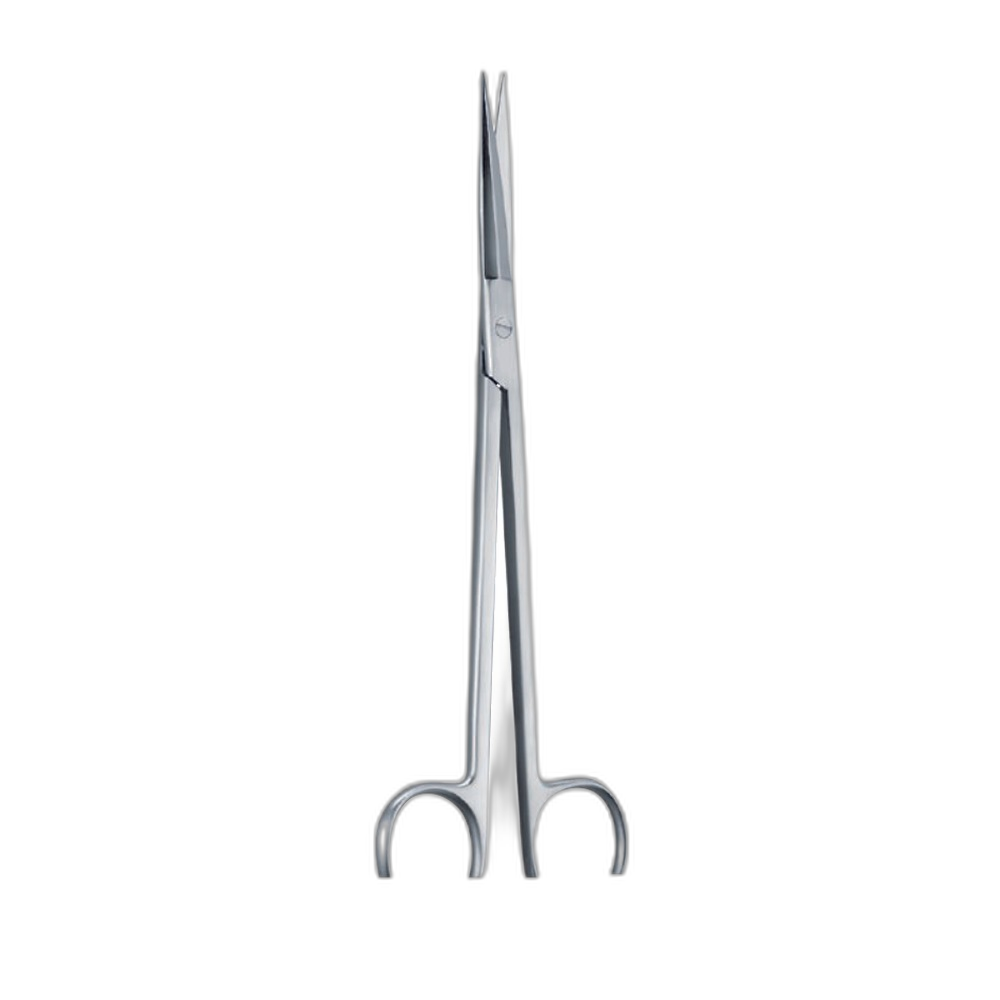
- Potts-Smith scissors — angled 25°–60° for precise arteriotomy, opening a vessel without lifting the far wall.
Needle Holders
Suturing coronary anastomoses uses 6-0 to 8-0 suture on fine needles, so the needle holders are correspondingly delicate:
- Castroviejo needle holder — spring-handle micro holder for the finest anastomotic work, covered in our Castroviejo needle holder guide.
- Ryder / Crile-Wood needle holders with tungsten carbide inserts for slightly heavier vascular suture.
- Jacobson microvascular needle holder for microvascular and small-calibre vessels.
Suction and Cannulation Accessories
Between the clamps and the needle holders sits a set of quieter but essential tools. Aortic and venous cannulae connect the patient to cardiopulmonary bypass, held by tube-occluding clamps and secured with purse-string sutures placed using fine forceps and needle holders. A coronary suction and a cardiotomy sucker keep the anastomotic field bloodless without traumatising vessel edges. A vent decompresses the left ventricle. Each of these passes through the same atraumatic-quality filter as the clamps: anything that touches endothelium must not damage it.
Handling and Inspection Between Cases
Atraumatic instruments are only atraumatic while their working surfaces are intact. A DeBakey forceps with a bent tip no longer aligns its serrations and starts to shear rather than hold. A vascular clamp with a sprung ratchet under-occludes and leaks. Because these faults are invisible at a glance, cardiac sets demand disciplined inspection: tip alignment on every forceps and needle holder, jaw closure and ratchet function on every clamp, and edge condition on every scissor, checked under magnification before the tray is reassembled.
This is also why fine cardiac instruments are kept on dedicated stringers and protected tip guards through cleaning and sterilisation — a single knock against a heavier instrument in a wash tray can end a micro needle holder’s working life.
Closure Instruments
The sternum is reapproximated with stainless sternal wire (typically No. 5 or 6), passed around or through the sternal halves. A wire twister tensions each wire and a wire cutter trims the twisted ends. Heavy needle holders and standard soft-tissue instruments then close the fascia and skin.
A Practical Instrument Checklist
| Category | Core instruments |
|---|---|
| Sternal access | Sternal saw, Finochietto sternal retractor, Rultract, bone rongeur |
| Exposure | Internal mammary retractor, vein retractors, pericardial well suction |
| Forceps | DeBakey (multiple lengths), fine adventitia forceps |
| Clamps | Aortic cross-clamp, Satinsky, bulldog clamps, tube-occluding clamps |
| Scissors | Metzenbaum, Potts-Smith angled, suture scissors |
| Needle holders | Castroviejo, Ryder, Jacobson |
| Closure | Sternal wire, wire twister, wire cutter, heavy needle holders |
Why Steel Grade Defines a Cardiac Set
Cardiac instruments split cleanly into two material worlds. The bone-cutting and retracting instruments are hardened martensitic stainless (AISI 410/420) for edge retention and rigidity. The atraumatic vascular instruments favour finer-grained, corrosion-resistant steels finished to a satin, non-glare surface — glare off a polished jaw is a genuine problem under bright OR lights working on a moving target.
Whichever grade, cardiovascular instruments must be manufactured to ISO 7153-1 material standards under an ISO 13485 quality system, then passivated to build the chromium-oxide layer that resists the pitting corrosion repeated autoclaving would otherwise cause. Atraumatic jaw geometry is the other half of the equation — a “DeBakey” clamp with slightly wrong serration depth stops being atraumatic and starts damaging intima.
Building or Auditing a Cardiac Tray
If you are specifying a cardiothoracic set, resist the temptation to judge it by instrument count. A 150-piece tray with imprecise clamp serrations is worse than a lean tray of correctly made instruments. Focus on three things: verified steel grade and passivation, atraumatic jaw geometry on every vascular instrument, and consistent tip alignment across the fine needle holders and forceps.
Frequently Asked Questions
What are the most essential cardiovascular surgery instruments?
The core set includes a sternal saw and sternal retractor for access; DeBakey forceps, aortic cross-clamp, Satinsky clamp, and bulldog clamps for atraumatic vascular control; Metzenbaum and Potts-Smith scissors; Castroviejo and Ryder needle holders for anastomoses; and sternal wire with a twister and cutter for closure.
Why are DeBakey instruments used in cardiac surgery?
DeBakey forceps and clamps have fine longitudinal serrations rather than sharp teeth, so they grip vessel wall securely without puncturing the delicate inner intimal layer. This atraumatic hold is essential when handling the aorta, coronary vessels, and vein grafts.
What is the difference between an aortic cross-clamp and a Satinsky clamp?
An aortic cross-clamp fully occludes the ascending aorta to arrest flow during cardioplegia. A Satinsky, or partial-occlusion clamp, takes only a bite of the aortic wall so a side anastomosis can be sewn while blood continues to flow through the vessel.
What steel are cardiac instruments made from?
Bone-cutting and retracting instruments use hardened martensitic stainless (AISI 410/420) for rigidity and edge retention. Atraumatic vascular instruments use finer corrosion-resistant steels with a satin, non-glare finish. All should meet ISO 7153-1 and be passivated for corrosion resistance.
How many instruments are in a cardiac surgery tray?
It varies widely by procedure and institution, from lean coronary bypass sets to large valve or aortic trays. Instrument count is a poor quality measure — correct steel grade, atraumatic jaw geometry, and precise tip alignment matter far more than raw piece count.
Sourcing a cardiothoracic set? Browse our surgical instruments range and confirm the standards behind them on our certifications page.
Need precision surgical instruments?
Configure complete instrument sets with our team — ISO 13485 certified, CE marked, made in Sialkot since 1980.
Related Guides
View all articles →
Where We Serve
Fizza Surgical exports to 50+ countries. Browse our country-specific pages with local regulatory guidance and pricing: