Electrosurgical Instruments: Monopolar vs Bipolar Forceps Guide
How monopolar and bipolar electrosurgical instruments differ: current path, thermal spread, safety risks, tip materials and reprocessing.
 Made in Sialkot · Since 1980
The decision is made a hundred times a day in every operating theatre, usually without discussion. Pencil or forceps. Pad on the thigh, or no pad at all.
| Monopolar | Bipolar | |
|---|---|---|
| Current path | Active tip → patient → return pad → generator | Tip 1 → tissue → tip 2 |
| Return electrode | Required (dispersive pad) | None |
| Typical power | 30–80 W | 15–40 W |
| Lateral thermal spread | 2–5 mm, variable | 0.5–2 mm |
| Can cut | Yes | Poorly (dedicated units only) |
| Works in fluid field | No | Yes |
| Safe with pacemakers | High caution | Preferred |
| Vessel sealing limit | ~2 mm | ~3 mm (up to 7 mm on advanced sealers) |
That table is the whole argument in miniature. What follows is why each row reads the way it does, and what it means for the instruments you buy.
Both Modes Run the Same Physics
Electrosurgical instruments do not cut or coagulate by being hot. There is no filament and no heating element — a bipolar forceps at rest is at room temperature.
The generator produces high-frequency alternating current, typically 300 kHz to 3 MHz. At those frequencies current passes through tissue without depolarising nerve or muscle, which is why the patient does not convulse. Heat comes from tissue’s own resistance to that current. Concentrate the current into a small enough area and the tissue at that spot heats fast enough to matter.
Current density is the entire game. The same 50 watts delivered through a needle tip vaporises cells; delivered through a 150 cm² return pad it raises the skin by a degree or two. Same current, same circuit — different area.
The waveform decides what the heat does:
- Cut — continuous, low voltage. Steady energy, tissue water flashes to steam, cells rupture along the tip. Clean division, minimal haemostasis.
- Coagulation — interrupted duty cycle around 6%, high voltage. Tissue heats and cools between bursts, so it dehydrates and the collagen denatures rather than exploding. Vessels seal.
- Blend — intermediate duty cycles, cutting with some haemostasis.
- Fulguration — high voltage coag held just off the surface, arcing across the gap for superficial eschar over a bleeding bed.
“Coag” being higher voltage than “cut” surprises people, and it is worth remembering: the coag setting carries the greater capacitive-coupling and insulation-failure risk in laparoscopy.
Monopolar: One Electrode and a Long Way Home
In monopolar the instrument holds only the active electrode. Current enters the patient at the tip, disperses through the body, and finds its way back to a dispersive pad — usually thigh or flank — and returns to the generator.
Because the return path is enormous compared to the tip, the entire thermal effect happens at the tip. That is what makes monopolar so versatile: cut, coag, blend, and fulgurate from one pencil, with power to spare for thick tissue.
Instruments in this family:
- Electrosurgical pencil — hand control or footswitch, taking interchangeable blade, needle, or ball tips
- Blade electrode — the workhorse; standard and extended lengths for deep cavities
- Needle electrode — highest current density, for fine dissection and dermatological work
- Ball electrode — 2 mm to 5 mm; low density, wide contact, for fulguration over a raw surface
- Loop and Colorado tips — excision and precision incision
- Monopolar hook and spatula (laparoscopic) — insulated shafts, 5 mm, 33–45 cm
The risks are all consequences of the current going somewhere you did not draw on the diagram.
Pad site burns happen when contact area drops — a peeling edge, a hairy site, a pad over bone or scar. Full contact on well-perfused muscle, and never over an implant.
Alternate site burns occur when the return path is interrupted and current exits through whatever else touches earth: an ECG electrode, a metal table edge, a limb touching the frame.
Capacitive coupling is the laparoscopic one. An insulated active electrode inside a metal cannula forms a capacitor. High-frequency current couples across the intact insulation into the cannula. If the cannula sits in a plastic anchor it cannot discharge to the abdominal wall, so it discharges into the first thing it touches — often bowel, out of view. Never mix metal cannulae with plastic threaded anchors.
Insulation failure is the mundane one. Shafts crack at flex points and pinholes appear from repeated autoclaving. A 1 mm defect concentrates the full output onto whatever it contacts. Inspect every insulated shaft before each case, and test with an insulation tester at reprocessing.
Direct coupling — activating while the tip touches another metal instrument, or a clip, energises that instrument along its length.
Bipolar: Both Electrodes in Your Hand
Bipolar puts the active and return electrodes on the two tips of a forceps. Current crosses only the tissue held between them. No pad. No transit through the patient.
Everything good about bipolar follows from that one change. Thermal spread stays close, typically 0.5 to 2 mm. Alternate site burns become impossible — there is no distant return. Capacitive coupling drops enormously because the circuit is closed at the tip. Patients with pacemakers, ICDs, or deep brain stimulators are far safer, because the current never crosses the chest.
It also works in a wet field. Monopolar in blood or irrigation loses current density and stops being predictable. Bipolar tips, gripping a vessel between them, still make a circuit. This is why it dominates in neurosurgery and arthroscopy.
Instruments in this family:
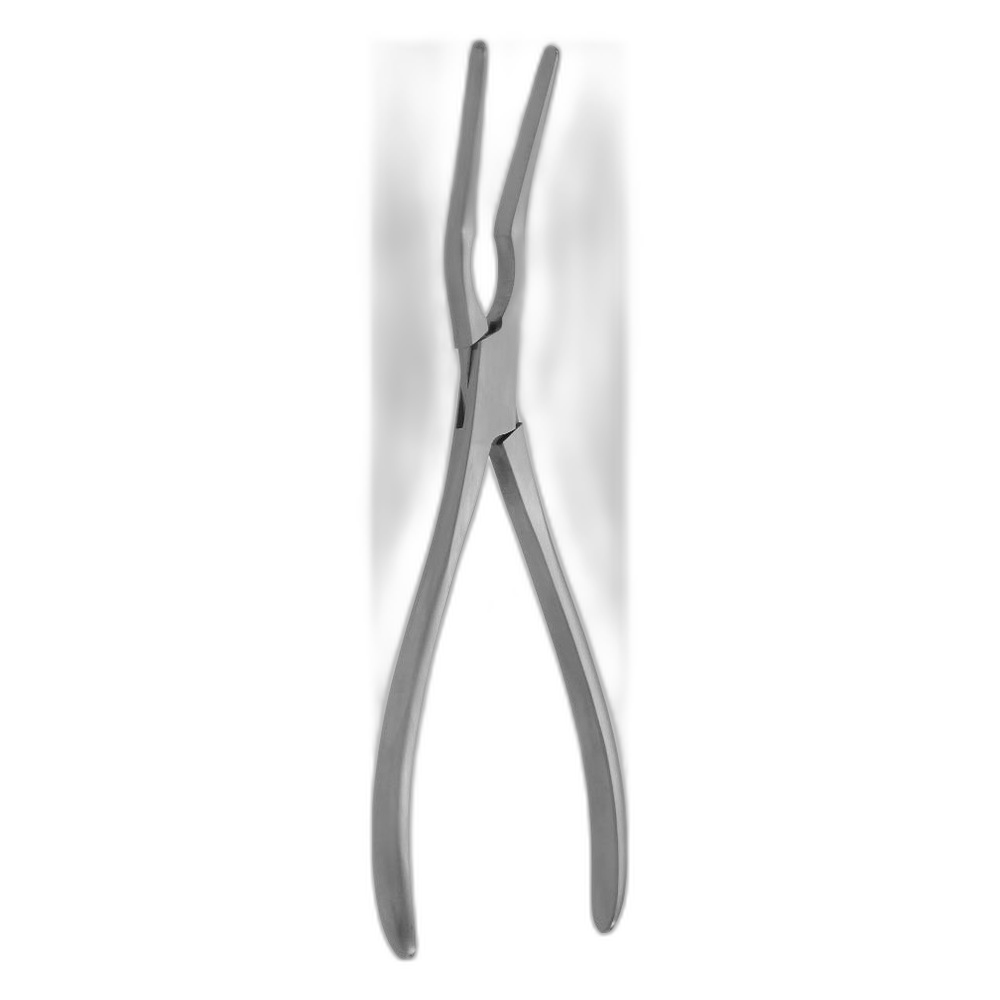
- Standard bipolar forceps — straight or bayonet, tips from 0.3 mm to 2 mm, lengths 11 cm to 24 cm
- Bayonet bipolar forceps — the offset keeps the hand out of the microscope’s line of sight; the neurosurgical default
- Non-stick bipolar forceps — silver alloy or titanium-nitride tip coatings that resist eschar adherence
- Irrigating bipolar forceps — integrated saline drip cools the tips and prevents sticking; standard in cranial work
- Bipolar scissors — coagulate and divide in one instrument
- Laparoscopic bipolar grasper (Maryland, fenestrated) — 5 mm, 33 cm and 45 cm
- Advanced vessel sealers — feedback-controlled units sealing to 7 mm
What bipolar does poorly is cut. Conventional bipolar coagulates; it does not divide tissue. Dedicated bipolar cutting exists but is not equivalent to a monopolar blade in bulk tissue. Bipolar is also slower on a wide raw surface — you are working millimetres at a time.
Tip sticking is the day-to-day irritation. Coagulum welds to the tips, tears the seal when you open the forceps, and re-starts the bleeding you just stopped. Non-stick tips and irrigation both address it. So does the lowest effective power setting — most sticking is over-coagulation.
Choosing in the Real Case
Reach for monopolar when you need speed through bulk tissue, when the skin incision and subcutaneous dissection need to move, when fulgurating a broad oozing bed — a raw liver surface after cholecystectomy — or when cutting is the point.
Reach for bipolar when the structure you must not injure is within a few millimetres of the vessel you must seal. Every one of these is a bipolar case:
- Recurrent laryngeal nerve during a thyroidectomy
- Cortical vessels on the brain surface
- Ureter during pelvic dissection
- Facial nerve in parotid surgery
- Any patient with a cardiac implantable device
- Digits, penis, and other structures on a narrow vascular pedicle, where monopolar current concentrating through a tissue bridge is a genuine risk
Most operations use both, and the surgeon swaps as the anatomy tightens.
Materials and Construction
Bipolar tips need conductivity and a fine, durable point. Common choices:
| Tip material | Property | Trade-off |
|---|---|---|
| Stainless steel (AISI 420) | Durable, economical, holds tip geometry | Sticks more readily |
| Silver alloy | Highest conductivity, minimal sticking | Softer, tips deform |
| Titanium | Light, non-magnetic, biocompatible | Higher cost |
| Titanium-nitride coated | Non-stick over a steel core | Coating wears at the tip |
Insulation on laparoscopic shafts is normally PTFE, PFA, or a medical-grade nylon, and it has to survive 134°C steam repeatedly without embrittlement. Bipolar cables are the component nobody thinks about until they fail — flex fatigue at the strain relief is the usual mode.
Our bipolar forceps are produced in both bayonet and straight patterns from 11 cm to 24 cm, tips from 0.3 mm, with plain stainless and non-stick options, under ISO 13485:2016 and CE marking. Reusable monopolar hooks, spatulas, and pencil tips are available across the standard laparoscopic lengths.
Reprocessing — What Kills Electrosurgical Instruments
These fail differently from mechanical instruments.
Do not scrape the tips. Wire brushes and blades take the non-stick coating off and score the steel, which makes sticking worse permanently. Soak and wipe with a soft pad.
Inspect insulation every cycle. Run a fingertip and an eye down the full shaft, both sides, flexing gently. Any crack, bubble, softening or discolouration and the instrument goes out of service. Insulation testers are inexpensive relative to a bowel injury.
Do not coil cables tightly. Loop them loosely and never wrap them around the instrument.
Check tip alignment on bipolar forceps. The two tips must meet accurately. Bent or crossed tips give an unpredictable current path and inconsistent seals. Check against a light source; a sprung forceps is worse than useless.
Standard cleaning practice for insulated instruments follows the same enzymatic and ultrasonic sequence as the rest of the tray — see our notes on instrument care and reprocessing — with the one addition that insulated shafts must be fully dry before storage, since trapped moisture under a lifting insulation edge accelerates the failure.
Specifications at a Glance
| Parameter | Monopolar | Bipolar |
|---|---|---|
| Operating frequency | 300 kHz – 3 MHz | 300 kHz – 1 MHz |
| Typical cut power | 30–80 W | Not standard |
| Typical coag power | 30–60 W | 15–40 W |
| Peak voltage (coag) | Up to 9,000 V | Typically under 500 V |
| Laparoscopic shaft | 5 mm × 33/45 cm | 5 mm × 33/45 cm |
| Open forceps length | — | 11–24 cm |
| Tip widths | Needle to 5 mm ball | 0.3–2.0 mm |
| Sterilisation | Steam 134°C, 4 min (check cable rating) | |
Frequently Asked Questions
Can bipolar forceps be used without a return pad?
Yes — that is the defining feature. Both electrodes are on the forceps tips and the circuit closes across the tissue held between them. No dispersive pad is applied, which is exactly why alternate site burns cannot occur.
Which mode is safer for a patient with a pacemaker?
Bipolar, clearly. The current stays between the tips instead of crossing the torso, so it will not be sensed as cardiac activity or reprogramme the device. If monopolar is unavoidable, keep the pad so the current path avoids the chest, use short bursts at the lowest effective power, and coordinate with cardiology beforehand.
Why do my bipolar tips keep sticking?
Usually power set too high — the tissue is being desiccated past the point of a good seal and the coagulum welds on. Drop the setting until you get a seal without charring. Beyond that: irrigating forceps, a non-stick tip finish, and cleaning tips between applications with a wet gauze rather than scraping.
What size vessel can bipolar coagulation seal?
Conventional bipolar forceps reliably seal vessels up to roughly 2–3 mm. Advanced feedback-controlled vessel sealing systems extend that to about 7 mm. Anything larger should be ligated or clipped — energy alone is not appropriate for a major named vessel.
Is capacitive coupling a real risk or a theoretical one?
Real, and specific to laparoscopy. The classic setup is a metal cannula held in a plastic anchor: the cannula picks up coupled current from the insulated active electrode inside it and has no path to the abdominal wall, so it discharges into whatever tissue it touches — often outside the camera’s view. Do not mix metal cannulae with plastic anchors, use the lowest workable power, favour cut over coag waveform, and keep activation bursts short.
Need precision surgical instruments?
Configure complete instrument sets with our team — ISO 13485 certified, CE marked, made in Sialkot since 1980.
Related Guides
View all articles →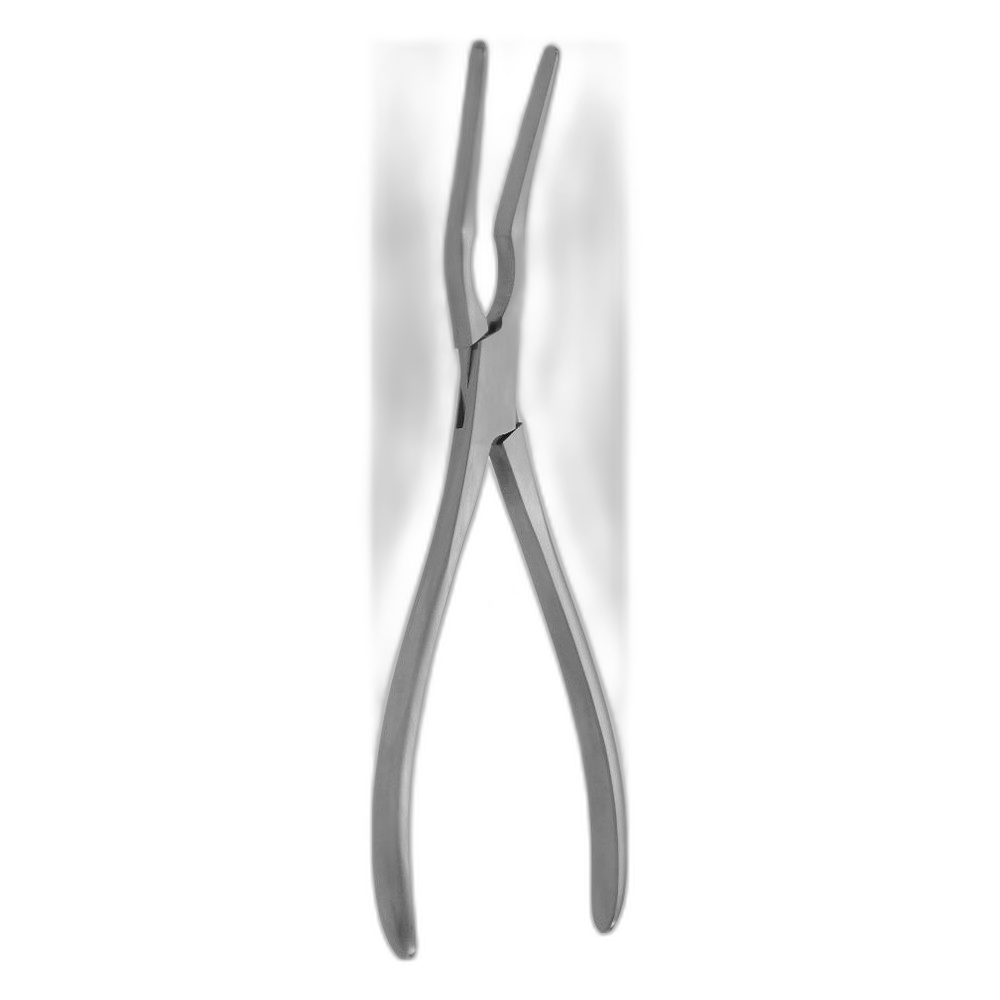

Where We Serve
Fizza Surgical exports to 50+ countries. Browse our country-specific pages with local regulatory guidance and pricing: