Bookwalter Retractor System: Setup, Components & Surgical Applications
Bookwalter retractor system explained: ring, ratchets, blades and arm components, step-by-step setup, and where this table-mounted system fits in surgery.
 Made in Sialkot · Since 1980
When a Balfour or a pair of handheld blades runs out of reach — a morbidly obese abdomen, a deep pelvic dissection, a liver transplant that will run six hours — surgeons reach for a table-mounted ring system. The Bookwalter is the reference design in that class.
Unlike a frame retractor that rests on the patient, the Bookwalter anchors to the operating table and builds a rigid ring above the wound. Independent blades hang from that ring at any angle and depth, each locked by its own ratchet. The effect is a fully customisable, rock-steady cage of exposure that no number of assistants could match by hand.
The Five Core Components
A Bookwalter set is modular by design. Five element groups combine into a setup tailored to the case in front of you.
| Component | Function | Typical Options |
|---|---|---|
| Table post & clamp | Anchors the whole system to the OR table rail | Single horizontal post with rail clamp |
| Flexible arm (segmented) | Links the post to the ring; locks rigid with one nut | Standard and extended lengths |
| Retractor ring | The fixed frame blades attach to | Oval, round, “C” and kidney rings; multiple diameters |
| Ratchet mechanisms | Hold each blade and let it be tensioned independently | Clip onto the ring anywhere around its circumference |
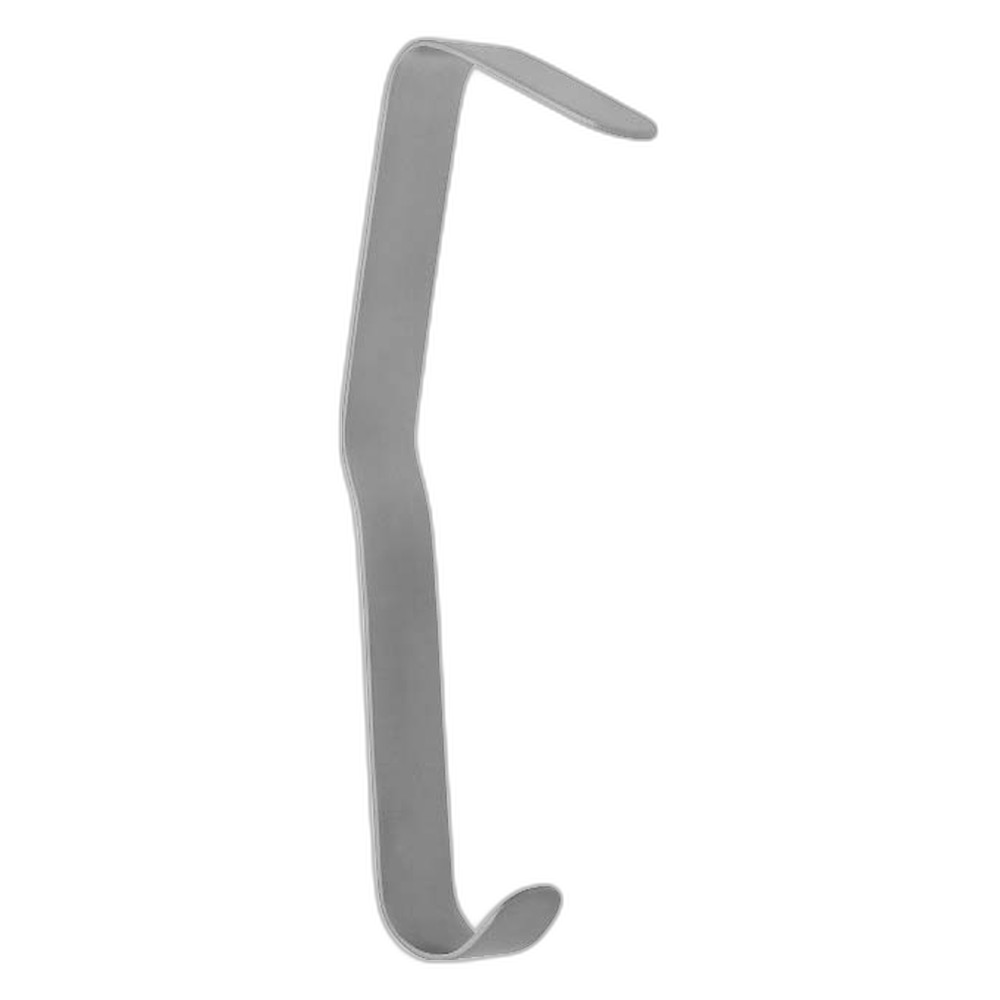
| Blades | Do the actual retracting | Malleable, Kelly, Balfour-style, bladder, Mayo — many widths and depths |
Because the ratchets clip anywhere on the ring and blades come in dozens of profiles, the same kit covers a shallow pelvic case and a deep upper-abdominal one. That flexibility is the whole point of a modular retractor system.
Step-by-Step Setup
Setup order matters. Build from the table outward, and never tension blades before the ring is locked.
- Mount the post. Clamp the horizontal post to the table rail on the surgeon’s preferred side, clear of the prep field.
- Attach the flexible arm to the post but leave its locking nut loose.
- Position the ring over the open wound at a height that clears the abdominal wall, then lock the flexible arm rigid.
- Clip on the ratchets where blades are needed — usually four to six around the wound.
- Seat each blade under a wound edge, hook it into its ratchet, and tension it independently.
- Balance the pull. Work opposing blades in pairs so the wound opens symmetrically rather than dragging to one side.
The discipline that separates a clean Bookwalter setup from a messy one is symmetry: tension opposing blades a little at a time rather than fully deploying one side first.
Where the Bookwalter Earns Its Keep
This is not an everyday laparotomy tool — it is reserved for cases where exposure is the limiting factor.
- Urology: radical prostatectomy, cystectomy, and nephrectomy, where deep pelvic or retroperitoneal access must stay fixed for hours.
- Transplant & hepatobiliary: renal and liver transplantation, major hepatic resection.
- Complex gynecologic oncology: the “Magrina” gynecologic variant is built for radical pelvic dissection.
- Bariatric and high-BMI general surgery: where the abdominal wall thickness defeats frame retractors.
For routine open cases, a Balfour self-retaining retractor is faster to deploy and entirely adequate. The Bookwalter is the answer specifically when depth, duration, or patient size exceed what a frame can hold.
Blade Selection Logic
Blades are chosen by tissue and depth, not habit. A few rules of thumb:
- Malleable blades bend to the contour you need — useful against an irregular wound or to protect a viscus.
- Kelly and Richardson-style blades hold a defined abdominal-wall layer at a fixed right angle.
- Deep bladder blades reach the pelvic floor in prostatectomy and radical pelvic work.
- Width follows wound length; depth follows abdominal-wall thickness plus the distance to the target organ.
A well-stocked system carries each blade in three or four widths and two or three depths, all interchangeable on the same ratchets.
Materials, Tolerances and Reprocessing
Every load-bearing part — post, arm segments, ring and ratchets — is forged from hardened 410/420 stainless steel; blades are typically 304 or 316L for corrosion resistance and a degree of malleability. The flexible-arm joints are the critical wear point: each segment must lock dead rigid under a single nut and stay rigid for the whole case. We test that lock to full cantilever load on every arm we build, under our ISO 13485 system and to ISO 7153-1 tolerances (see our certifications).
Reprocessing a Bookwalter is a CSSD project, not a quick wipe. Every set should break down completely — ring, ratchets, blades, arm, post — for individual cleaning, with a dedicated sterilization box that keeps the dozens of small ratchets organised and counted. A lost ratchet renders a whole blade position useless mid-case.
Buying and Compatibility Notes
Two practical points for procurement. First, ring shape drives blade reach: an oval ring suits a midline laparotomy, while “C” and kidney rings open one side for limb or flank access. Second, confirm ratchet-to-ring compatibility — rings and ratchets must come from a matched system, because tolerances on the clip interface are not universal across makers.
Hospitals building a complete OR inventory usually pair the ring system with the specialty trays it serves; our general surgery instrument set guide shows how the pieces fit a full procurement list.
Configurations by Procedure
The Bookwalter is defined by how it is built for each case. Three representative setups show the range.
| Procedure | Ring | Typical Blades | Notes |
|---|---|---|---|
| Radical prostatectomy | Oval, smaller | Deep bladder + 2 malleable | Deep pelvic reach; protect bladder neck |
| Liver transplant / hepatic resection | Large oval or “C” | Wide Kelly + costal-margin blades | Upward costal retraction is the priority |
| Bariatric / high-BMI laparotomy | Large round | Extra-deep solid blades | Blade depth must exceed wall thickness |
| Gynecologic oncology (Magrina) | Specialty pelvic | Deep pelvic + lateral | Radical pelvic dissection |
The constant across all of them is that blade depth tracks the distance from skin to target organ, while ring shape tracks the direction exposure is needed. A “C” ring leaves one quadrant open for a costal-margin or flank approach; a full oval ring suits a symmetrical midline. Getting these two choices right before scrubbing saves a frustrating reconfiguration mid-case.
Common Setup Mistakes
A ring system is unforgiving of shortcuts. The errors that cost time and exposure:
- Tensioning blades before the flexible arm is locked. The ring shifts and every blade has to be reset. Lock the arm rigid first, always.
- Mounting the ring too low. If the ring sits close to the abdominal wall the blades cannot angle properly; keep it high enough to clear the wall fully.
- Deploying one side fully, then the other. This drags the wound off-axis. Tension opposing blades a little at a time.
- Over-retraction against the costal margin or psoas. Prolonged heavy traction risks neuropraxia and abdominal-wall ischaemia; back off blades you are not actively using.
- Skipping the component count. With dozens of small ratchets, a missing piece must be found before closing.
The discipline of building from the table outward — post, arm, ring, ratchets, blades — and balancing tension in pairs is what makes the difference between a stable cage of exposure and a setup that fights the surgeon all case.
Bookwalter vs. Other Ring Retractor Systems
The Bookwalter is one of several table-mounted systems, and procurement teams should understand where it sits.
- vs. a Balfour frame: the Balfour rests on the patient and works in one plane; the Bookwalter anchors to the table and retracts in any direction at any depth. The frame is faster; the ring is far more capable.
- vs. flexible-arm “octopus” systems: some competitors use multiple independent flexible arms instead of a single rigid ring. The rigid ring gives more predictable, higher-load stability for the deepest cases.
- vs. handheld retraction: a Deaver or Richardson blade still has a role for dynamic, momentary retraction the ring cannot provide — the two approaches are complementary, not exclusive.
The decision rule is duration and depth. For a case under an hour at moderate depth, a frame or handheld blades win on speed. When exposure must hold rock-steady for hours at the bottom of a deep field, the ring system pays back its longer setup many times over.
Frequently Asked Questions
What is a Bookwalter retractor used for?
It delivers fixed, table-anchored, hands-free retraction for deep and long open procedures — radical prostatectomy, cystectomy, nephrectomy, liver and kidney transplant, major hepatic resection, and complex gynecologic oncology. Its rigidity and independent blades suit cases where exposure must hold for hours.
How is a Bookwalter different from a Balfour?
The Balfour is a self-contained frame that rests on the patient and spreads the abdominal wall in one plane. The Bookwalter anchors to the table and builds a rigid ring carrying many independent blades at any angle or depth — far more versatile and stable, but slower to set up.
What are the main parts of a Bookwalter system?
A table post and rail clamp, a segmented flexible arm, the retractor ring, clip-on ratchet mechanisms, and a range of interchangeable blades. The arm locks the ring rigid; the ratchets tension each blade independently around the ring.
Why does a Bookwalter need a sterilization box?
The set contains dozens of small ratchets and blades that must be tracked, organised and counted. A dedicated container keeps the components from being lost during reprocessing and supports the surgical count that prevents retained items.
Fizza Surgical produces Bookwalter-compatible rings, ratchets, posts, arms and the full blade range to order. Explore the catalogue in our surgical instruments collection.
Need precision surgical instruments?
Configure complete instrument sets with our team — ISO 13485 certified, CE marked, made in Sialkot since 1980.
Related Guides
View all articles →
Where We Serve
Fizza Surgical exports to 50+ countries. Browse our country-specific pages with local regulatory guidance and pricing: