Richardson Retractor: Uses in Open Abdominal & Pelvic Surgery
The Richardson retractor holds the abdominal wall open in laparotomy and C-section. Blade sizes, uses, technique, and quality checks covered.
 Made in Sialkot · Since 1980
What holds the abdominal wall open during a laparotomy while the surgeon works two layers deeper? In most open abdominal and pelvic cases, the answer is a Richardson retractor in an assistant’s hand. It is the instrument that turns a closed cavity into a workable field — and getting the blade size right is the difference between clear exposure and a fight.
This guide covers how the Richardson is built, the blade sizes that matter, the procedures that depend on it, and how to tell a good one from a copy that bends under load.
Anatomy of the Instrument
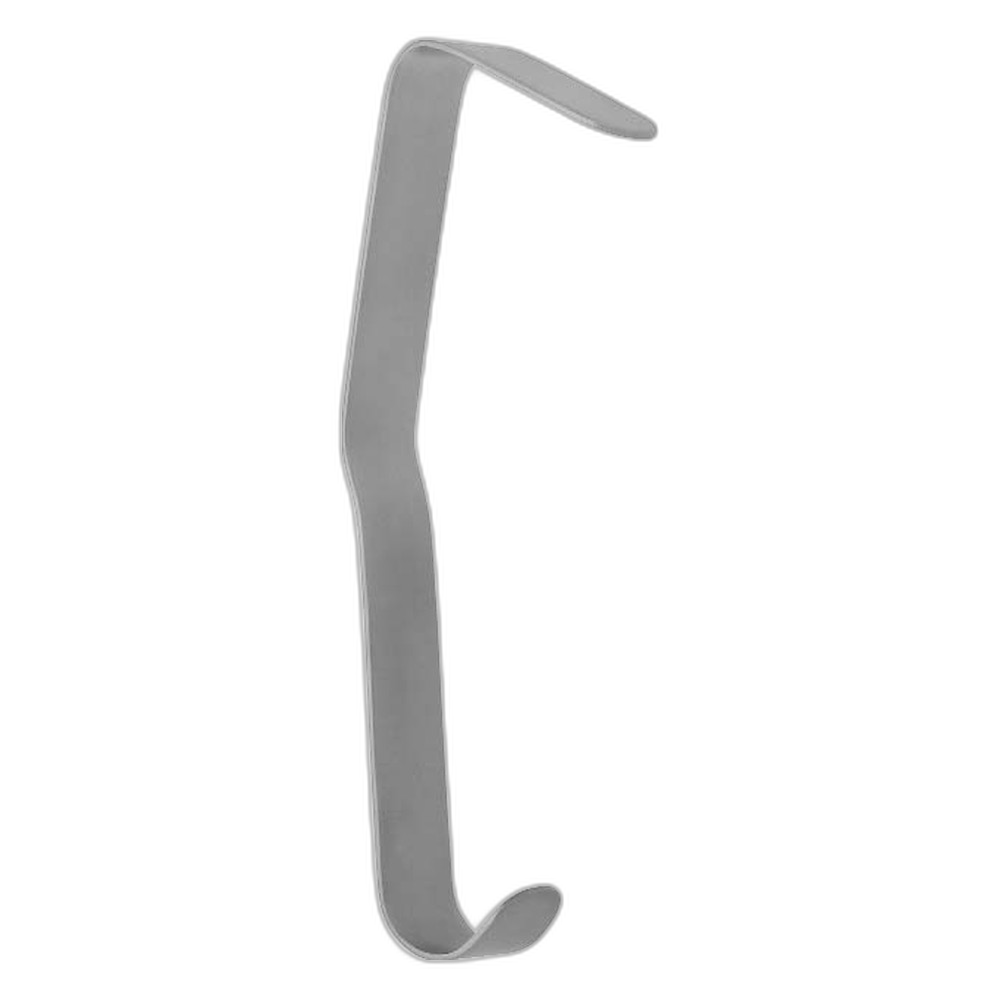
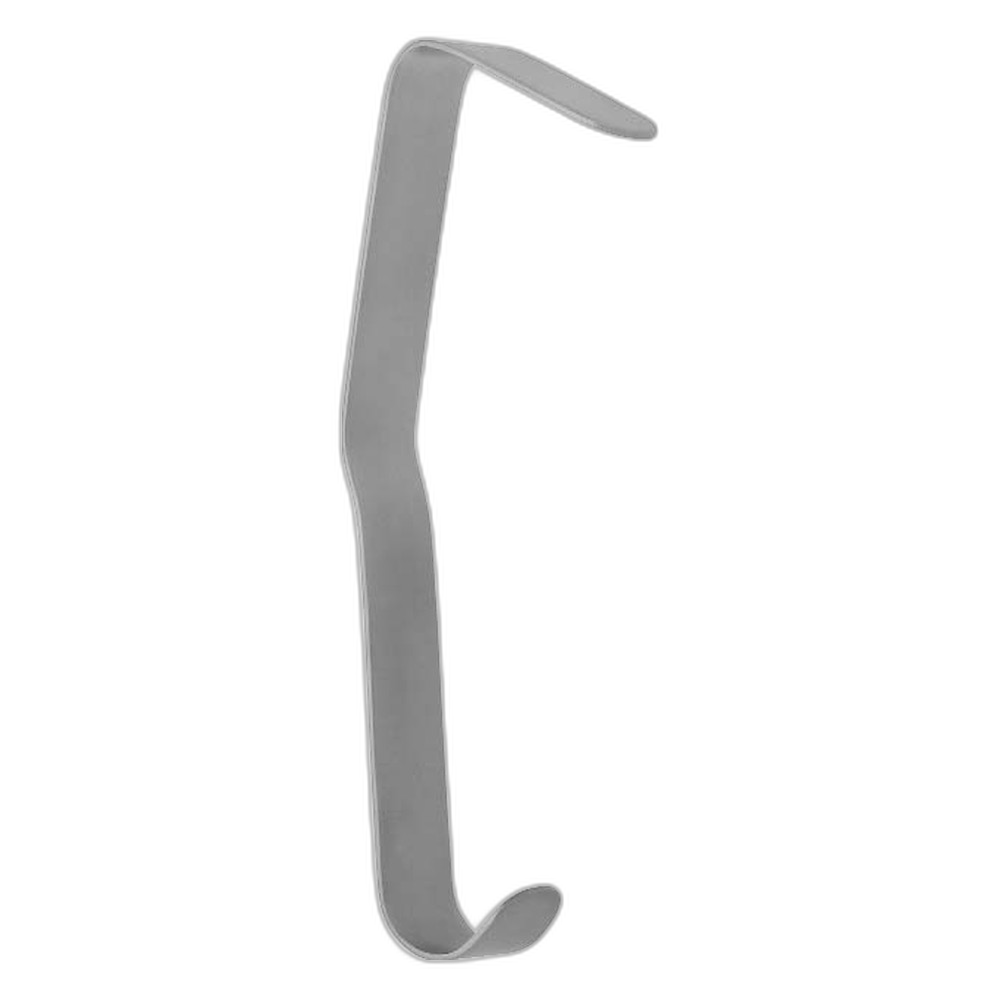
The Richardson is a handheld retractor with an L-shaped working end: a flat blade set at a right angle to a sturdy shaft, finished with a hooked lip at the blade tip. The lip is the key feature — it catches under the cut edge of the abdominal wall or fascia so the blade transmits pull without sliding off the tissue.
The handle is broad and often hollow-ground or fenestrated to cut weight, because an assistant may hold steady retraction for the better part of an hour. Balance matters: a head-heavy retractor fatigues the hand and the field drifts. A well-made Richardson carries its weight toward the handle so the blade end stays where the surgeon set it.
Single-ended Richardsons are most common, but double-ended versions pair two blade depths on one shaft — a smaller blade at one end, a larger at the other — for cases where retraction depth changes as you go.
Single-Ended vs Double-Ended in Practice
The single-ended Richardson is the default: one optimised blade, a comfortable handle, predictable balance. The double-ended version trades a dedicated handle for a second blade, which sounds efficient but changes how it feels in the hand — there is no broad grip, so an assistant holding long retraction tires faster. Most teams keep single-ended Richardsons in graduated sizes and reach for the double-ended only when space on the tray is tight or the case genuinely shifts depth mid-procedure. If you are buying for a busy general OR, a graduated set of single-ended blades usually serves better than a stack of double-ended ones.
Blade Sizes and How to Choose
Blade dimensions are where this instrument lives or dies. Too narrow and the wall keeps folding into the field; too wide and you over-stretch tissue and crowd the surgeon’s hands. The choice tracks the size of the patient and the depth of the cavity.
| Blade size (W × depth) | Tissue depth | Typical case |
|---|---|---|
| 13 × 25 mm | Superficial / pediatric | Small or thin-walled patients, shallow pelvic work |
| 20 × 25 mm | Moderate | Hernia repair, cholecystectomy, confined pelvic fields |
| 25 × 32 mm | Standard abdominal | General laparotomy, bowel resection |
| 40 × 40 mm | Deep abdominal | Major laparotomy, cesarean in larger patients |
| 50 × 50 mm | Very deep / large patient | Obese abdomen, wide exploratory exposure |
A practical approach: match blade depth to the thickness of the wall you are retracting, and blade width to how much of the wound edge you need to hold at once. Many trays carry a graduated set — narrow, medium, wide — so the assistant can swap as the dissection deepens.
Procedures That Rely on the Richardson
The Richardson is a fixture of open abdominal and pelvic surgery. Its job is to hold the abdominal wall and superficial-to-mid layers clear while deeper instruments take over below.
General and GI surgery
In exploratory laparotomy, bowel resection, and appendectomy through an open approach, the Richardson holds the wall while the surgeon works the cavity. It is a standard component of an open general surgery instrument set.
Obstetrics and gynecology
During cesarean section it retracts the wall for access to the lower uterine segment; in hysterectomy and ovarian surgery it isolates the operative field. It frequently works alongside deeper blades — once the cavity is open, a Deaver retractor takes over the deep pelvic retraction the Richardson is too short for.
Hernia and pelvic repair
Narrower blades suit the confined fields of inguinal hernia repair and lower pelvic work, where a wide blade would simply be in the way.
Technique and Ergonomics
The Richardson rewards good technique and punishes bad. Hook the lip under the cut edge of the wall and pull along the plane the surgeon needs opened — usually outward and slightly upward, not straight vertical. Pulling straight up tents the wall, raises intra-abdominal pressure against the assistant, and narrows the field. A shallow outward angle holds the wall back where it belongs.
Tension should be steady and continuous. The assistant’s job is to become a fixed point, not to follow the surgeon’s hands around the field. When the dissection deepens past the blade’s reach, that is the cue to swap up a blade size or hand off to a deeper instrument rather than pulling harder on a blade that has run out of depth — extra force at that point just stretches the wall and fatigues the hand without improving exposure.
On long cases, brief releases matter. Sustained edge pressure on the abdominal wall causes traction discomfort and, over hours, can bruise the wall musculature. A few seconds of release when the surgeon pauses is good practice, not lost time.
Common Mistakes
- Wrong blade for the depth — a short blade in a deep wall folds the field back in; the fix is a deeper blade, not more pull.
- Pulling vertically — tents the wall and works against the assistant. Pull outward along the plane.
- Re-bending a bent blade — work-hardens the steel and seeds a crack. Retire it instead.
- Skipping the lip check — a flattened or chipped lip slides off the wound edge mid-case and forces constant repositioning.
The Richardson Among Other Abdominal Retractors
It helps to know where the Richardson stops and another instrument starts:
- Richardson — workhorse for the abdominal wall and mid-depth retraction; right-angle blade with a hooked lip.
- Deaver — a long, curved blade for deep retraction of organs once the cavity is open; reaches where the Richardson cannot.
- Army Navy — shorter and lighter, for superficial layers and the opening stages.
- Self-retaining frames — for cases needing sustained hands-free retraction across a wide field.
Our surgical retractor types guide lays out the full hierarchy if you are assembling a tray from scratch.
Material, Build, and Quality Checks
A surgical-grade Richardson is forged from AISI 410 or 420 martensitic stainless under ISO 7153-1, hardened so the blade resists flexing under sustained pull. Flex is the enemy here: a blade that springs under load lets the wall creep back into the field and forces the assistant to pull harder, accelerating fatigue.
Three checks before you accept any Richardson:
- Blade rigidity — press the blade against a firm surface; it should not visibly flex.
- Lip integrity — the hooked tip must be even and unbroken, or it will not catch the wound edge.
- Balance and finish — weight toward the handle, smooth edges that will not abrade gloves or tissue, and a satin finish to cut OR-light glare.
Steel grade underpins all of it; our breakdown of surgical stainless steel grades explains why the alloy and heat treatment matter more than the surface finish.
Care and Sterilization
With no hinge or moving parts, the Richardson is simple to maintain. Clean the blade and the hooked lip thoroughly — dried blood collects under the lip — inspect for any bend or burr, and steam-sterilize per your CSSD protocol. A bent blade should be retired, not bent back; re-bending work-hardens the steel and invites a crack under the next load.
Frequently Asked Questions
What is a Richardson retractor used for?
It holds the abdominal wall and mid-depth tissue layers open during open abdominal and pelvic surgery — laparotomy, bowel resection, cesarean section, hysterectomy, and hernia repair.
What blade size should I choose?
Match blade depth to wall thickness and width to how much wound edge you need to hold. Narrow blades (13–20 mm) suit pelvic and hernia work; wide blades (40–50 mm) suit deep or large-patient laparotomy.
What is the difference between a Richardson and a Deaver retractor?
The Richardson has a right-angle blade with a hooked lip for the abdominal wall and mid-depth retraction. The Deaver has a long curved blade for deep organ retraction once the cavity is open.
Is the Richardson self-retaining?
No. It is handheld, so an assistant maintains tension. Cases needing sustained hands-free exposure use a self-retaining frame retractor instead.
How do I check the quality of a Richardson retractor?
Confirm the blade does not flex under pressure, the hooked lip is even and unbroken, and the instrument balances toward the handle with smooth, non-abrasive edges.
Sourcing from Fizza Surgical
Fizza Surgical forges Richardson retractors in Sialkot from ISO 7153-1 stainless, single- and double-ended, across the full graduated blade-size range, each tested for blade rigidity before dispatch. All instruments are CE marked under ISO 13485:2016. Browse the surgical instruments catalogue or review our certifications for OEM and distributor enquiries.
Need precision surgical instruments?
Configure complete instrument sets with our team — ISO 13485 certified, CE marked, made in Sialkot since 1980.
Related Guides
View all articles →
Where We Serve
Fizza Surgical exports to 50+ countries. Browse our country-specific pages with local regulatory guidance and pricing: