Iris Scissors: Delicate Cutting for Ophthalmic & Microsurgery
Iris scissors guide: sizes, straight vs curved blades, steel grades, and uses across eye, plastic and microsurgery, with care and sterilization tips.
 Made in Sialkot · Since 1980
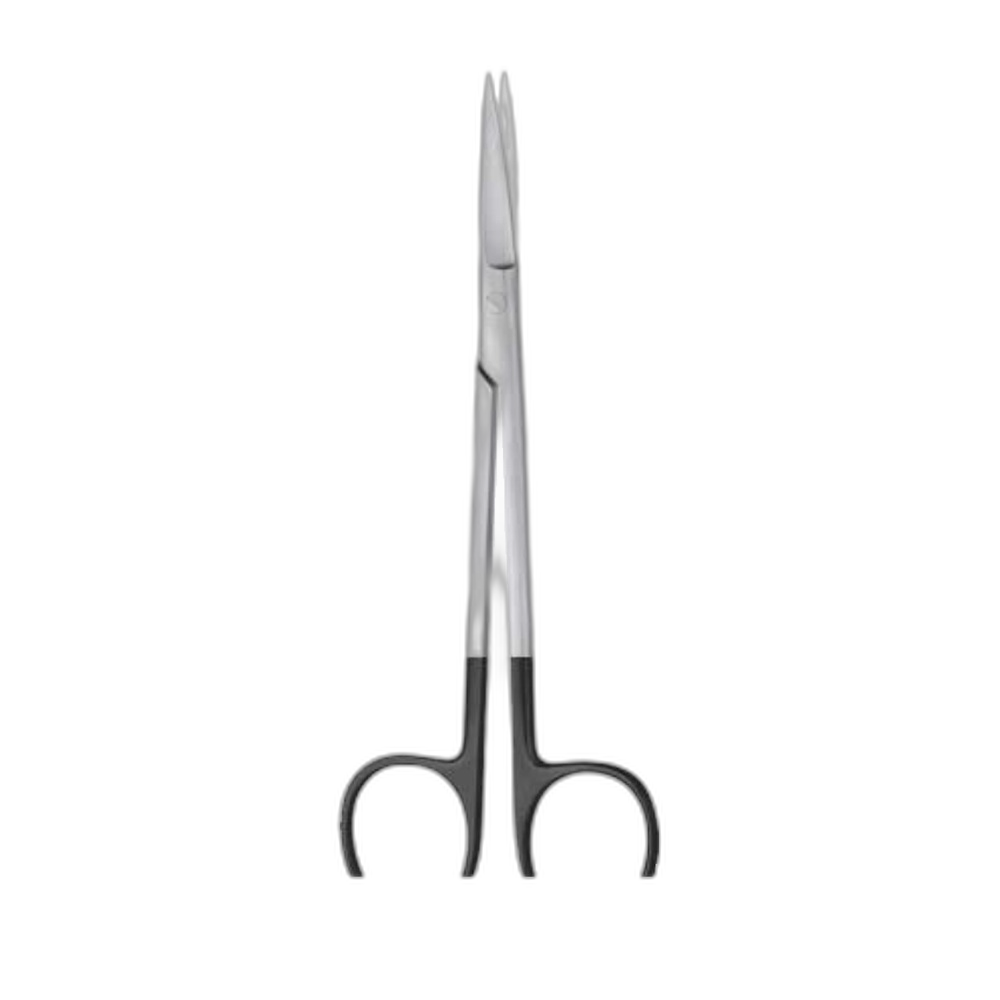
A standard iris scissor measures 11 cm overall, with a blade length of roughly 20-25 mm and a cutting edge that tapers to a point fine enough to trim a suture flush against tissue without lifting it. That combination of short blade and sharp tip is the whole reason the instrument exists. It was designed for iridectomy in the mid-19th century, and though the eye is no longer its only workplace, the geometry has barely changed.
Today you will find iris scissors on ophthalmic trays, plastic and reconstructive sets, dermatology carts, ENT kits, and any bench where fine dissection matters more than cutting force.
What Defines an Iris Scissor
Three features separate a true iris scissor from a general-purpose fine scissor:
- Short, sharp blades — both tips are sharp (sharp/sharp), unlike the sharp/blunt configuration of many suture scissors. The short blade gives the surgeon control at the tip rather than leverage at the pivot.
- Fine box or lap joint — most iris scissors use a screw-set lap joint that keeps the blades in close shear contact. A loose joint is the single most common reason a fine scissor starts to fold tissue instead of cutting it.
- Ring handles with no ratchet — free-running handles for continuous cutting motion.
Blades come straight or curved. Curved blades let you cut around a structure and keep the tips visible during dissection; straight blades are preferred for precise, in-line snips such as cutting a suture at the knot.
Material and Construction
A quality iris scissor is forged from martensitic stainless steel — typically AISI 420 or 410 grade — hardened to around 52-56 HRC so the cutting edge holds. The steel choice is a compromise: hard enough to keep an edge on delicate work, corrosion-resistant enough to survive repeated autoclave cycles. For an in-depth look at why grade selection matters, see our guide to stainless steel grades in surgery.
Tungsten carbide (TC) inserts are available on the premium end. A TC iris scissor carries gold-plated rings as a visual marker and a bonded carbide cutting edge that stays sharp far longer than a solid-steel blade. For a busy microsurgical practice the higher upfront cost usually pays for itself in reduced sharpening and replacement.
Common Iris Scissor Specifications
| Attribute | Typical Range | Notes |
|---|---|---|
| Overall length | 9 – 11.5 cm | 11 cm is the everyday standard |
| Blade length | 18 – 25 mm | Short blade = tip control |
| Blade profile | Straight or curved | Curved for dissection around structures |
| Tip configuration | Sharp/sharp | Both points sharp |
| Steel grade | AISI 410/420 | 52-56 HRC hardness |
| Edge option | Solid steel or TC insert | TC rings gold-plated |
Choosing Length and Blade Profile
Selection comes down to two decisions: how long, and straight or curved. The 11 cm pattern is the default for open fine work — long enough to hold comfortably in a ring grip, short enough to keep control at the tip. Shorter 9 cm versions suit shallow, close work such as eyelid and conjunctival surgery, where a longer blade would sit awkwardly. Longer 11.5 cm patterns give a little more reach into a wound without sacrificing the fine point.
For the blade profile, a simple rule holds: cut in a straight line with straight blades, cut around something with curved. Curved blades also keep the tips lifted and visible during dissection, which reduces the risk of catching underlying tissue. Many surgeons carry a curved pair for undermining and dissection and a straight pair for suture and in-line cuts, and switch between them without thinking. If your work is predominantly one or the other, buy for that; if it is mixed, buy both — the price difference is small against the time saved.
A left-handed surgeon should also confirm the ring handle and joint suit a left grip; true left-handed fine scissors exist, though most patterns are handed-neutral at this size.
Where Iris Scissors Earn Their Keep
In ophthalmic surgery, iris scissors handle conjunctival dissection, trimming iris tissue during iridectomy, and cutting fine sutures near the globe. The short blade lets the surgeon work millimetres from delicate structures.
In plastic and reconstructive work, they undermine skin edges, trim skin grafts, and dissect around small vessels and nerves. Dermatologists reach for them during excisions and flap procedures where a Mayo or Metzenbaum would be clumsy.
In microsurgery and vascular work, these scissors bridge the gap between general instruments and true spring-handle microscissors. When the task calls for angled cutting of a vessel wall rather than fine tissue snips, surgeons often switch to Potts-Smith scissors, which carry an angled blade built for arteriotomy.
They also appear far from any operating theatre — in laboratory dissection, veterinary microsurgery, and even electronics and craft work, where their fine point is prized. Instrument makers sell “iris scissor” patterns into all of these markets.
Telling Iris, Tenotomy and Stitch Scissors Apart
The confusion usually comes down to iris versus tenotomy versus stitch scissors. A tenotomy scissor has a similarly fine tip but longer, more slender blades for reaching into a wound. A suture (stitch) scissor is often sharp/blunt and heavier, built to cut material rather than tissue. The iris scissor sits between them: short, sharp on both tips, and optimised for cutting tissue precisely at the blade point.
Care, Sharpening and Sterilization
Fine tips bend and dull faster than any other part of the instrument, so handling discipline matters. Never use them to cut suture packaging, wire, or dressings — that is what heavy utility scissors are for. A single cut through a metal ligature clip can roll the edge and end the instrument’s useful life at the tip.
Clean immediately after use before blood and saline dry into the joint. Inspect the tips under magnification: they should meet cleanly with no gap and no overlap. Test the cut on a single-ply gauze or a thin latex strip — if the blades fold rather than shear the material, the joint needs adjustment or the edge needs regrinding.
Lubricate the joint with instrument milk after each cleaning cycle and before sterilization. Because these are delicate, precision instruments, they benefit from the dedicated protocols we cover in sterilization of microsurgical instruments — protected tip guards, careful tray positioning, and separation from heavier instruments during the wash cycle.
Store with tip protectors fitted. A loose iris scissor rattling against a Kelly clamp in a tray will not survive many trips through the CSSD.
Frequently Asked Questions
Are iris scissors only used for eye surgery?
No. They originated in ophthalmology for iridectomy, but today they are used across plastic surgery, dermatology, ENT, microsurgery, veterinary work, and laboratory dissection wherever fine, precise cutting is needed. The name reflects their history, not the limit of their use.
What is the difference between straight and curved iris scissors?
Straight blades are best for in-line cuts such as trimming a suture at the knot. Curved blades let you cut around a structure while keeping the tips in view, which is useful for dissecting near vessels or nerves. Most fine-surgery sets carry both.
Should I choose tungsten carbide iris scissors?
If your caseload involves frequent fine cutting, TC-insert scissors hold their edge far longer and reduce sharpening and replacement costs over time. They are identifiable by gold-plated ring handles. For occasional use, a well-made solid-steel iris scissor is perfectly adequate.
Why do my iris scissors fold tissue instead of cutting?
Almost always a loose joint or a dulled tip. Test on thin gauze under magnification. If the blades fold rather than shear, the lap joint needs tightening or the edge needs professional regrinding. Cutting non-tissue materials is the usual cause of premature tip damage.
Fizza Surgical manufactures iris scissors in straight and curved patterns, in both solid-steel and tungsten carbide edge options, forged from AISI 410/420 stainless and finished to CE and ISO 13485 standards. Browse our full range in the surgical instruments category.
Need precision surgical instruments?
Configure complete instrument sets with our team — ISO 13485 certified, CE marked, made in Sialkot since 1980.
Related Guides
View all articles →


Where We Serve
Fizza Surgical exports to 50+ countries. Browse our country-specific pages with local regulatory guidance and pricing: