Chest Drain Insertion Set: Thoracostomy Instrument Guide
Chest drain insertion instruments explained: the safe triangle tray, why the trocar was retired, forceps sizing, tube sizes and drainage systems.
Latissimus dorsi behind. Pectoralis major in front. The horizontal level of the nipple below, the axilla above. That quadrilateral — conventionally called the safe triangle — is the whole reason a chest drain tray looks the way it does.
The anatomy dictates the tray. Every choice among chest drain insertion instruments follows from it: access is through a narrow intercostal corridor with the neurovascular bundle running along the inferior border of the rib above, the long thoracic nerve and lateral thoracic artery sitting in the mid-axillary line, and the lung immediately beyond the parietal pleura. Every instrument on the tray exists either to open that corridor bluntly or to control what happens once it is open.
The Core Tray
A standard thoracostomy set is short — twelve to fifteen items — because the procedure rewards blunt technique over sharp dissection. What follows is the configuration we supply most often to emergency departments and thoracic units.
| Instrument | Typical spec | Function |
|---|---|---|
| Scalpel handle No. 3 | Standard, for No. 10 or 11 blade | Skin incision only |
| Large curved artery forceps (Roberts / Kelly) | 20–24 cm, curved | Blunt dissection through intercostal muscle; pleural breach |
| Second large curved forceps | 20–24 cm | Grips the tube tip to guide it through the tract |
| Spencer Wells forceps | 14–18 cm | Haemostasis at the incision |
| Toothed dissecting forceps | 15 cm, 1×2 teeth | Skin handling for suturing |
| Needle holder | Mayo-Hegar 16–18 cm | Anchor and closure sutures |
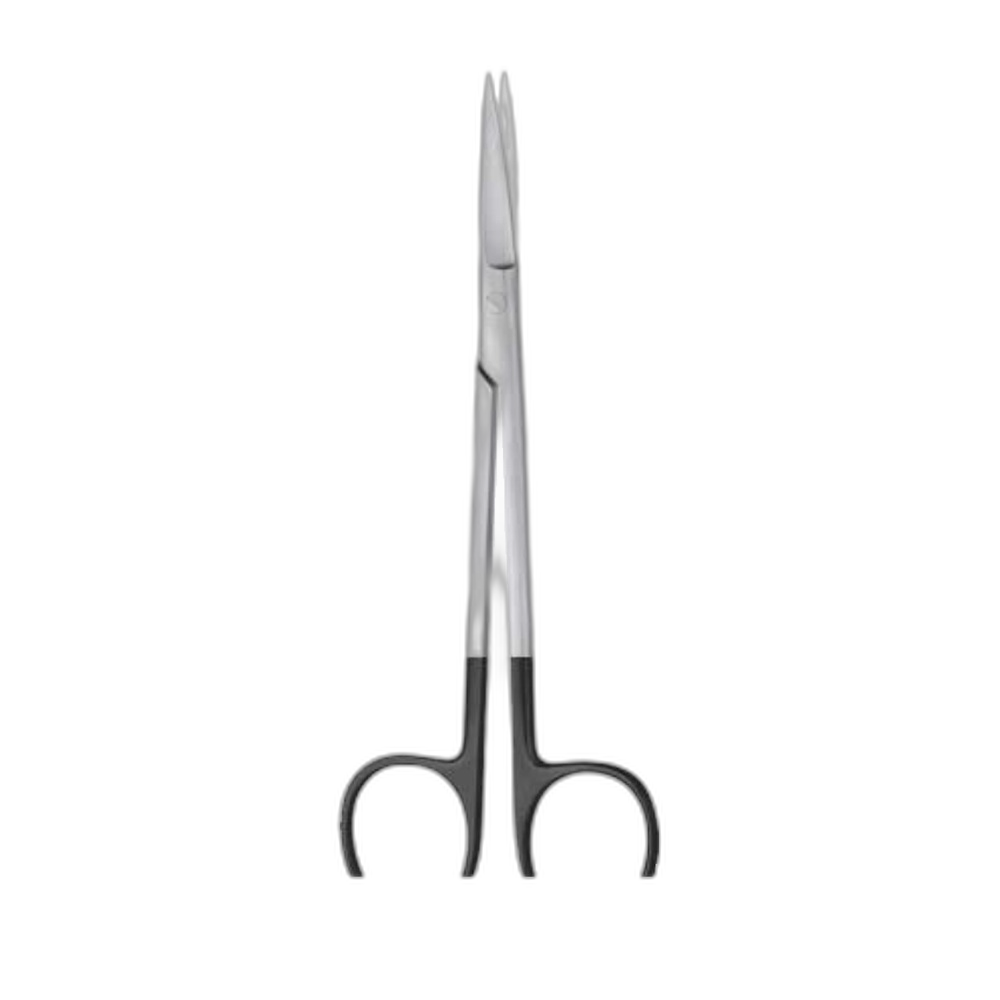
| Mayo scissors | 17 cm, straight | Suture cutting |
| Sponge holding forceps | Rampley 24 cm | Skin preparation |
| Tubing clamp | Non-toothed, rubber-shod or Roberts | Clamps drain tubing without perforating it |
| Gallipot | Stainless, 250 ml | Antiseptic |
| Kidney dish | Stainless, 250–300 mm | Receiver |
| Towel clips | Backhaus 11 cm × 4 | Drape fixation |
Two omissions are deliberate. There is no trocar, and there is no small sharp dissector.
Why the Trocar Left the Tray
Chest drains were historically supplied with a rigid internal trocar, sharpened at the tip, which was pushed through the chest wall carrying the tube with it. The technique was quick and the complication profile was poor — the sharp tip has no way of knowing where the lung, diaphragm, liver, spleen or heart is once it passes the pleura.
Contemporary guidance, including the British Thoracic Society position, has moved decisively toward blunt technique. Skin incision, blunt dissection with curved forceps over the superior border of the rib below, finger sweep to confirm entry into the pleural space and exclude adherent lung, then tube insertion guided by forceps.
This is why the large curved artery forceps is the defining instrument of the set. It has to be substantial enough to spread intercostal muscle under real force, long enough to reach through the chest wall of a large adult, and curved so the tips travel upward away from the neurovascular bundle. A standard 16 cm Kelly is not adequate for this; the pattern needed is a 20–24 cm Roberts or long Kelly.
Some units still carry a trocar drain for specific circumstances. If yours does, it should be a distinct, clearly labelled item rather than the default.
Instrument Detail That Matters
The Dissecting Forceps Pair
Most sets carry two large curved forceps rather than one, and the reason is workflow. The first stays in the tract holding it open after the pleura is breached. The second grips the tip of the drain and steers it through — usually apically for a pneumothorax, basally for fluid. Trying to do both with one instrument means losing the tract, and re-finding a tract through intercostal muscle in a moving patient is exactly the moment when technique deteriorates.
Jaw serration matters here. A finely serrated jaw will not hold a wet silicone drain reliably. Cross-serration or a slightly coarser transverse pattern grips better without perforating the tube wall.
The Tubing Clamp
A non-toothed or rubber-shod clamp, not a standard artery forceps. Clamping a drain with a toothed instrument can score or perforate the tubing, and a perforated drain becomes an open pathway to the pleural space. This is a small, cheap item that gets substituted with whatever is to hand, and the substitution is a genuine defect.
Scalpel Blade
A No. 10 blade on a No. 3 handle gives a clean 2–3 cm skin incision. Some operators prefer a No. 11 for the stab. Either way the blade’s role ends at the skin and the subcutaneous layer — it should never be advanced toward the pleura. Our guide to scalpel handles and blade sizes covers handle and blade pairing across the range.
Suture Material
Conventionally 0 or 2-0 silk on a cutting needle: one anchor suture securing the tube to the chest wall, and in many units a closure suture left untied for use when the drain is removed. Silk remains standard here because it knots securely and is easy to identify against skin at removal.
Tube Sizing
The tube is not an instrument, but the tray has to accommodate the range in use, and the forceps must be able to grip the largest size the unit stocks.
| Indication | Typical size | Approach |
|---|---|---|
| Traumatic haemothorax | 28–36 Fr | Open blunt dissection |
| Traumatic / tension pneumothorax | 24–28 Fr | Open blunt dissection |
| Spontaneous pneumothorax | 8–14 Fr | Seldinger, small bore |
| Simple pleural effusion | 8–14 Fr | Seldinger, small bore |
| Empyema | Variable; larger bore often preferred | Either, unit-dependent |
The Seldinger route needs a different consumable kit — introducer needle, guidewire, dilators, and the drain itself — and only minimal chest drain insertion instruments from the reusable tray: scalpel, needle holder, scissors, forceps for skin handling. Units that do a high proportion of small-bore insertions often maintain two tray configurations rather than opening a full open-thoracostomy set for a Seldinger procedure. That is a straightforward way to cut reprocessing load.
Drainage System
Whatever goes in must connect to a closed drainage system that permits air and fluid out while preventing air in. The classical arrangement is the underwater seal, with the tube tip submerged roughly 2 cm below the water surface — a one-way valve that costs nothing and cannot fail electronically.
Three-chamber systems separate the functions: a collection chamber for fluid, a water seal chamber, and a suction control chamber regulating applied negative pressure. Contemporary single-unit disposable systems combine all three, and dry-suction variants replace the water column with a mechanical regulator.
The tray requirement is simply that the connector fits and the tubing clamp is present. Connector mismatch between drain and drainage system is an avoidable equipment failure that shows up at exactly the wrong moment.
Materials and Reprocessing
Nothing on a thoracostomy tray is exotic, but two material choices are worth specifying when purchasing.
Hinged instruments — the artery forceps and needle holder — take AISI 420 martensitic stainless, hardened at the box joint and jaws. These instruments are used with real force during blunt dissection, and a soft box joint develops play. Play in the jaws of a 24 cm forceps translates to a poor grip on a wet drain tube.
Holloware — gallipots, kidney dishes — takes AISI 304, deep-drawn with a rolled rim. A rolled rim is not decoration: a cut edge on a stainless dish is a glove-puncture risk and a soil trap.
Reprocessing is routine, with one specific point. Large curved artery forceps used for blunt dissection are opened wide and loaded heavily; the box joints accumulate protein and should be processed articulated open, with a joint check at every inspection point. Jaws should meet at the tips first and the ratchet should hold at each tooth without springing.
Our instruments are manufactured under ISO 13485:2016 from ISO 7153-1 compliant steel, with CE marking under EU MDR — details on our certifications page. Sets are supplied configured to unit specification; browse the range under surgical instruments and hospital holloware.
Where This Set Sits
A thoracostomy tray is the smallest member of a family. When drainage is insufficient and the chest has to be opened, the requirement escalates to the full set covered in our thoracotomy instrument set guide. For minimally invasive thoracic work, our VATS instrument set guide covers the endoscopic equivalent.
In emergency departments the chest drain tray is usually stored alongside the airway equipment, and it is worth auditing both together — see our note on the emergency tracheostomy kit.
Frequently Asked Questions
Why do chest drain insertion instruments favour blunt dissection over a trocar?
Because a sharp trocar cannot detect what lies beyond the pleura. Injuries to lung, diaphragm, liver, spleen and heart have all been reported with trocar technique. Blunt dissection with large curved forceps, followed by a finger sweep to confirm the pleural space is entered and no lung is adherent, removes the mechanism for those injuries. Current guidance strongly favours the blunt approach for open insertion.
What size artery forceps does a thoracostomy set need?
Large and curved — a 20–24 cm Roberts or long Kelly pattern. A standard 16 cm Kelly is too short to reach reliably through the chest wall of a large adult and too light to spread intercostal muscle. The set should carry two: one to hold the tract open, one to guide the drain tube through it.
Why must the drain pass over the top of the rib?
The intercostal neurovascular bundle — vein, artery, nerve from superior to inferior — runs in the groove along the inferior border of each rib. Dissecting and passing the tube over the superior border of the rib below keeps the instrument away from that bundle. Approaching immediately beneath a rib risks intercostal artery injury, which in an anticoagulated or trauma patient is a serious bleed.
Can a standard artery forceps be used to clamp the drain tubing?
It should not be. Toothed or finely serrated jaws can score or perforate silicone drain tubing, creating a pathway into the pleural space. Use a dedicated non-toothed or rubber-shod tubing clamp. It is an inexpensive item and its absence from a tray is a defect worth correcting at the next set review.
Should small-bore Seldinger insertions use the same tray?
Usually not, and maintaining a reduced tray for Seldinger procedures is worthwhile. A Seldinger insertion needs a scalpel, needle holder, suture scissors and skin forceps from the reusable set — the large dissecting forceps that dominate an open thoracostomy tray are simply not used. Units doing a high proportion of small-bore drains cut reprocessing volume substantially by splitting the configurations.
For complete thoracostomy set configurations, individual instrument pricing, or OEM manufacture to your unit’s specification, contact our technical team.
Need precision surgical instruments?
Configure complete instrument sets with our team — ISO 13485 certified, CE marked, made in Sialkot since 1980.
Related Guides
View all articles →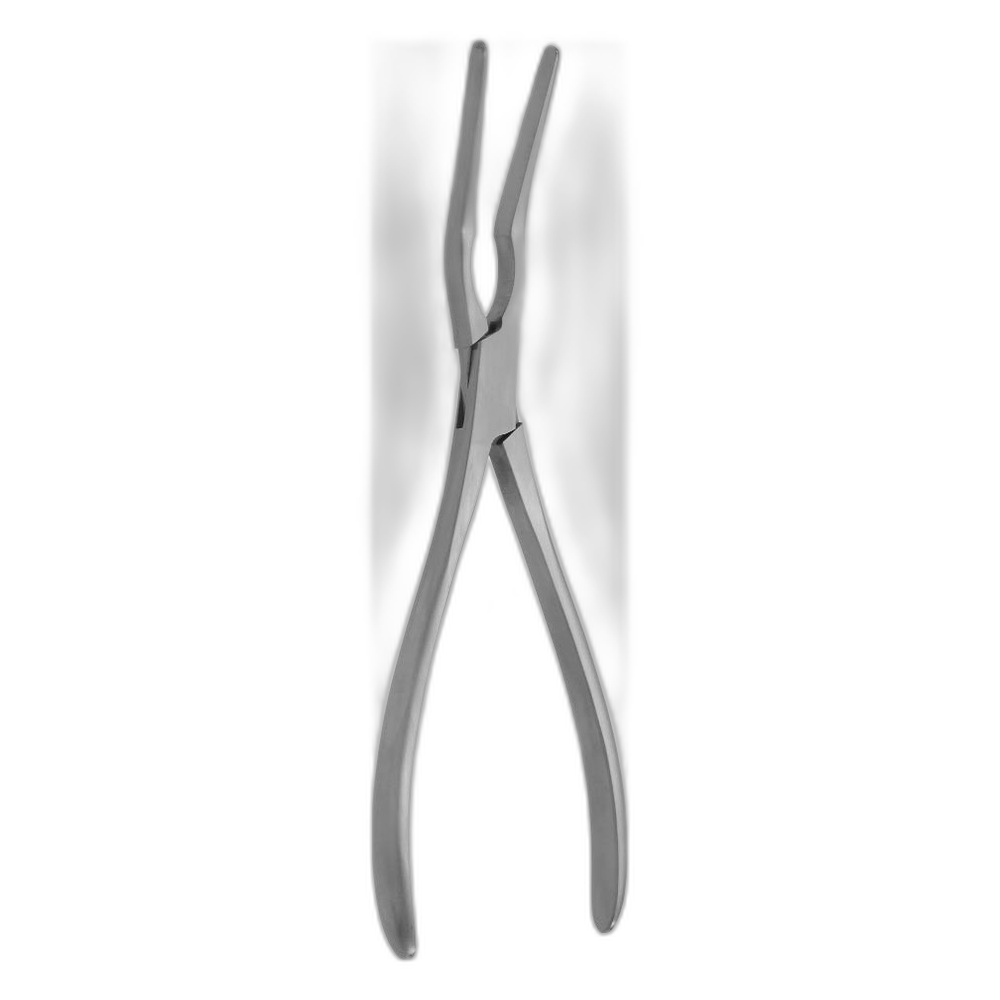
Where We Serve
Fizza Surgical exports to 50+ countries. Browse our country-specific pages with local regulatory guidance and pricing: