Emergency Tracheostomy Kit: Critical Airway Instruments & Setup
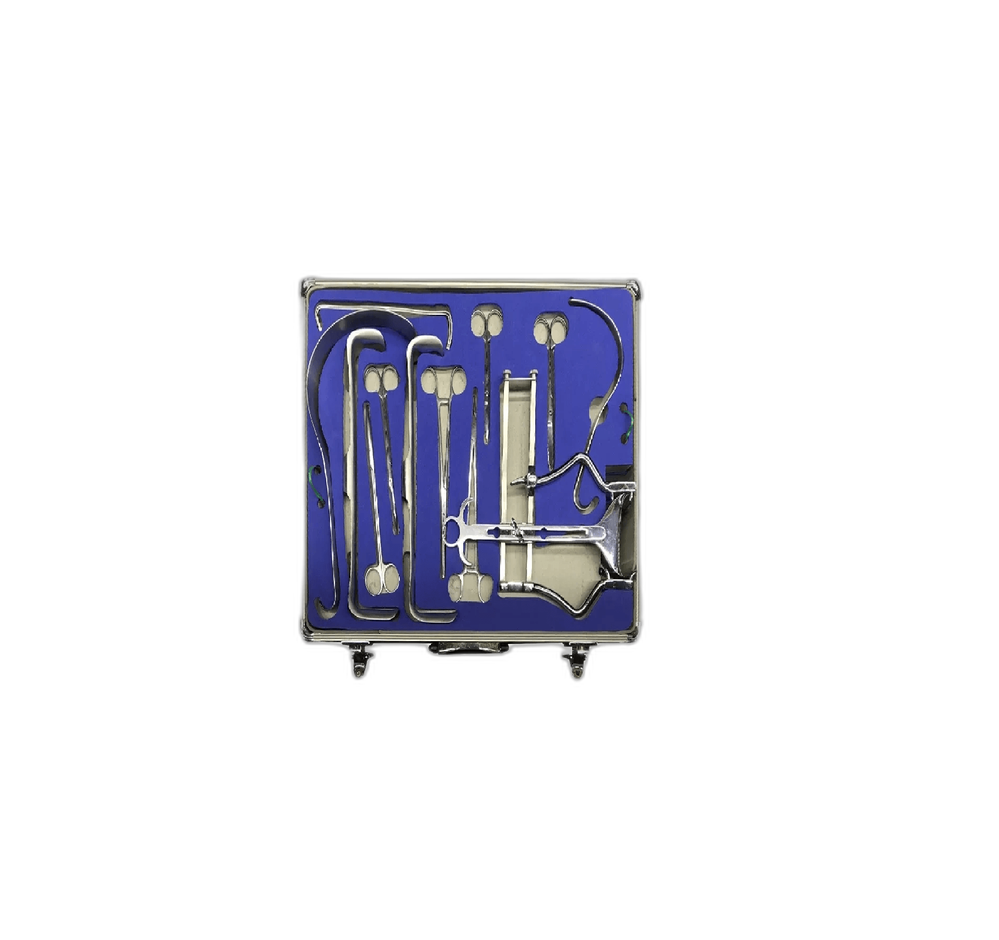
What belongs in an emergency tracheostomy kit: scalpel, tracheal hook, Trousseau dilator, bougie and tube specs, plus placement and check cycles.
 Made in Sialkot · Since 1980
Ninety seconds into a failed intubation, the saturation monitor reads 74% and falling. Bag-mask ventilation is not moving the chest. A supraglottic device has been seated twice and both times the leak defeated it. This is the “cannot intubate, cannot oxygenate” corner of the algorithm, and the next decision is a cut to the neck.
Everything about that moment is determined by what is inside the box on the wall — and whether the person opening it has ever handled the contents. An emergency tracheostomy kit is not a shopping list. It is a piece of choreography that has been pre-loaded into a tray so that a stressed operator can execute six steps without looking up.
This guide covers what belongs in the tray, why each instrument earns its place, and the specification details that separate a kit that works from one that fails at the worst possible time.
Surgical Airway vs Emergency Tracheostomy: The Terminology Matters
Hospitals use “emergency tracheostomy” loosely, and it causes real procurement confusion. Two distinct procedures live under that banner:
Cricothyrotomy — a horizontal incision through the cricothyroid membrane, roughly 1 cm below the thyroid cartilage prominence. It is the rescue procedure. The membrane sits superficially, is relatively avascular, and can be reached in under 60 seconds. This is what belongs in a wall-mounted emergency box.
Surgical tracheostomy — a formal dissection through the pretracheal fascia and strap muscles to enter the trachea between the second and third rings. It is a planned theatre procedure requiring retraction, haemostasis, and a full instrument tray. Our tracheostomy instrument set guide covers that configuration in detail.
The mistake departments make is stocking a formal tracheostomy tray on the resuscitation trolley. Thirty instruments in a wrapped pack, and the operator has to find four of them while the patient desaturates. Buy for the procedure you will actually perform under time pressure.
Core Contents of an Emergency Surgical Airway Tray
The consensus configuration across UK, US, and Australian difficult-airway guidance converges on a very short list. Strip it back to this:
| Instrument | Specification | Function |
|---|---|---|
| Scalpel handle No. 3 + No. 10 blade | Broad-bellied blade, not a No. 11 | Single transverse stab through skin and membrane |
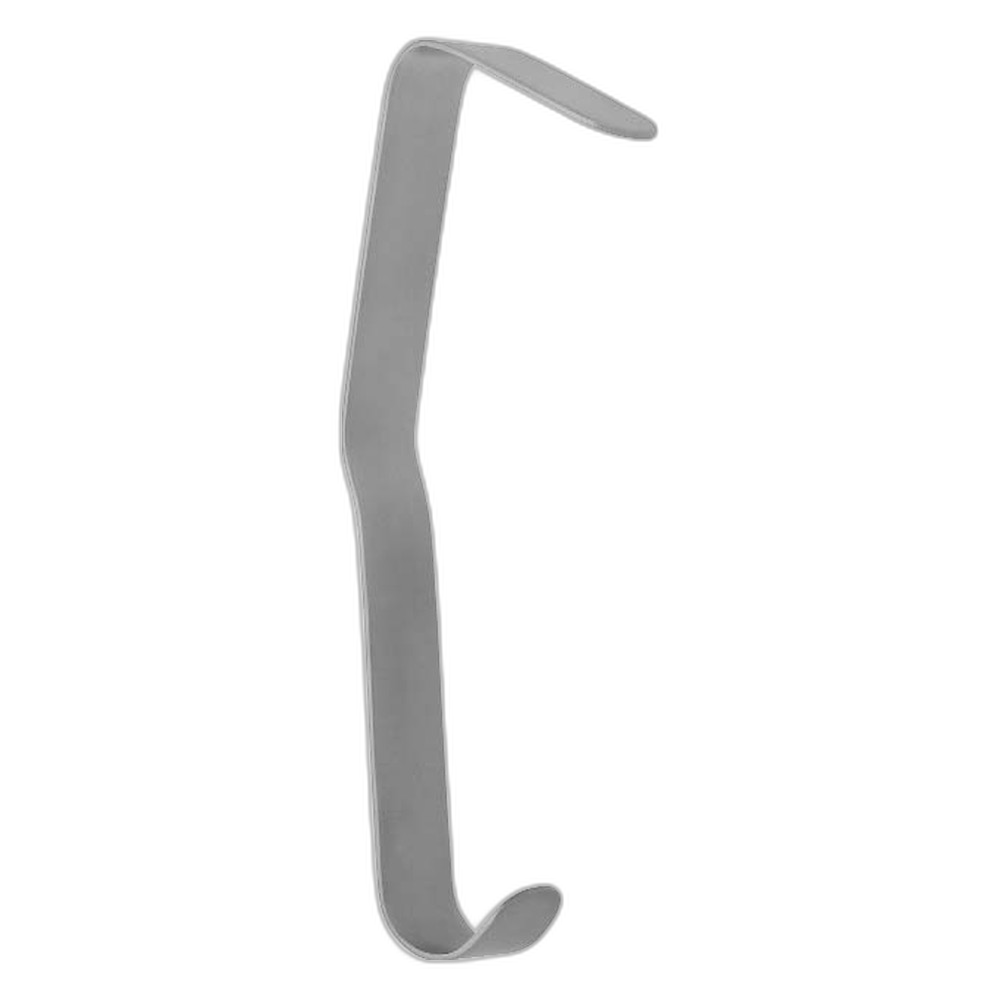
| Tracheal hook | Single sharp prong, 90° or blunt-tip variant | Retracts cricoid caudally, stabilises larynx |
| Trousseau tracheal dilator | 3-bladed, 14 cm, reverse-action | Opens the incision transversely for tube passage |
| Bougie | 15 Fr, coudé tip | Railroads the tube; confirms tracheal placement by hold-up |
| Cuffed tube | 6.0 mm ID cuffed ETT or size 4 Shiley | Definitive airway |
| 10 mL syringe | Luer slip | Cuff inflation |
| Tie or twill tape | Cotton, 40 cm | Secures the tube — tape alone slips on a wet neck |
Note the blade choice. A No. 11 blade is the reflex pick because it looks surgical, but its fine point buries itself in the membrane without producing a usable opening, and the sharp tip has punctured posterior tracheal walls. The No. 10 belly cuts a wider aperture on a single pass. Several national airway societies now specify it explicitly.
The Tracheal Hook Is the Instrument People Under-Order
Ask a theatre manager to price an emergency airway tray and the hook is usually the line item that gets dropped. It is also the instrument that determines whether the procedure succeeds.
Once the membrane is incised, the larynx becomes mobile. Without downward traction on the cricoid ring, the anatomy retreats and the operator ends up dissecting into the pretracheal space with a bougie. A single sharp hook — typically 16 cm overall, with a 3 mm hook radius in AISI 420 martensitic stainless — holds the field open with one hand while the other passes the bougie.
Buy two. One for the tray, one for the drill kit that the department practises on.
Material and Build Specifications
Emergency airway instruments live in sealed trays for months and get opened wet, under pressure, by people who are not careful with them. That drives the material choice.
- Cutting and holding instruments — AISI 420 martensitic stainless, hardened to 48–52 HRC. It takes and holds an edge on the hook tip.
- Dilators and non-cutting instruments — AISI 304 or 316 austenitic stainless. Better corrosion resistance, and the Trousseau’s reverse-action spring survives repeated autoclave cycling without losing tension.
- Finish — satin, not mirror. A mirror finish throws theatre-light glare straight back at an operator who is already working at the limit of their visual field.
- Passivation — mandatory. A tray that sits sealed for six months at ward humidity will pit at the box joints if the chromium oxide layer was never properly formed.
The Trousseau dilator deserves specific attention at goods-in. Squeeze the handles and watch the three blades. They should separate in a single plane, evenly, and return under spring tension without any lag. A dilator that opens asymmetrically will torque the incision and tear it. Our instrument inspection checklist covers the wider acceptance protocol.
Where the Kit Should Live
Placement kills more patients than instrument quality does.
A surgical airway kit belongs anywhere an airway is manipulated: main theatres, ICU, emergency department resus bays, the interventional radiology suite, and the endoscopy unit. Departments consistently forget the last two. Sedation for an ERCP goes wrong exactly as fast as sedation in theatre does, and the airway trolley is four corridors away.
Standardise the box across every location. Same tray layout, same tube size, same laminated card on the lid. An operator who trained on the ED tray must be able to open the ICU tray and find the hook in the same position.
Paediatric Considerations
Below roughly eight years of age, the cricothyroid membrane is too small and the larynx too pliable for a surgical cricothyrotomy to be safe. Guidance for this group directs operators towards needle cricothyrotomy with a cannula and a low-pressure oxygen source, or towards urgent formal tracheostomy in theatre.
Do not stock an adult surgical airway kit in a paediatric resus bay without a clear label stating the age threshold. Size the airway equipment in that bay to the patient population instead — our paediatric laryngoscope selection guide covers the blade sizing that goes alongside it.
Training and Check Cycle
A sealed tray has a shelf life measured in staff turnover, not sterility indicator dates. Two practical rules:
Check monthly, log the check. Tube cuffs perish. Bougies take a set and hold their curve. Ties migrate out of the pack. A signed monthly card on the box is the cheapest intervention available.
Run a scalpel-bougie-tube drill twice a year on a manikin or a training larynx, using instruments identical to the ones in the tray. Departments that do this report procedure times under 45 seconds. Departments that do not report operators opening the pack and asking what the three-bladed instrument is for.
Fizza Surgical has manufactured airway and ENT instrumentation in Sialkot since 1980, working to ISO 13485 with CE marking on the surgical range. Full catalogue of surgical instruments and laryngoscopes, with certification detail on our certifications page.
Frequently Asked Questions
What is the minimum viable emergency tracheostomy kit?
Scalpel with a No. 10 blade, a bougie, and a size 6.0 cuffed tube. That three-item combination is the basis of the scalpel-bougie-tube technique and will establish an airway. A tracheal hook and Trousseau dilator make it considerably more reliable, particularly on obese or short-necked patients.
Should the kit be single-use or reusable?
Both models work. Single-use kits guarantee a sharp blade and an intact cuff at the moment of opening, with no reprocessing burden. Reusable stainless trays cost less over a five-year horizon and let a department standardise on instruments staff have handled in training. Most large hospitals run reusable trays in theatre and ICU with single-use kits in remote locations.
What size tube goes into an emergency cricothyrotomy?
A 6.0 mm internal diameter cuffed endotracheal tube suits most adults of either sex. Larger tubes risk damage to the cricoid ring at the narrow point of the adult airway. If a tracheostomy tube is preferred, a size 4 cuffed tube is the usual equivalent.
Why a tracheal hook rather than a pair of forceps?
A hook applies traction at a single point on the cricoid ring and holds it caudally without occupying the incision. Forceps take up the aperture the operator needs for the bougie, and grip inconsistently on cartilage. Once the membrane is open, forceps also tend to push the larynx away rather than stabilise it.
How often should an emergency airway tray be inspected?
Monthly, with a signed log on the container. Check the seal integrity, sterilisation indicator, cuff patency on any pre-loaded tube, bougie shape retention, and the spring action on the Trousseau dilator. Anything failing goes back to CSSD the same day and the tray is replaced, not patched.
Need precision surgical instruments?
Configure complete instrument sets with our team — ISO 13485 certified, CE marked, made in Sialkot since 1980.
Related Guides
View all articles →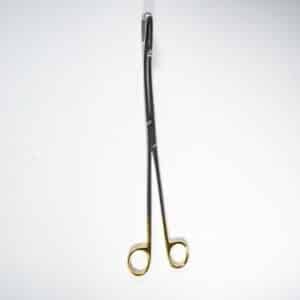
Where We Serve
Fizza Surgical exports to 50+ countries. Browse our country-specific pages with local regulatory guidance and pricing: