Antrum Puncture Instruments: Tilley-Lichtwitz Trocar Guide
Antrum puncture trocar guide: the Tilley-Lichtwitz set, full tray contents, landmarks for maxillary sinus washout, steel grades and reprocessing.
Antral lavage was, for most of the twentieth century, the standard answer to chronic maxillary sinusitis. Functional endoscopic sinus surgery displaced it in high-income systems from the 1990s onward, and a good many ENT trainees in Europe now qualify without ever having performed one.
The instrument did not disappear. It moved. Antral puncture remains in active use across South Asia, Africa, Latin America and the Middle East, where it delivers a diagnostic aspirate and therapeutic drainage in a few minutes under local anaesthesia, without an endoscopy stack. It also survives in well-equipped units as the fastest route to a culture sample when a sinus is not accessible endoscopically.
We supply the trocar set to all of those markets, so this is a practical account of the instrument rather than an argument about the procedure.
The Tilley-Lichtwitz Trocar and Cannula
The instrument is a two-part assembly: an outer cannula and an inner trocar with a trilateral cutting point, the two locking together at a knurled hub so the point projects a fixed distance beyond the cannula mouth.
Three features define it:
- The curve. The shaft carries a gentle curve so the tip can be directed laterally and superiorly toward the antrum once it is under the inferior turbinate. A straight trocar cannot make that angle inside a nasal cavity.
- The trilateral point. Three ground facets meeting at an apex. This cuts rather than crushes as it crosses the medial antral wall — the reason the classic description of the sensation is a sudden give, “like a brad-awl” penetrating a thin partition.
- The hub. A flared, knurled hub gives a palm-braced grip for controlled axial force, and accepts the syringe nozzle once the trocar is withdrawn.
Cannula gauges vary between manufacturers; the common working range is roughly 2 to 3 mm outside diameter, with paediatric patterns finer. The bore matters — it has to admit thick purulent material without blocking, which is why a fine needle is not a substitute.
The Rest of the Tray
The trocar is one item among six or seven. A functional antral washout set carries:
| Instrument | Purpose |
|---|---|
| Tilley-Lichtwitz trocar and cannula | Puncture and drainage channel |
| Nasal speculum (Killian or Thudichum) | Exposure of the inferior meatus |
| Tilley or Luc’s angled dressing forceps | Placing and removing anaesthetic packs |
| Higginson’s syringe or 20 ml Luer syringe | Irrigation and aspiration |
| Metal nozzle adaptor | Seals the syringe to the cannula hub |
| Kidney dish / receiver | Collecting returned lavage fluid |
| Head light or head mirror | Illumination of the nasal floor |
The nozzle adaptor is the piece most often missing from a bought-in set. A syringe that does not seal to the hub sprays lavage fluid back at the operator instead of into the sinus. Confirm the adaptor is included and that it fits the specific cannula supplied — hub dimensions are not standardised across patterns. Our comparison of Killian, Thudichum and Vienna nasal specula covers the exposure end of the tray in more detail.
Landmarks: Where the Puncture Goes
The target is the medial wall of the maxillary sinus, entered through the inferior meatus, where the bone is thinnest.
The cannula passes under the attachment of the inferior turbinate, roughly 1.5 to 2 cm behind its anterior end, and the tip is directed toward the outer canthus of the eye on the same side. That trajectory is the whole technique in one sentence, and it is why the classical teaching insists on the ipsilateral outer canthus as the aiming point: it steers the point into the body of the antrum and away from the orbital floor above and the posterior wall behind.
Anaesthesia is topical — a cotton wisp soaked in local anaesthetic packed under and around the anterior end of the inferior turbinate, left in place while it takes effect. Angled dressing forceps place it; the same forceps retrieve it.
After the give is felt, the trocar is withdrawn and the cannula stays. Aspiration comes before irrigation: pus or mucopus confirms both position and pathology and gives the culture sample. Air aspirated from an empty sinus confirms position without pathology. Only then is the syringe connected and the sinus irrigated with warm saline, with the patient leaning forward over a receiver so returned fluid drains through the natural ostium and out of the nose rather than into the pharynx.
Steel, Finish and Reprocessing
An antrum puncture trocar is a cutting instrument in the sense that matters for material selection. The trilateral point is made from hardened martensitic stainless — AISI 420-grade under ISO 7153-1 — because a point that deforms instead of cutting will not cross the medial wall cleanly and turns a controlled puncture into a shoving match.
The cannula is typically AISI 410 or 316L. It sees warm saline and purulent material, so corrosion resistance outranks hardness here.
Three reprocessing points specific to this instrument:
- Disassemble before cleaning. The trocar must come out of the cannula. Material trapped in the annular gap between the two will not be reached by any washer-disinfector cycle.
- Brush the cannula lumen at the point of use. Purulent material dries fast in a 2 mm bore. See our guidance on ultrasonic cleaning of surgical instruments for what cavitation can and cannot reach inside a narrow lumen.
- Inspect the point under magnification every cycle. A rolled or blunted apex is the first sign the instrument is due for service.
Where It Sits Against Endoscopic Surgery
Antral puncture is a drainage and sampling procedure. It does not address the ostiomeatal complex, and it will not correct the underlying obstruction that produced the sinusitis. Where an endoscopy stack and a trained surgeon are available, functional endoscopic sinus surgery is the definitive operation — our FESS instrument set guide covers that tray.
Where they are not, the antrum puncture trocar still does useful work: it drains a symptomatic sinus, it gets a clean culture from a closed space, and it does so with an instrument set that costs a fraction of an endoscopic tower and needs no electricity.
Fizza Surgical manufactures ENT instruments in Sialkot under an ISO 13485 quality management system, CE marked to EU MDR. Trocar and cannula sets, antrum punches and antrum curettes are stocked within our surgical instruments range, and certification documentation is available on our certifications page.
Frequently Asked Questions
What is a Tilley-Lichtwitz trocar used for?
It is used to puncture the medial wall of the maxillary sinus through the inferior meatus, creating a channel for aspirating a diagnostic sample and irrigating the sinus with warm saline. The instrument is a curved outer cannula with an inner trocar carrying a trilateral cutting point, the two locking at a knurled hub.
Why is the trocar aimed at the outer canthus of the eye?
The ipsilateral outer canthus is the classical aiming point because that trajectory carries the tip into the body of the antrum while keeping it clear of the orbital floor above and the posterior antral wall behind. The cannula enters under the attachment of the inferior turbinate, about 1.5 to 2 cm behind its anterior end, where the medial wall is thinnest.
What else is needed besides the trocar?
A nasal speculum for exposure, angled dressing forceps for placing and removing the anaesthetic pack, a Higginson’s or 20 ml syringe for irrigation, a metal nozzle adaptor to seal the syringe to the cannula hub, a receiver for returned fluid, and a head light. The nozzle adaptor is the item most often absent from a bought-in set, and hub dimensions are not standardised between patterns — confirm it fits the specific cannula supplied.
How is a trocar and cannula set reprocessed?
Disassemble it first. Material trapped in the annular gap between trocar and cannula will not be reached by a washer-disinfector cycle while the two are locked together. Brush the cannula lumen at the point of use before purulent material dries in the bore, and inspect the trilateral point under magnification each cycle — a rolled apex means the instrument is due for service.
Need precision surgical instruments?
Configure complete instrument sets with our team — ISO 13485 certified, CE marked, made in Sialkot since 1980.
Related Guides
View all articles →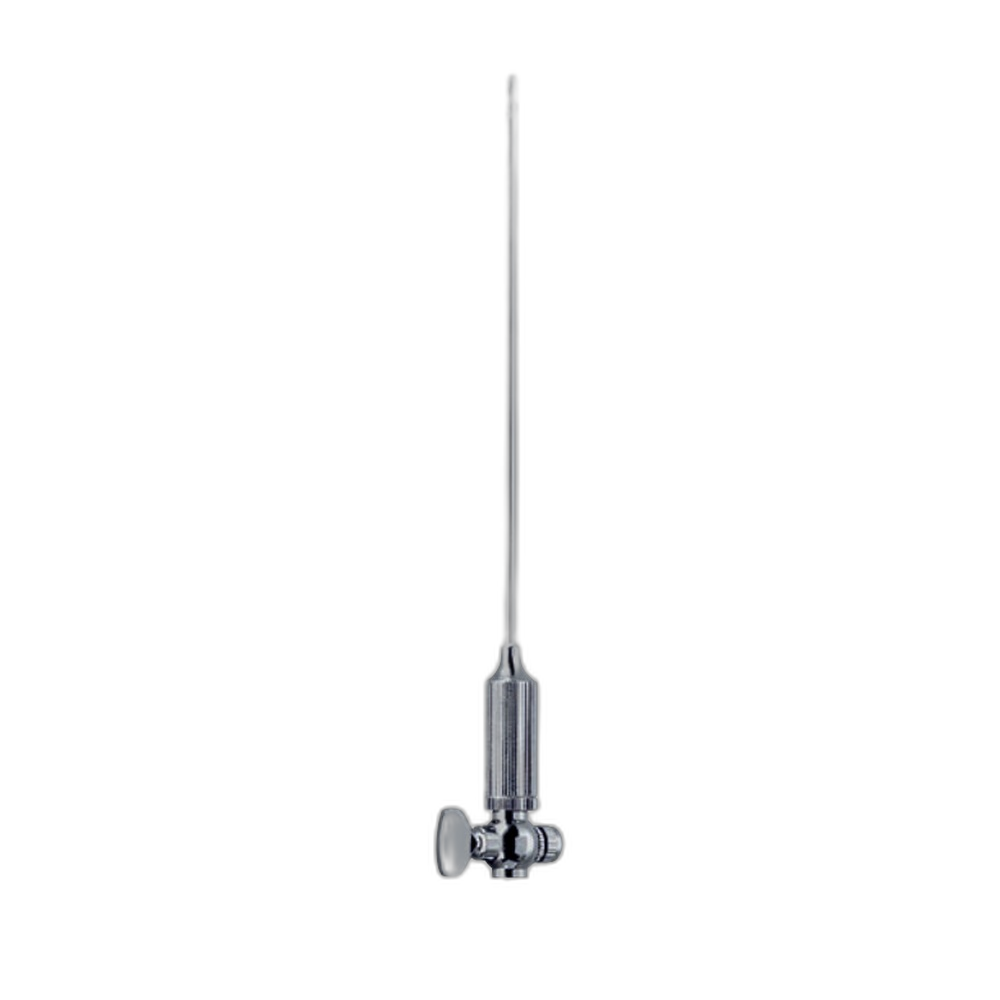
Where We Serve
Fizza Surgical exports to 50+ countries. Browse our country-specific pages with local regulatory guidance and pricing: