Titanium Surgical Instruments: When & Why to Choose Over Steel
Titanium surgical instruments explained: MRI-safe, 40% lighter, nickel-free and where steel still wins. A practical procurement guide.
 Made in Sialkot · Since 1980
A neurosurgeon working inside an intraoperative MRI suite reaches for a bayonet forceps. If that instrument were ordinary martensitic stainless, the fringe field of a 1.5-tesla magnet would tug at it and smear the image with a signal void. So the tray in front of her is titanium — non-magnetic, lighter in the hand, and invisible to the scanner. That single scenario explains most of why titanium instruments exist, but it is far from the only reason a department invests in them.
Titanium is not a replacement for steel across the board. It is a deliberate choice for specific problems: magnetic environments, microsurgical fatigue, allergy-sensitive patients, and long procedures where every gram matters. Understanding where it earns its premium — and where it does not — keeps a procurement budget honest.
What “titanium” means on an instrument label
Surgical titanium is rarely pure. Most reusable titanium instruments are made from Ti-6Al-4V — Grade 5 — an alloy of titanium with roughly 6% aluminium and 4% vanadium. It combines the light weight of titanium with tensile strength comparable to hardened steel. Commercially pure titanium (Grades 1 through 4) shows up in components where maximum corrosion resistance and formability outweigh the need for a hard cutting edge.
The number that surprises people is density. Titanium alloy sits around 4.4 g/cm³ against roughly 7.9 g/cm³ for stainless steel. That is why a titanium instrument feels close to 40% lighter than its steel twin — not a marketing figure, a direct consequence of the metal’s atomic mass.
The four advantages that justify the price
Non-magnetic behaviour
Titanium is paramagnetic to a negligible degree — for practical purposes, non-magnetic. In an MRI-guided or intraoperative-MRI procedure, steel instruments are hazardous projectiles and imaging spoilers. Titanium aneurysm clips, forceps and scissors let the surgeon operate inside the field without distortion. This is the single advantage steel cannot match at any price.
Weight and surgeon fatigue
In a microsurgical case that runs six or eight hours, the cumulative load of lifting a heavier instrument thousands of times produces measurable hand tremor and fatigue. A lighter tool reduces that. Microvascular surgeons, neurosurgeons and ophthalmic microsurgeons cite reduced fatigue as the reason they specify titanium micro-needle holders and jeweller’s forceps even outside magnetic environments.
Corrosion resistance and biocompatibility
Titanium forms a tenacious, self-healing titanium-dioxide passive layer the instant a fresh surface meets oxygen. That film resists chloride pitting, saline, and the repeated thermal insult of autoclaving far better than a chromium-oxide layer on steel. It is also why titanium is the reference biocompatible metal for implants — the same inertness that makes hip stems and dental implants durable makes titanium instruments kind to sensitive tissue and to nickel-allergic patients, since Ti-6Al-4V contains no nickel.
Thermal and dimensional stability
Titanium alloy expands and contracts less than stainless steel across the temperature swings of a sterilisation cycle. Delicate, close-tolerance jaws and box joints therefore hold their alignment through more cycles. Titanium also tolerates a slightly higher working temperature before losing temper.
Titanium versus stainless steel — the honest comparison
| Property | Titanium (Ti-6Al-4V) | Martensitic stainless (420/440) |
|---|---|---|
| Density | ~4.4 g/cm³ (about 40% lighter) | ~7.9 g/cm³ |
| Magnetic response | Non-magnetic — MRI safe | Ferromagnetic — MRI unsafe |
| Corrosion resistance | Outstanding (TiO₂ passive film) | Good with proper passivation |
| Cutting-edge hardness | Lower — edges dull faster | Higher — superior for scissors/blades |
| Nickel content | None — allergy-friendly | Present in most grades |
| Cost | Significantly higher | Economical |
| Anodised colour-coding | Yes (oxide interference colours) | No |
Where titanium is the wrong choice
Titanium’s weakness is edge hardness. It will not take or hold a cutting edge the way hardened martensitic steel does, so operating scissors, osteotomes and sharp curettes are usually better left in steel. A titanium scissor blade dulls faster and re-sharpens poorly. For the same reason, heavy bone-cutting instruments that rely on a hard, wear-resistant edge stay in steel — see the bone surgery instrument range for those.
Titanium also galls. Two titanium surfaces sliding under load — a box joint, a ratchet — can cold-weld and seize if not designed with that in mind. Good titanium instruments manage this with hard-anodised wear surfaces or by pairing titanium with a steel insert at the friction point.
And there is the plain economics: titanium bar stock and the slower, more careful machining it demands make a finished instrument several times the cost of its steel equivalent. Buying titanium where steel would serve is simply spending margin for no clinical return.
The anodising bonus
One practical perk unique to titanium: it can be anodised into a spectrum of colours without any dye. Passing a controlled voltage grows the oxide layer to a precise thickness, and that film refracts light into blues, golds, purples and greens through thin-film interference. The colour is the metal itself, not a coating, so it never chips or leaches. Departments use it to colour-code sets by surgeon, by tray, or by instrument function — a small logistics win that steel cannot offer.
Reprocessing titanium correctly
Titanium is forgiving but not indestructible. Three habits protect it. First, avoid strong alkaline or chlorine-bearing detergents that can attack the oxide film over time; use neutral-pH enzymatic cleaners. Second, do not mix titanium and steel instruments loosely in the same ultrasonic bath, where galvanic contact and steel debris can stain the titanium surface. Third, respect the passive layer — it repairs itself in air, so thorough drying after the final rinse does most of the work. Titanium’s corrosion story is strong, but the same surface-chemistry principles that govern steel still apply.
When you specify a titanium set, confirm the alloy grade, the anodising standard if colour-coded, and that the instruments carry full ISO 13485 and CE documentation. The metal is premium; the paperwork should match.
Which specialties actually buy titanium
Titanium adoption is not uniform across the OR — it clusters where its specific properties solve a real problem.
Neurosurgery is the heaviest user. Bayonet forceps, dissectors and micro-scissors in titanium keep the surgeon’s hand out of the line of sight and stay usable in intraoperative-MRI theatres. Titanium aneurysm clips are standard precisely because they will not migrate or distort follow-up imaging.
Microvascular and plastic surgery value the weight saving. Jeweller’s forceps and micro-needle holders used continuously through a free-flap reconstruction are noticeably less fatiguing in titanium, and the finer balance helps with the sub-millimetre precision these anastomoses demand.
Ophthalmic microsurgery uses titanium for the same fatigue and precision reasons, though the sharpest cutting elements often remain steel or diamond.
ENT and dental implantology reach for titanium where instruments contact osseointegration sites, avoiding any transfer of steel particles that could compromise a titanium implant surface through galvanic effects.
What these specialties share is a willingness to pay for a property steel cannot provide — non-magnetism, minimum weight, or maximum biocompatibility at the contact point. Departments that buy titanium indiscriminately, on the other hand, tend to end up with expensive scissors that dull too fast. Matching the metal to the mission is the whole discipline.
Frequently Asked Questions
Are titanium surgical instruments MRI safe?
Yes. Titanium is effectively non-magnetic, so titanium forceps, clips and scissors can be used inside MRI and intraoperative-MRI suites without being pulled by the field or distorting the image, unlike ferromagnetic stainless steel.
Why are titanium instruments so much lighter than steel?
Titanium alloy has a density around 4.4 g/cm³ versus about 7.9 g/cm³ for stainless steel. That difference makes a titanium instrument roughly 40% lighter than an identical steel one, which reduces hand fatigue in long microsurgical cases.
Should I buy titanium scissors?
Usually no. Titanium does not hold a cutting edge as well as hardened martensitic steel, so scissors, osteotomes and sharp curettes generally perform better in steel. Reserve titanium for forceps, needle holders and microsurgical tools where weight and non-magnetism matter more than edge hardness.
Is titanium better for patients with metal allergies?
Yes. Ti-6Al-4V contains no nickel, the most common contact allergen in stainless steel, and titanium is highly biocompatible, making it a good choice for nickel-sensitive patients and tissue-contact applications.
How is titanium colour-coded without paint?
By anodising. A controlled voltage grows the titanium-dioxide layer to a set thickness, and thin-film interference makes it appear blue, gold or purple. The colour is part of the oxide layer, so it will not chip or wash off during reprocessing.
Written by Ali, Fizza Surgical instrument engineering team — Sialkot, Pakistan. Four decades of instrument manufacture under ISO 13485 and CE marking.
Need precision surgical instruments?
Configure complete instrument sets with our team — ISO 13485 certified, CE marked, made in Sialkot since 1980.
Related Guides
View all articles →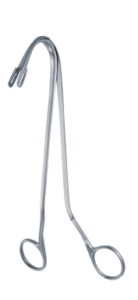
Where We Serve
Fizza Surgical exports to 50+ countries. Browse our country-specific pages with local regulatory guidance and pricing: