Cleft Palate Repair Instruments: Pediatric Plastic Surgery Guide
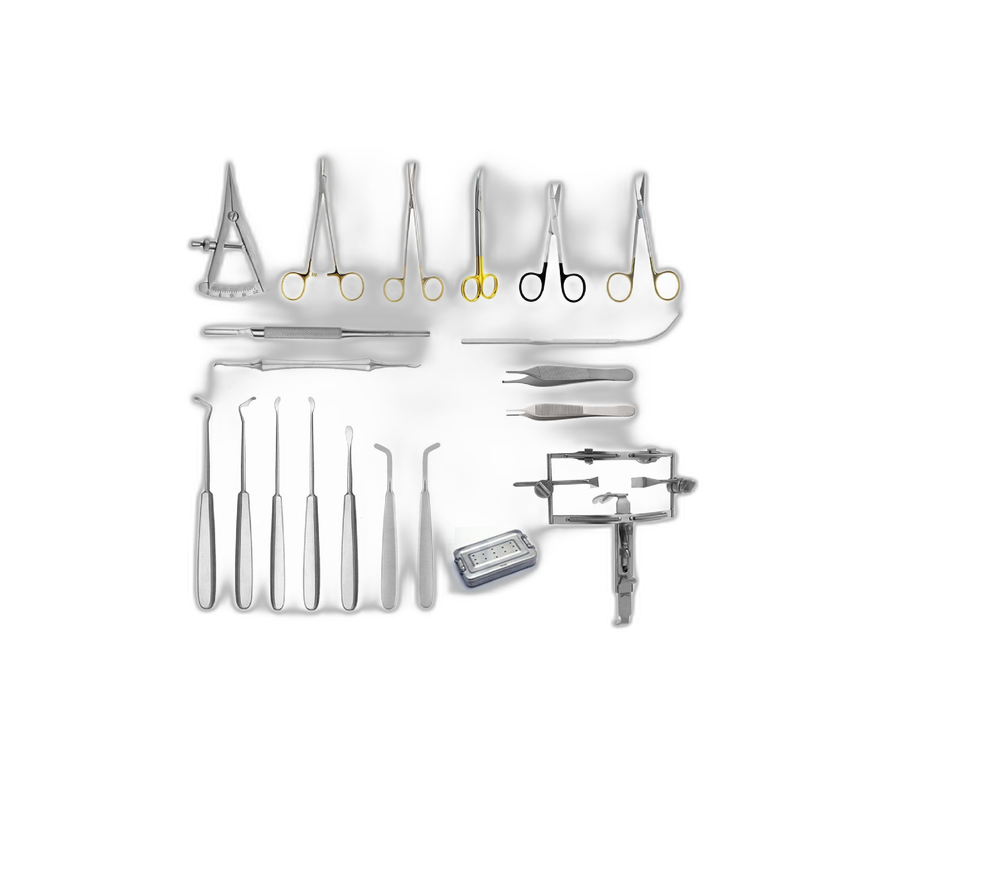
Cleft palate instruments guide: Dingman mouth gag, Freer and Cronin elevators, fine forceps and needle holders for paediatric palatoplasty.
 Made in Sialkot · Since 1980
How do you operate inside the mouth of a nine-month-old, on a field a few centimetres wide, deep enough that your own hands block the light? That single question shapes every instrument on a cleft palate repair tray. Exposure has to be self-holding, the elevators have to be fine enough to lift a mucoperiosteal flap off infant bone without tearing it, and the whole set has to work at the back of a small, wet oral cavity.
Palatoplasty — the surgical closure of a cleft palate — is usually performed between 9 and 18 months of age to give the child the best chance at normal speech. This guide covers the complete instrument set, organised by the surgical steps of the repair.
Exposure: The Dingman Mouth Gag
Nothing on the tray matters more than the retractor that opens and holds the operative field. In palatoplasty that is almost always the Dingman.
The Dingman mouth gag is a self-retaining frame that does four jobs at once: it opens the mouth to a set width, depresses and retracts the tongue with an interchangeable tongue blade, holds the cheeks apart with side retractor blades, and anchors the corners of the mouth. Different tongue-blade sizes match the frame to the patient, from small infants to older children.
- Dingman mouth gag frame — the self-retaining base with a ratcheted opening mechanism.
- Interchangeable tongue blades — graded sizes to fit the airway and depress the tongue without compressing the endotracheal tube.
- Side cheek retractor blades — spread the commissures for lateral access.
Because the Dingman is self-retaining, it frees both of the surgeon’s hands throughout the case — the same principle that makes self-retaining retractors valuable across surgery, as covered in our guide to versatile retractors.
Incision and Flap Elevation
The core of a palatoplasty is raising mucoperiosteal flaps off the hard palate, mobilising them, and bringing them together in the midline. Elevating those flaps cleanly, without buttonholing the delicate mucosa, is where the fine instruments earn their place.
- Periosteal elevators — the workhorses of flap elevation. Common patterns include the Freer, Molt No. 9, Cronin palate elevator, Warwick-James and Mitchell’s trimmer. Each lifts the periosteum off the bone to create the working plane.
- Barsky cleft palate rasp — for smoothing and contouring bony edges.
- No. 15 and No. 11 scalpel blades on a fine handle — for the relieving incisions and the cleft-margin freshening.
- Beaver blade handle — for the finest mucosal incisions in a tight field.
The Freer elevator on a cleft tray is the same instrument family used in nasal septal surgery — our septoplasty instrument set guide covers the Freer’s design in detail.
Tissue Handling and Dissection
Once the flaps are raised, the levator muscle is dissected and repositioned (intravelar veloplasty) to rebuild the muscular sling that gives the soft palate its function. This demands fine, long-reach instruments.
- Gerald forceps (with and without teeth) — long, fine tissue pickups for handling flap edges and muscle.
- Adson-Brown forceps — multi-toothed atraumatic grasp of the mucosa.
- Fine single and double skin hooks (Guthrie hook) — to retract flap edges without crushing.
- Blair palate hook and nerve hooks — for teasing out the neurovascular bundle and the levator muscle.
Cutting and Suturing
The soft-tissue closure is deep and delicate, so the cutting and suturing instruments are long-handled and fine-tipped.
- Metzenbaum scissors (long, fine) — for sharp dissection of the levator muscle off the posterior hard palate.
- Fine curved and straight scissors — for trimming flap margins.
- Long fine needle holder (Rider-Moore, Crile-Wood, or Castroviejo pattern) — for placing 4-0 and 5-0 absorbable sutures deep in the oral cavity.
- Suture scissors — for the fine absorbable material used throughout.
The deep, restricted field makes needle-holder choice important — a long, well-balanced holder that closes precisely is essential when the target is at the back of an infant’s mouth. Our Castroviejo needle holder guide explains the fine-suture handling principles that apply here.
A Complete Palatoplasty Set at a Glance
| Surgical Step | Key Instruments |
|---|---|
| Exposure | Dingman mouth gag with graded tongue blades and cheek retractors |
| Incision | No. 15 / No. 11 blades, Beaver handle |
| Flap elevation | Freer, Molt No. 9, Cronin, Mitchell’s trimmer, Barsky rasp |
| Tissue handling | Gerald forceps, Adson-Brown, Guthrie and Blair hooks |
| Muscle dissection | Long fine Metzenbaum scissors, nerve hooks |
| Closure | Long fine needle holder, 4-0/5-0 absorbable suture, suture scissors |
Cleft Lip vs Cleft Palate: Where the Sets Differ
Cleft lip repair (cheiloplasty) and cleft palate repair are related but call for different emphasis, and the two sets are often kept separate even though they overlap.
| Feature | Cleft Lip Repair | Cleft Palate Repair |
|---|---|---|
| Field | External, on the lip and nostril sill | Deep intraoral, at the hard and soft palate |
| Exposure | Fine skin hooks, lip clamp, calipers for marking | Dingman mouth gag, self-retaining |
| Marking | Calipers, marking pen, fine ruler for the Millard rotation-advancement | Minimal marking; incisions defined by cleft margins |
| Signature instrument | Precision calipers and fine skin hooks | Dingman gag and periosteal elevators |
Where the two overlap is in the fine forceps, needle holders and delicate scissors — the same instruments that handle infant tissue safely in both operations. A surgeon running a combined cleft service will draw a consolidated set of cleft palate instruments and lip instruments from one carefully organised tray.
Materials and Why Precision Matters
Cleft instruments are manufactured from surgical stainless steel — martensitic AISI 420 for the fine cutting edges and elevators, corrosion-resistant austenitic grades for handles and the Dingman frame. In paediatric work the margin for error is smaller than in any adult case: an elevator with a burr on its leading edge tears infant periosteum, and a needle holder that does not close precisely fumbles a 5-0 stitch in a field the surgeon can barely see into.
That is why dimensional finishing to ISO 7153-1 and manufacture under an ISO 13485 quality system matter as much on a small cleft tray as on any major set. Fizza Surgical manufactures cleft, plastic and reconstructive instruments to these standards, with the fine tips and smooth working edges that paediatric flap elevation demands.
Sterilisation Notes
Fine elevators and delicate hooks are easily damaged during reprocessing. Tips should be protected with silicone guards, instruments cleaned open in an enzymatic solution and ultrasonically, and the Dingman gag lubricated at its ratchet and hinge before steam sterilisation. Because these instruments are small and easily lost, cleft sets are usually counted and steam-sterilised in a dedicated stringer-mounted tray.
Frequently Asked Questions
What is the main retractor used in cleft palate surgery?
The Dingman mouth gag. It is a self-retaining frame that opens the mouth, depresses and retracts the tongue with an interchangeable blade, holds the cheeks apart, and anchors the mouth corners — giving hands-free exposure of the palate throughout the repair.
Which elevators are used to raise the palatal flaps?
Periosteal elevators such as the Freer, Molt No. 9, Cronin palate elevator, Warwick-James and Mitchell’s trimmer are used to lift the mucoperiosteal flaps off the hard palate. The Barsky rasp is used to smooth bony edges.
At what age is cleft palate repair usually performed?
Palatoplasty is typically performed between 9 and 18 months of age. Closing the palate within this window gives the developing child the best opportunity for normal speech, which is the primary functional goal of the repair.
Why do cleft instruments need to be so fine?
The operative field is tiny, deep and inside an infant’s mouth, and the mucoperiosteal flaps are delicate. Elevators must lift periosteum off infant bone without tearing it, and needle holders must place 4-0 and 5-0 sutures precisely in a confined space — so the instruments are fine-tipped, long-reach, and finished to close tolerances.
Sourcing a Cleft Palate Instrument Set
A dependable palatoplasty tray comes down to a well-made Dingman gag, a graded family of periosteal elevators, and fine long-reach cutting and suturing instruments. Fizza Surgical manufactures the full cleft and reconstructive range under ISO 13485 with CE marking. Browse the complete surgical instruments catalogue or review our certifications to see the standards behind every elevator on the tray.
Need precision surgical instruments?
Configure complete instrument sets with our team — ISO 13485 certified, CE marked, made in Sialkot since 1980.
Related Guides
View all articles →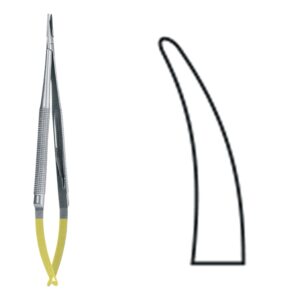
Where We Serve
Fizza Surgical exports to 50+ countries. Browse our country-specific pages with local regulatory guidance and pricing: