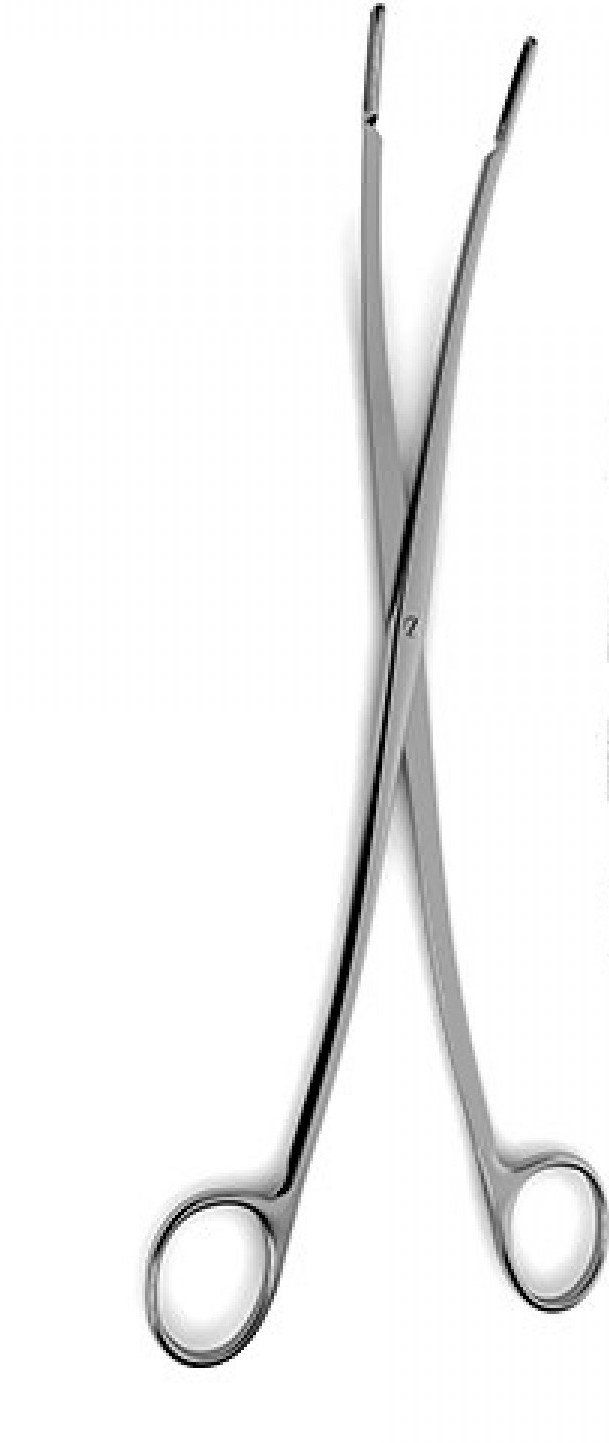
Randall Forceps — Philadelphia Stone Theory Pioneer
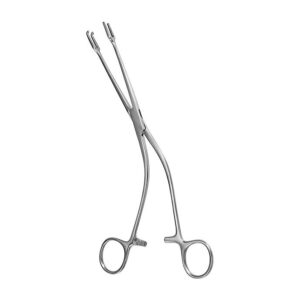
Alexander Randall (1885-1951), Philadelphia urologist whose 1937 paper described the calcium-phosphate plaques in the renal papillae from which urinary calculi originate (“Randall’s plaques”), designed the gallstone-extraction forceps that bears his name. The Randall pronounced-curve geometry handles stones across the spectrum of sizes encountered in both biliary and urological stone surgery — explaining the instrument’s cross-listing in urology catalogues.
The Randall’s-plaques theory
Randall’s observation that kidney stones often originate as calcium-phosphate deposits in the renal papillae (later called “Randall’s plaques”) remains the foundational theory of urinary stone formation. Modern stone research has confirmed and refined this observation, identifying Randall’s plaques as the nidus for calcium-oxalate stone growth. The Randall plaque theory connects Randall the urologist to Randall the instrument designer in modern stone surgery.
The cross-specialty stone-extraction
Randall forceps serve both biliary stone extraction (open choledocholithotomy) and urological stone extraction (open ureterolithotomy, pyelolithotomy). Modern percutaneous and endoscopic stone surgery has displaced most open stone procedures; the Randall forceps remains for residual open indications and for resource-limited settings.

Reviews
There are no reviews yet.