Rib Shears Guide: Bethune, Gluck and Sauerbruch Patterns
Rib shears compared: Gluck, Sauerbruch, Giertz-Stille and Bethune. Lengths, jaw geometry, blade hardness and why the wrong pattern chips.
Rib shears are among the shortest-lived instruments in a cardiothoracic tray, and almost every failure traces back to the same thing: the wrong pattern was reached for.
There are four in common circulation — Gluck, Sauerbruch, Giertz-Stille and Bethune — and they differ by nearly a factor of two in overall length. That difference is not cosmetic. It is the leverage available at the jaw, and using a short pattern where a long one belongs is how blades chip and joints spring.
The Four Patterns
| Pattern | Length | Jaw type | Best suited to |
|---|---|---|---|
| Gluck | 220 mm (8½″) | Angled, guarded lower jaw | Costal cartilage, paediatric ribs, first rib |
| Sauerbruch | 260 mm (10¼″) | Double-action, angled | General adult rib resection |
| Giertz-Stille | 270 mm (10½″) | Double-action, guillotine | Adult rib resection, guarded cut |
| Bethune | 340 mm (13½″) | Double-action, deep angled | Deep posterior ribs, thoracotomy exposure |
| Sauerbruch-Frey | 360 mm (14″) | Double-action, long reach | Extended posterior access |
What double-action actually buys you
A single-pivot shear multiplies handle force once. A double-action shear inserts a second pivot between the handles and the jaws, so the mechanical advantage compounds. On a 340 mm Bethune the practical result is that a surgeon can divide a calcified adult rib with a controlled squeeze rather than a crushing effort — which matters, because uncontrolled force is what drives a blade tip into the pleura underneath.
Gluck shears are single-action and short. They are correct for costal cartilage, for paediatric ribs, and for the first rib where a long instrument simply will not reach the angle. They are not correct for a calcified sixth rib in a seventy-year-old, and that mismatch is the most common cause of chipped rib shear blades we see returned.
Jaw Geometry and the Pleura
The lower jaw on most rib shears carries a guard or blunt foot. It is inserted between the rib and the parietal pleura, sliding along the inferior surface, and it protects the lung and intercostal bundle from the descending cutting edge.
Three geometries exist in practice:
- Guillotine (Giertz-Stille). A flat blade descends into a slotted anvil. The cut is contained and the bone cannot escape laterally. Best control, slightly larger footprint to insert.
- Angled shear (Sauerbruch, Bethune). Two curved blades pass one another. Faster to seat around a rib, needs a firmer grip on the bone before closing.
- Guarded angled (Gluck). Short jaws with an upturned lower guard, designed for cartilage where the tissue is softer and the risk is over-travel rather than escape.
Whichever geometry, the blades must meet with essentially no gap. A rib shear that has developed clearance at the jaw crushes rather than cuts — producing a comminuted rib end with spicules, which is both a bleeding source and a hazard when the chest is closed.
Steel, Hardness and Why These Fail
Rib shears are hot-forged from AISI 420 martensitic stainless, with cutting edges hardened to approximately 54–58 HRC — harder than a general dissecting scissor, because cortical bone is an abrasive, impact-loaded workload. The joints and handles are left softer, around 44–48 HRC, so they yield rather than crack under overload.
That hardness gradient is the whole design. Get it wrong and you get one of two failure modes:
Too hard at the edge and the blade chips on the first calcified rib. The chip is small, often unnoticed at the table, and turns up as a bone-fragment-shaped defect at the next inspection.
Too soft at the edge and the blade rolls. The instrument still closes, still appears intact, and simply stops cutting cleanly — the surgeon compensates with force, and the joint takes the load instead.
Buyers cannot verify hardness visually. What you can do is ask for the heat treatment specification and hardness range in the technical file, and inspect a sample under magnification for edge grinding quality. Our pre-purchase inspection guide sets out a workable incoming QC routine.
Care and Reprocessing
Bone debris in a double-action joint is the practical maintenance problem. Two pivots means two places for periosteum and marrow to lodge, and once dried in, ultrasonic cleaning alone will not clear it.
- Open the instrument fully and irrigate both joints immediately after use, before the case is closed if possible.
- Enzymatic soak, then ultrasonic with the joint articulated — a static open position leaves the pivot bore untouched. See our ultrasonic cleaning guide for cycle parameters.
- Lubricate both pivots with instrument milk after every cycle. Dry-running a double-action joint galls the bearing surfaces.
- Steam sterilise at 134°C in the open position. Never ratchet or tie a rib shear closed for processing.
Inspect the cutting edges under magnification at each reprocessing. A chipped rib shear should leave circulation immediately — it will not perform, and a fragment liberated in the field is a foreign-body event.
Building a Thoracic Tray
A rib shear alone does not open a chest. The sequence is periosteal elevator to strip, raspatory to clear the inferior border, shear to divide, then rongeur or file to smooth the cut end before the retractor goes in.
For a standard adult posterolateral thoracotomy the usual complement is one Bethune for depth, one Sauerbruch or Giertz-Stille for mid-range work, a Doyen rib raspatory in left and right versions, and a bone rongeur for edge trimming. Our Finochietto rib spreader guide covers the retraction side, and the thoracotomy instrument set guide lists the complete tray.
Fizza Surgical manufactures the full rib shear range across our bone surgery instruments category, forged in Sialkot to ISO 13485 with CE marking under MDR 2017/745. Tungsten carbide insert versions are available where an unusually high case volume justifies the premium.
Frequently Asked Questions
What is the difference between Gluck and Bethune rib shears?
Length and mechanism. Gluck is a short single-action instrument at around 220 mm, intended for costal cartilage, paediatric ribs and the first rib where reach is constrained. Bethune is a 340 mm double-action shear whose compounded leverage handles calcified adult ribs at depth. Substituting Gluck for Bethune on a dense adult rib is the leading cause of chipped blades in this category.
Are rib shears and costotomes the same instrument?
Broadly yes — costotome is the general term for a rib-cutting instrument, and in most catalogues rib shears are listed under it. Some manufacturers reserve “costotome” for guillotine-jaw patterns such as the Giertz-Stille and use “rib shears” for angled crossing-blade designs, but the usage is not consistent enough to rely on when ordering. Specify the pattern name and length.
What hardness should rib shear blades be?
Approximately 54–58 HRC at the cutting edge, with the joints and handles left softer at roughly 44–48 HRC. Cortical bone is abrasive and impact-loaded, so the edge needs more hardness than a soft-tissue scissor; the body needs to remain tough enough to deform rather than fracture if the instrument is overloaded.
How should double-action rib shears be cleaned?
Irrigate both pivots immediately after use before bone debris dries. Follow with an enzymatic soak and an ultrasonic cycle with the joint articulated rather than held statically open, since a fixed position leaves the pivot bore unwashed. Lubricate both joints with instrument milk after every cycle and steam sterilise open at 134°C.
Can a chipped rib shear be repaired?
A minor edge roll can often be re-ground by a competent sharpening service. A genuine chip — material lost from the cutting edge — usually cannot, because restoring the profile removes so much stock that the blades no longer meet correctly along their length. Remove it from circulation and replace it.
Need precision surgical instruments?
Configure complete instrument sets with our team — ISO 13485 certified, CE marked, made in Sialkot since 1980.
Related Guides
View all articles →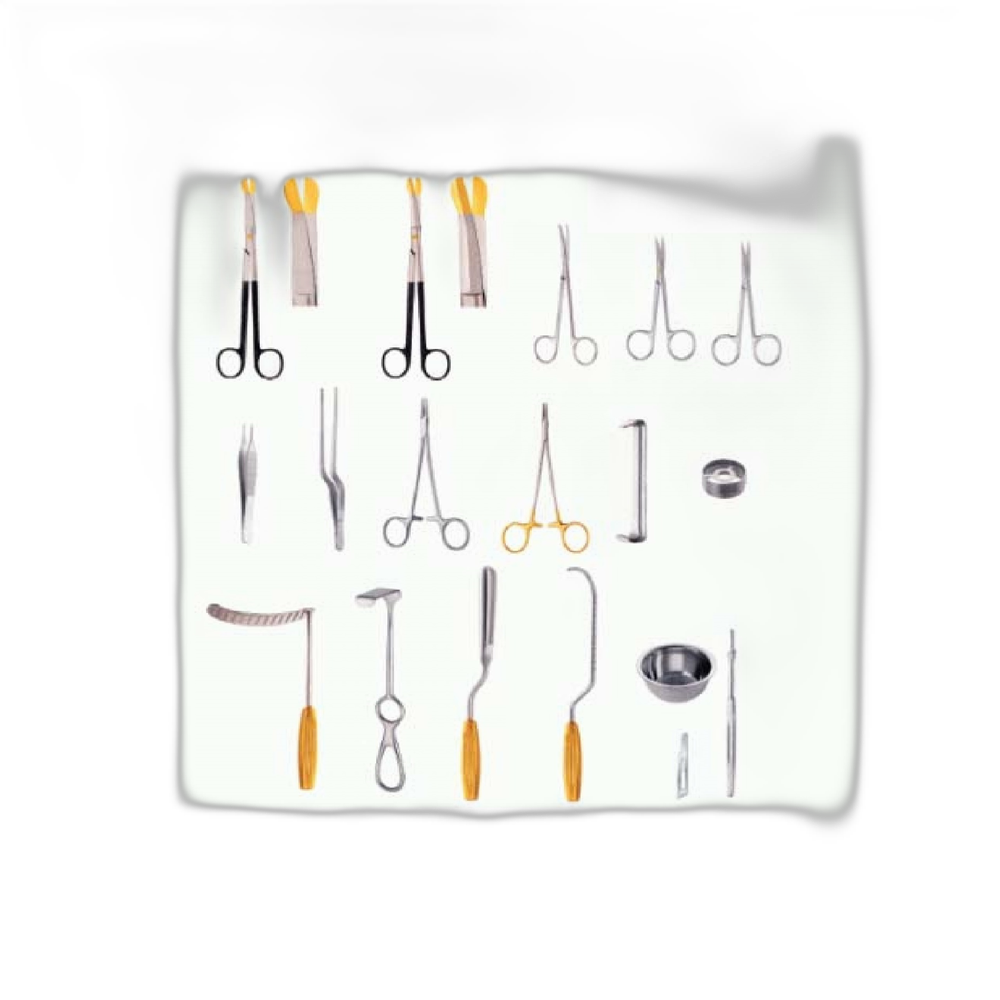
Where We Serve
Fizza Surgical exports to 50+ countries. Browse our country-specific pages with local regulatory guidance and pricing: