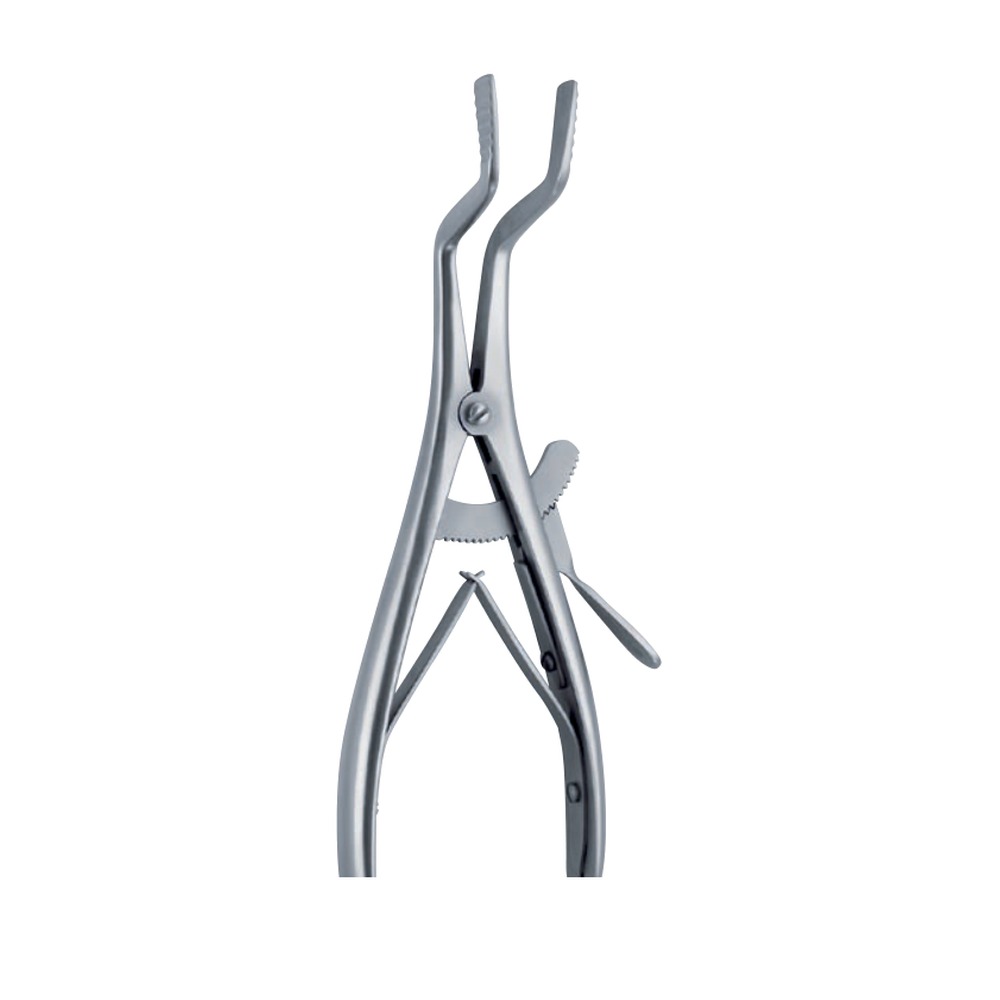
The Roser-König Mouth Gag — German Tonsillectomy Pattern (SKU MG 15-50-00) is part of the Fizza Surgical catalogue.
Dental instruments cover extraction forceps, elevators, excavators, scalers, scissors, mirror handles, and specialty patterns for endodontic and periodontal work. Extraction forceps are the workhorses — English-pattern (rotational grip) and American-pattern (lateral grip) cover the major tooth groups: incisors, canines, premolars, molars in both upper and lower arches. Dental scaler patterns (Gracey, Columbia, Younger-Good) target specific tooth surfaces during periodontal treatment. Elevators (Coupland, Cryer, Winter) loosen teeth before extraction. Modern dental instruments are manufactured from AISI 420 stainless for autoclavability and corrosion resistance; tungsten-carbide tips appear on scaler and curette variants where edge retention matters most. Fizza manufactures full dental sets to ISO 13485:2016.
| Reference / SKU | MG 15-50-00 |
| Material | Surgical-grade stainless steel |
| Sterilization | Steam autoclave to 134 °C · EtO compatible |
| Quality system | ISO 13485:2016 · CE-marked under EU MDR 2017/745 · FDA establishment-registered |
- Fergusson-Ackland Mouth Gag — British Combined Pattern (MG 15-45-00)
- Dingman Mouth Retractor — Cleft-Palate Repair Standard (MG 15-55-00)
- Michel Laryngeal Mirror — Indirect Laryngoscopy (LI 15-25-00)
Sialkot has been the world’s primary cluster for surgical-instrument manufacturing since the late nineteenth century, when local steel workshops began supplying instruments to British military and civilian hospitals. Fizza Surgical’s facility continues that tradition, combining workshop craftsmanship with the metallurgy and quality systems modern medical regulation requires. Fizza products are exhibited at international medical-device trade fairs in Europe, the Middle East, and North America.


Reviews
There are no reviews yet.