Mastectomy Instrument Set: Breast Surgery Complete Tray Guide
What belongs in a working mastectomy instruments tray: counts, sizes and steel for simple, modified radical and skin-sparing breast surgery.
 Made in Sialkot · Since 1980
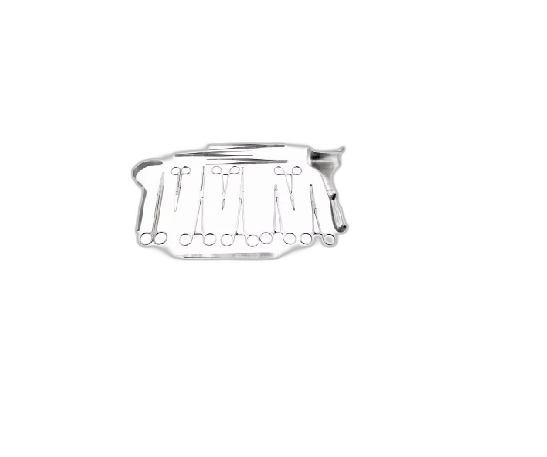
Forty-two instruments. That is the realistic core count for a modified radical mastectomy tray — not the 200-piece showcase configurations in some catalogues, and not the stripped-down 25-piece general set that leaves the scrub team opening peel packs mid-case. What belongs in those forty-two, and why, is what separates a tray built by someone who has watched the operation from one assembled off a price list.
What the Operation Actually Asks of the Instruments
A mastectomy is, mechanically, three tasks repeated for ninety minutes: raising thin skin flaps at a consistent thickness, controlling perforator vessels the moment they appear, and — in the modified radical version — dissecting the axilla without injuring the long thoracic or thoracodorsal nerves. Each task maps to a specific instrument group.
Flap Raising
- Scalpel handles No. 3 and No. 4, with No. 10 blades for the elliptical skin incision and No. 22 for surgeons who raise flaps sharp
- Curved Metzenbaum scissors, 18 cm — the flap-raising workhorse where diathermy is not preferred
- Adson forceps with 1×2 teeth (2 pcs) and DeBakey forceps 20 cm (2 pcs) for flap edge handling — toothed for skin, atraumatic for everything deeper
- Skin hooks (Gillies, 2 pcs) and double-prong rake retractors (2 pcs) — flap tension comes from hooks, not from an assistant’s fingers crushing the flap edge
- Lahey swab-on-a-stick sponge forceps (4 pcs) for countertraction on the breast mound
Hemostasis
- Curved Kelly hemostatic forceps, 14 cm (10–12 pcs) — perforators off the pectoralis fascia arrive in clusters
- Curved mosquito forceps, 12.5 cm (6 pcs) for finer subdermal vessels
- Right-angle (Mixter) forceps, 18 cm (2 pcs) for vessel isolation in the axillary tail
- Electrosurgical pencil with spatula tip — most units now raise flaps with cutting diathermy; the instrument tray must still carry full clamp capacity for when a vessel retracts
Retraction and Exposure
- Richardson retractors, medium and large — the standard for pectoral margin exposure; see our Richardson retractor guide for blade sizing logic
- Army-Navy retractors (2 pcs) for superficial flap edges
- Deaver retractor, 25 mm — retracts pectoralis major during clearance of the interpectoral (Rotter’s) nodes
- Langenbeck retractors (2 pcs, 21 cm × 11 mm) for the axillary window
Axillary Dissection
- Curved Metzenbaum scissors, 23 cm — longer reach for level II–III nodes
- DeBakey forceps, 24 cm — atraumatic handling around the axillary vein
- Allis forceps (6 pcs, 15 cm) — grasp the specimen side only, never the flap
- Vein retractors (Cushing, 2 pcs) for gentle axillary vein displacement
- Ligature clips applier (medium) or 2-0/3-0 silk ties for named tributaries
Closure and Suction
- Mayo-Hegar needle holders, 18 cm (2 pcs), tungsten carbide jaws
- Yankauer suction plus a Poole suction body — the Poole matters when irrigating the axilla before closure; the difference between the two patterns is covered in our Yankauer vs Poole comparison
- Backhaus towel clamps (8 pcs), straight Mayo scissors for sutures, sponge sticks
- Trocar for closed-suction drain placement (two drains in modified radical: axilla and flap bed)
Core Tray — Specification Table
| Group | Key instruments | Qty | Length range |
|---|---|---|---|
| Cutting | Scalpel handles No. 3/4, Metzenbaum 18 & 23 cm, Mayo straight/curved | 7 | 14–23 cm |
| Hemostats | Kelly curved, mosquito curved, Mixter right-angle | 18–20 | 12.5–18 cm |
| Grasping | Adson 1×2, DeBakey 20/24 cm, Allis, sponge forceps | 14 | 12–24 cm |
| Retraction | Richardson M/L, Army-Navy, Deaver 25 mm, Langenbeck, skin hooks, rakes, vein retractors | 12 | — |
| Suturing | Mayo-Hegar 18 cm TC | 2 | 18 cm |
| Suction | Yankauer, Poole with guard | 2 | — |
Simple vs Modified Radical vs Skin-Sparing: Same Tray?
Mostly, yes — with three adjustments.
A simple (total) mastectomy drops the long axillary instruments; the 23 cm Metzenbaums and 24 cm DeBakeys can stay in the container unopened.
A skin-sparing or nipple-sparing mastectomy works through a much smaller incision, and the retraction module changes character: lighted breast retractors or narrow Deaver blades (13–19 mm) replace the wide Richardsons, and the flap instruments shift a size finer. Some units add fiberoptic retractors here rather than maintaining a separate tray.
A modified radical mastectomy uses everything listed above. If your unit does all three, build the full tray and document which modules stay wrapped for which procedure — cheaper than three separate sets, and the count sheet stays consistent.
Cold Steel vs Diathermy Flaps: What It Means for the Tray
The longest-running technique debate in breast surgery has direct tray consequences. Units that raise flaps with cutting diathermy leave the 18 cm Metzenbaums nearly unused and burn through electrosurgical pencil tips instead; units preferring cold steel (on the argument of less thermal injury to flap microvasculature and lower seroma rates in some series) put real mileage on scissors and clamps. Neither camp has definitively won in the literature — seroma incidence data goes both ways — but the tray must serve both, because the same unit often contains surgeons from each school.
The practical procurement consequence: do not down-spec the scissors because “everyone uses diathermy now.” A Metzenbaum that has gone dull mid-flap forces exactly the crush-and-tear dissection that causes flap necrosis at the edges. Scissors in this set should be inspected for smooth shear action along the full blade length at every reprocessing cycle, and sent for sharpening on a schedule, not on complaint.
Drains, Counts, and the End of the Case
Closure is where mastectomy trays get untidy. Two closed-suction drains (axilla and flap bed in a modified radical), each placed with a trocar through a separate stab wound, then secured — which means the tray’s needle holders and toothed forceps are still working after the “main” operation ends. Budget instrument capacity for this: a tray with exactly two needle holders has zero redundancy when one drops during drain fixation.
The count itself is simpler than in cavity surgery — no deep abdomen to lose a sponge in — but the axillary space can and does retain small items. Standard practice is a full count before axillary closure begins, not just at skin. The instruments most often flagged in mastectomy count discrepancies are mosquito forceps and skin hooks, both small enough to hide in drapes.
Buying a Mastectomy Set: Specification Points That Matter
When evaluating a supplier’s mastectomy configuration, five points separate a working set from a catalogue bundle:
- Clamp count. Fewer than ten Kellys is not a mastectomy set; it is a general set with a new label.
- Two lengths of Metzenbaum and DeBakey. The 18 cm and 23–24 cm pairs are not interchangeable; the long pair exists solely for the axilla.
- Tungsten carbide needle holder jaws, identifiable by gold-plated rings — plain stainless jaws round off within a year of weekly use.
- Retractor blade finish. Satin, not mirror. Glare off a polished Richardson blade under LED theatre lights is a genuine visibility problem in a shallow field.
- Per-instrument traceability marking — laser-etched codes that survive reprocessing, so the SPD can track sharpening cycles per instrument rather than per tray.
Steel and Standards
Ring-handled forceps and needle holders in this set are martensitic stainless (AISI 410/420 per ISO 7153-1); retractor blades are typically AISI 410 with a satin finish to cut glare under theatre lights. Instruments contacting the axillary vein — the DeBakeys especially — justify the premium for properly finished atraumatic jaw serrations: a burred DeBakey jaw is how axillary vein tears start. Manufacturing under ISO 13485 with CE marking is the baseline for tender eligibility in most markets; Fizza Surgical’s quality documentation is available on our certifications page.
Frequently Asked Questions
How many instruments are in a mastectomy set?
A working modified radical tray carries 40–55 instruments. Larger published configurations (80+) usually bundle closure extras and duplicates for bilateral cases rather than genuinely different instruments.
Do I need separate instruments for sentinel lymph node biopsy?
No — SLNB uses a small subset of the same tray (mosquitoes, small Langenbecks, DeBakeys, Metzenbaum 18 cm). Units doing high SLNB volumes often make a dedicated 15-piece minor tray so the full mastectomy set is not opened unnecessarily.
Why so many hemostatic forceps for breast surgery?
The breast’s blood supply arrives through dozens of small perforators from the internal mammary, intercostal, and lateral thoracic vessels. During flap raising they open faster than any single clamp can be tied off, so the tray carries a dozen Kellys to park on vessels while the surgeon keeps moving.
What retractor is best for the axilla?
A Langenbeck or narrow Richardson for the working window, plus a Cushing vein retractor for the axillary vein itself. Deep self-retaining retractors are generally avoided in the axilla because sustained blade pressure sits directly on the intercostobrachial nerve.
Fizza Surgical supplies mastectomy trays in simple, modified radical, and skin-sparing configurations, manufactured in Sialkot from ISO 7153-1 compliant steel. Explore the full surgical instruments range or request the mastectomy set contents sheet with per-instrument specifications.
Need precision surgical instruments?
Configure complete instrument sets with our team — ISO 13485 certified, CE marked, made in Sialkot since 1980.
Related Guides
View all articles →
Where We Serve
Fizza Surgical exports to 50+ countries. Browse our country-specific pages with local regulatory guidance and pricing: