Box Joint vs Screw Joint Instruments: Which Lasts Longer
Box joint instruments vs screw joint: how each hinge is built, why tip alignment fails, quality checks on arrival, and correct reprocessing.
Two ring-handled forceps sit side by side on the tray. Same pattern, same length, same finish. One costs roughly forty percent more than the other and will still be in service when the cheaper one has been discarded for tip misalignment. The difference is entirely in the hinge.
| Box joint | Screw joint (lap joint) | |
|---|---|---|
| Construction | One shank passes through a machined slot in the other, then pinned | Two shanks lie flat against each other, joined by a screw |
| Lateral play | Minimal — the slot constrains the shank on both faces | Present and increases with wear |
| Tip alignment under load | Held; jaws stay in register | Jaws can skew and cross |
| Tendency to loosen | Very low; pin is peened or riveted | Screw can back out with repeated cycling |
| Manufacturing cost | Higher — slot must be broached and matched | Lower |
| Cleaning difficulty | Higher — enclosed slot traps soil | Lower — flat mating faces |
| Typical use | Hemostats, needle holders, ring-handled clamps | Light scissors, some dressing forceps, economy patterns |
What Actually Happens Inside the Hinge
In a box joint, one arm is machined with a rectangular slot and the other arm is reduced to a tongue that passes through it. A pin runs through both and is peened over. The tongue is now captured on both faces — it cannot move sideways because the walls of the slot are in the way.
In a screw joint the two arms simply overlap, face to face, with a screw through the overlap. Nothing constrains sideways movement except the friction of the screw and the flatness of the mating surfaces. That is fine at low load. Under a heavy clamping force applied off-axis — which is what happens every time a surgeon clamps a pedicle at an angle rather than square on — the arms splay apart at the hinge and the jaw tips walk out of register.
The consequence is not subtle. A needle holder whose jaws have skewed by half a millimetre will let a 4-0 needle rotate in the jaws mid-throw. A hemostat with crossed tips grips at one point instead of along the serration length, and slides off the vessel.
Why the Cost Difference Exists
Broaching a clean rectangular slot and machining a tongue to match it within a few hundredths of a millimetre is genuinely harder than drilling two flat arms and running a screw through. The slot has to be square to the shank axis. The tongue has to fit without binding but without slack. On finished box joint instruments the two arms are lapped together as a matched pair, which is why you cannot swap halves between two nominally identical forceps.
That matched-pair reality is worth knowing at inspection time. If a supplier’s box joint instruments show visible daylight in the slot, the pair was never properly lapped and the instrument will develop play early.
Testing Joint Quality on Arrival
Three checks, none of which need equipment:
- Lateral wiggle. Hold the instrument closed on the first ratchet tooth and try to move the jaw tips sideways against each other. A good box joint gives essentially nothing. Any perceptible side-to-side motion means the slot is oversized or the pin is loose.
- Light gap. Close the jaws fully and hold them against a light source. On a hemostat the serrated faces should meet along their whole length with no daylight. On a needle holder the tungsten carbide inserts should meet flush.
- Ratchet walk. Close to the first tooth, then tap the instrument lightly against the palm. The ratchet should hold. A joint with excess play lets the arms twist enough for the ratchet teeth to disengage.
These are the same checks that belong in any incoming goods protocol — we set out the full sequence in our instrument inspection and QC checklist.
Where Screw Joints Are the Right Answer
The box joint is not universally superior, and treating it that way leads to over-specification. Screw and lap joints are appropriate where the load is light and mostly in the plane of the instrument.
Scissors are the clearest case. A scissor’s cutting action generates force largely along the blade plane, and the shearing action itself pulls the blades together rather than apart. Most surgical scissors — Mayo, Metzenbaum, iris — use a screw joint, and a well-made screw joint scissor is not a compromise. It also has a practical advantage: the tension can be adjusted. A scissor whose blades have loosened over years of service can often be brought back by a quarter turn on the screw. A loose box joint is a repair-shop job or a write-off.
Light dressing forceps and some sponge holders also live comfortably on screw joints because they are never asked to hold against a spring-loaded pedicle.
Reprocessing: The Box Joint’s Real Weakness
The advantage that makes a box joint strong — an enclosed slot — makes it hard to clean. Blood and tissue protein enter the slot, and there is no line of sight into it. Left there, that soil supports corrosion inside the joint, and corrosion inside a box joint is invisible from the outside until the instrument stiffens.
Three rules keep it under control:
Open the ratchet before soaking. A closed instrument holds the slot shut and blocks solution exchange. This single habit accounts for more box joint failures than any other factor.
Brush the hinge, don’t just cavitate it. Ultrasonic cleaning is effective but cavitation energy is weakest inside narrow enclosed geometry. A fine brush through the joint region before ultrasonic processing is not optional on box joint instruments.
Lubricate every cycle. Water-soluble instrument lubricant applied to an open joint after cleaning, before sterilisation. It penetrates the slot and displaces residual moisture. Skipping this is the fastest route to a stiff hinge.
Our guides to ultrasonic cleaning and rust and staining prevention go into the chemistry in more detail.
The Ratchet Is a Separate Question
A common conflation: joint type and ratchet quality are independent. A box joint instrument with a poorly cut ratchet still slips. The ratchet teeth on a quality hemostat are cut with a slight undercut so that closing force seats them more firmly rather than levering them apart — that geometry is what makes a clamp hold on a vessel under pulsatile pressure.
When you evaluate a supplier, check both. Joint tightness tells you about the hinge machining; ratchet hold tells you about the finishing. A supplier can get one right and the other wrong.
Frequently Asked Questions
Are box joint instruments always better than screw joint?
No — better for high-load, ring-handled clamping instruments where tip alignment is critical, such as hemostats and needle holders. For scissors and light dressing forceps a screw joint is appropriate and has the advantage of adjustable tension.
Can a loose box joint be repaired?
Sometimes. A skilled repair technician can re-peen the pin to take up minor play. If the slot itself has worn oval, the instrument is beyond economic repair and should be withdrawn.
How do I tell which joint type an instrument has?
Look at the hinge from the side. A box joint shows one shank visibly passing through the other with a small pin head flush to the surface. A screw joint shows two flat overlapping arms with a slotted or domed screw head standing proud.
Why do box joint instruments cost more?
The slot must be broached square and the tongue matched to it, then the pair lapped together. It is several additional machining and hand-finishing operations compared with drilling two flat arms for a screw.
Does joint type affect sterilisation?
Not the sterilisation itself, but it changes the cleaning burden. Box joints must be processed in the open position with mechanical brushing of the hinge. Steam penetrates both types equally once they are genuinely clean.
Specifying Joint Type in a Purchase Order
Write it explicitly. “Crile hemostat 14 cm curved” does not specify a joint, and economy suppliers will quote against the cheaper construction. “Crile hemostat 14 cm curved, box joint” removes the ambiguity and makes quotes comparable.
Fizza Surgical builds all ring-handled clamping instruments on box joints as standard, drop-forged in Sialkot from AISI 410 and 420 martensitic stainless and finished under ISO 13485. Browse the range in surgical instruments, or see our certifications for the quality documentation behind it.
Need precision surgical instruments?
Configure complete instrument sets with our team — ISO 13485 certified, CE marked, made in Sialkot since 1980.
Related Guides
View all articles →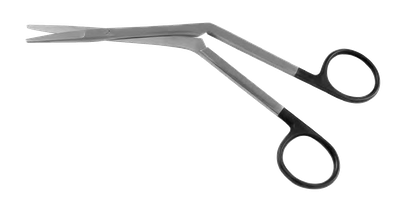
Where We Serve
Fizza Surgical exports to 50+ countries. Browse our country-specific pages with local regulatory guidance and pricing: