Lahey Thyroid Traction Forceps: Uses and Sizes Guide
Lahey traction forceps guide: 2x2 vs 3x3 prongs, 16-20 cm sizes, thyroid uses, and how to avoid confusing them with Lahey gall duct forceps.
The thyroid lobe is mobilised, the middle thyroid vein is divided, and now the lobe has to be rotated medially so the recurrent laryngeal nerve can be traced up to Berry’s ligament. A Babcock slips off the capsule. A Allis tears it. What holds is a pronged traction clamp seated squarely in the gland substance — and that instrument is the Lahey.
This clamp gets ordered under half a dozen names: Lahey goitre forceps, Lahey vulsellum, Lahey tenaculum, thyroid traction forceps. Same instrument, different catalogue conventions. The confusion matters when you are matching a tray list against a purchase order, so this guide separates the naming, the prong patterns, and the two other unrelated instruments that also carry Lahey’s name.
Who Lahey Was, and Why the Name Sits on Three Instruments
Frank Howard Lahey founded the Boston clinic that still bears his name and built much of his reputation on thyroid surgery in the 1920s and 1930s — an era when large toxic goitres were common and the recurrent laryngeal nerve was injured far more often than it is today. He designed instruments around the problem he faced daily: getting controlled, non-slipping traction on a bulky, friable, highly vascular gland.
Three quite different instruments carry his name, and mixing them up on a requisition is a genuinely common procurement error:
- Lahey traction forceps (this article) — ring-handled, ratcheted, with sharp inward-curving prongs. For grasping thyroid tissue.
- Lahey gall duct forceps — a fine right-angled dissecting forceps used to pass ligatures around the cystic duct. No prongs at all.
- Lahey thyroid retractor — a small handheld blade retractor for the strap muscles.
If a catalogue line simply reads “Lahey forceps 19 cm,” ask which pattern. The three are not interchangeable and the price points differ substantially.
Design: What the Prongs Actually Do
The working end carries opposing sets of sharp, inward-curved prongs — most commonly 3 × 3, with 2 × 2 patterns available for smaller or more friable glands. The inward curve is the functional detail. Straight teeth would simply perforate the capsule and pull through under traction; the inward hook means that as tension increases, the prong tips converge and capture a bolus of tissue rather than shearing through it.
Behind the jaws sits a standard box joint. That matters more here than on a general-purpose hemostat, because traction forceps are loaded asymmetrically and almost always off-axis — the surgeon is pulling the gland sideways while the assistant holds counter-tension. A screw or lap joint would allow the prong sets to skew out of register under that load, and a skewed prong set tears tissue. We cover the mechanics of this in our guide to box joint versus screw joint instrument construction.
The finger rings terminate in a ratchet, usually two or three teeth. Two positions is deliberate: thyroid tissue does not need aggressive compression, only stable purchase, and over-ratcheting a Lahey onto a vascular gland produces exactly the capsular bleeding the clamp was meant to avoid.
Materials and Finish
Standard production is AISI 420 martensitic stainless, hardened through the jaw and prong region to hold the sharp prong points, with the shanks left slightly more ductile so the instrument flexes rather than fractures if it is dropped or levered. Prong tips are the wear point — they blunt and roll before any other part of the instrument fails, which is why a rounded prong tip is the standard trigger for withdrawal from service.
Satin finish is the usual specification. A mirror-polished Lahey throws operating light straight back into the surgeon’s eyes in a shallow cervical field, which is a nuisance during the fine capsular dissection near the nerve.
Sizes and Selection
| Length | Prong pattern | Typical application |
|---|---|---|
| 15.5–16 cm (6¼”) | 3 × 3 | Hemithyroidectomy, small to moderate lobes, shallow collar incision, paediatric and adolescent cases |
| 15.5–16 cm (6¼”) | 2 × 2 | Friable or thyroiditis-affected tissue where fewer, cleaner purchase points reduce capsular tearing |
| 19 cm (7½”) | 3 × 3 | General-purpose total thyroidectomy; the most commonly stocked pattern |
| 20 cm (8″) | 3 × 3 | Large multinodular goitre, retrosternal extension, deep cervical exposure where hand clearance from the field matters |
The length decision is really about hand position, not gland size. In a deep or retrosternal case the surgeon’s hand has to stay clear of the central neck so the assistant’s suction and the nerve monitor probe can work; the extra 4 cm of shank buys that clearance. In a slim-necked hemithyroidectomy the same 20 cm instrument becomes a lever that the surgeon fights.
Most thyroid trays carry four to six of these clamps. Two per lobe is the working minimum — one on the upper pole and one on the lower — and the spares matter because a prong set that has torn out mid-case cannot be repositioned into the same hole.
Beyond Thyroid Surgery
The pronged traction pattern gets used well outside the neck. Breast surgeons use them to hold the specimen during mastectomy flap dissection. In general surgery they appear for traction on fibrous tumour capsules and dense scar. Some hysterectomy trays include a pair for cervical traction, though a purpose-built vulsellum is the better instrument for that job.
What all these share is the same requirement: fibrous or bulky tissue that must not slip, in a field where an atraumatic grasper cannot generate enough hold. If the tissue is delicate and must not be perforated, a Lahey is the wrong choice — that is Babcock or Allis territory, and the trade-offs are set out in our Babcock versus Allis comparison.
Reprocessing Notes
Two features drive the cleaning protocol. The prongs trap tissue debris between the tips, and the box joint traps protein-rich fluid in the hinge slot.
Open the ratchet fully before the instrument goes into the enzymatic soak — a closed box joint holds soil in the slot no matter how long it sits. Brush the prong interstices with a fine nylon brush; ultrasonic cavitation alone will not always dislodge a plug of thyroid tissue wedged between converging prong tips. Lubricate the joint after every cycle. A stiff Lahey joint is the earliest warning that corrosion has started inside the box.
Inspect prong sharpness at every reassembly. Draw the tips lightly across a gloved fingertip; a serviceable prong catches, a worn one skates. Blunt prongs do not fail safely — they slip under traction at the exact moment the surgeon is applying most tension near the nerve.
Frequently Asked Questions
Are Lahey traction forceps and Lahey goitre forceps the same instrument?
Yes. “Lahey goitre forceps,” “Lahey vulsellum,” and “Lahey tenaculum forceps” all describe the same ring-handled, pronged traction clamp. Note that Lahey gall duct forceps is a completely different right-angled dissecting instrument that shares only the surname.
Should I order 2 × 2 or 3 × 3 prongs?
3 × 3 is the general-purpose choice and covers most thyroidectomy work. Order 2 × 2 when the tissue is friable — Hashimoto’s thyroiditis, previous radioiodine, re-operative fields — because fewer prongs mean fewer capsular perforation points to tear between.
Why does my Lahey clamp keep slipping off the thyroid lobe?
Almost always blunt or splayed prong tips, or over-ratcheting. Prongs that have rolled over will not seat. Closing to the third ratchet tooth on soft glandular tissue crushes it and lets the tissue extrude out from between the prongs rather than staying captured.
What steel grade should thyroid traction forceps be made from?
AISI 420 martensitic stainless is the working standard — it takes the hardness needed to hold sharp prong points while remaining tough enough not to snap. See our breakdown of surgical steel grades 410, 420 and 440 for how the grades differ in practice.
How many should a standard thyroidectomy tray carry?
Four to six. Two per lobe is the functional minimum, with spares available because a prong set that tears out cannot be reseated in the same tissue.
Specifying These for Your Tray
When you write the requisition, three lines settle it: pattern (traction/vulsellum, not gall duct), prong count (2 × 2 or 3 × 3), and overall length. Add “box joint” and “satin finish” and there is nothing left to interpret.
Fizza Surgical manufactures Lahey traction forceps in Sialkot in all four standard configurations, drop-forged from AISI 420 and finished under ISO 13485. Our full thyroid tray context is covered in the thyroidectomy instrument set guide, and the wider range sits in general surgical instruments. Manufacturing and quality documentation is available on our certifications page.
Need precision surgical instruments?
Configure complete instrument sets with our team — ISO 13485 certified, CE marked, made in Sialkot since 1980.
Related Guides
View all articles →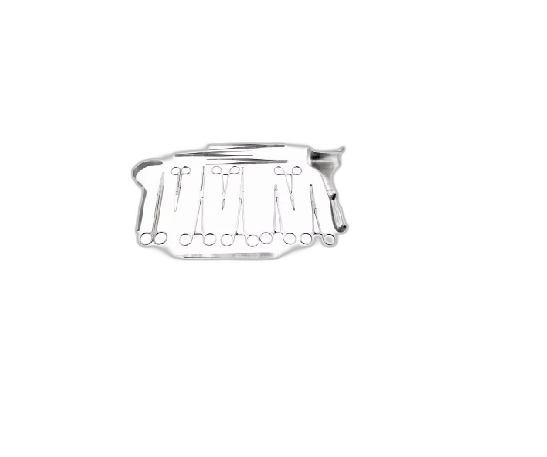
Where We Serve
Fizza Surgical exports to 50+ countries. Browse our country-specific pages with local regulatory guidance and pricing: