Urethral Sounds and Bougies: Clutton, Lister, Van Buren
Urethral sounds compared: Van Buren, Lister and Clutton patterns, French gauge conversions, steel grades and set composition for urology.
Before there was steel there was wax. Surgeons treating urethral stricture in the eighteenth century passed tapered wax candles — bougies, from the Algerian town of Bugia that supplied the wax trade — into the urethra and left them to soften and stretch the narrowed segment. The name outlived the material. Today a bougie is a slim graduated dilator, and the metal instruments that replaced the candles are still, confusingly, called sounds.
Confusingly, because sounding and dilating are not the same act, even when the same instrument performs both. This guide covers what separates the three patterns a urology tray is most likely to carry, how French gauge sizing actually works, and how to specify a set that will not arrive with the wrong curve.
Sound Versus Bougie: The Distinction That Still Matters
A sound was originally a diagnostic instrument — a rigid probe passed to sound out the urethra and bladder, detecting stones by the click transmitted up the shaft. A bougie was therapeutic, passed to dilate. The functional split has blurred because a graduated set of solid metal urethral sounds does both jobs: the smallest that passes tells you the calibre of the stricture, and the sequence that follows opens it.
What has not blurred is the mechanical difference between the patterns. Curve geometry, taper length, and tip profile all change how an instrument negotiates the bulbar urethra and the prostatic angle, and choosing badly turns a routine dilation into a false passage.
The Three Classical Patterns
Van Buren
The Van Buren is the workhorse of adult male urethral dilation. It carries a long shaft — typically 11 inches, around 28 cm — with a pronounced J-shaped distal curve that mirrors the natural course of the posterior urethra as it turns through the prostate into the bladder neck. The curve is what lets the instrument follow anatomy rather than fight it.
Sets are commonly supplied as 12 pieces covering 8 Fr to 30 Fr in 2 Fr steps, or as 16-piece sets extending to 40 Fr. The handle is flattened and knurled so the operator can feel rotation, which matters: the sound is advanced with the curve pointing anteriorly, then rotated as the tip reaches the bulb.
Lister
Lister bougies are the finer-calibre relatives. Shorter overall — around 28 cm is standard — with a gentler curve and a considerably longer taper at the tip, they are built for tight strictures and for uterine and general dilating work as well as urethral use. Sets run in small increments through the very low gauges, which is where Lister patterns earn their place: 00-1 FG, 0-2 FG, ½-3 FG and upward, sizing that a Van Buren set simply does not reach.
The long taper is the point. In a pinhole stricture the tip acts as its own guide, and the gradual increase in diameter along the working length means one instrument achieves a small dilation without a full sequence.
Clutton
Clutton sounds are the shorter, straighter members of the family, and they are the least standardised. They are used for anterior urethral work and for female urethral dilation where the short, straight urethra needs no curve at all — a J-curve in a female urethra achieves nothing except a harder-to-control instrument.
Clutton patterns also turn up as follower sounds after internal urethrotomy, where a straight shaft is easier to pass through a freshly incised segment.
| Pattern | Typical length | Curve | Common size range | Primary use |
|---|---|---|---|---|
| Van Buren | 28 cm (11″) | Deep J-curve | 8–30 Fr, extended sets to 40 Fr | Adult male posterior urethral dilation |
| Lister | 28 cm | Gentle, long taper | 00-1 FG upward, fine increments | Tight strictures, uterine and urethral dilation |
| Clutton | Shorter, ~24–26 cm | Straight or minimal | Mid-range gauges | Anterior urethra, female urethral dilation |
| Dittel | 28–30 cm | Slight single curve | 8–40 Fr in 2 Fr steps | General graduated dilation |
French Gauge: Read It Correctly
French gauge (Fr, FG, or Ch for Charrière, its inventor) measures circumference, not diameter. The conversion is simply diameter in millimetres × 3. Divide the French number by 3 to get millimetres.
| French gauge | Diameter (mm) | Clinical note |
|---|---|---|
| 8 Fr | 2.67 mm | Tight stricture, starting calibre |
| 10 Fr | 3.33 mm | |
| 12 Fr | 4.00 mm | Typical female urethral working range begins |
| 14 Fr | 4.67 mm | |
| 16 Fr | 5.33 mm | Standard adult catheter calibre |
| 18 Fr | 6.00 mm | |
| 20 Fr | 6.67 mm | |
| 22 Fr | 7.33 mm | Common dilation endpoint |
| 24 Fr | 8.00 mm | |
| 30 Fr | 10.00 mm | Upper end of most 12-piece sets |
Two Fr equals 0.67 mm. That is the step size in a standard set, and it is deliberately small — jumping calibre in a scarred urethra is how mucosa tears.
Set Composition: What to Actually Buy
The temptation is to order the biggest set available. Resist it. A 16-piece 8–40 Fr set contains six instruments most departments will never take out of the tray, and each one still needs cleaning, inspection and tracking.
General urology clinic: a 12-piece Van Buren set, 8–30 Fr, curved, plus two or three Lister bougies in the sub-8 range for the occasional pinhole stricture.
Female urethral dilation only: straight Clutton or short straight dilators, 12–26 Fr. Curved sounds are unnecessary and harder to control.
Theatre, mixed workload: the 16-piece 8–40 Fr set, on the grounds that a theatre tray gets used for cases you did not schedule.
Storage is worth a paragraph of its own. A graduated set in a felt roll is a set that will eventually be missing 18 Fr. Rigid trays with numbered silicone-cushioned slots make a missing instrument obvious at count-out, and the cushioning stops the polished shafts scoring each other in transit. Related tray-organisation issues for dilating instruments are covered in our guide to Hegar uterine dilators.
Technique Notes That Drive Instrument Choice
Instrument selection makes more sense once the mechanics of passage are clear.
The male urethra has two fixed points of resistance: the bulbomembranous junction, where the tract turns sharply upward through the urogenital diaphragm, and the bladder neck. A curved sound is advanced with the concavity facing anteriorly and the shaft nearly parallel to the abdominal wall. As the tip reaches the bulb, the handle is swept downward between the legs, and the curve carries the tip up and over the membranous urethra. The instrument is never pushed through resistance. It is rotated and repositioned until it drops.
Two rules follow directly from this and shape what you buy:
- Weight is a feature, not a flaw. A properly weighted solid sound descends into the bladder under its own mass once the tip clears the membranous urethra. Hollow or lightweight imitations require the operator to push, which is exactly the force that creates a false passage.
- Handle geometry conveys tip orientation. The flattened, knurled handle is oriented to the plane of the curve. If the handle is round or the knurling is symmetrical, the operator loses the tactile cue that tells them which way the tip is pointing inside the patient.
The false-passage problem
The main complication of dilation is creating a false passage — driving the tip through the urethral wall into periurethral tissue. It is a technique failure, but instrument quality contributes. A worn, blunted or bent tip concentrates force unevenly. A shaft with a slight bend transmits the operator’s axial push off-axis. Both make the same error easier to commit.
This is why serviceable urethral sounds are inspected for straightness and tip integrity at every reprocessing cycle, not annually.
Paediatric considerations
Paediatric urethral dilation uses shorter instruments and much finer calibres, starting well below 8 Fr. Adult sets are not scalable downward — the shaft length alone makes an adult Van Buren unusable in a child. Departments doing paediatric urology need a dedicated short set with fine graduations, and mixing the two on a shared shelf invites the wrong instrument reaching the field.
Material Specification
Solid urethral dilators are made from martensitic stainless — AISI 420 is common — or, at the premium end, from austenitic AISI 316L. The choice is not cosmetic.
316L is more corrosion-resistant, notably against the chloride exposure that urological instruments get from urine contact. It is also non-magnetic and softer, so a 316L sound can take a permanent bend if mishandled. Martensitic 420 is harder and holds its curve, but is more prone to pitting if reprocessing is sloppy.
For instruments that spend their working life in a chloride-rich environment, 316L is the defensible choice provided handling discipline is good. ISO 7153-1 sets out the compositional requirements for both families.
Surface finish matters more on urethral sounds than on almost any other instrument. The shaft is drawn along mucosa along its entire working length. Any longitudinal machining mark, any weld line, any transition ridge where the shaft meets the handle will be felt by the patient and will abrade tissue. Specify a mirror-polished shaft with a documented Ra value where your procurement process allows it, and inspect the shaft-to-handle junction on receipt — that junction is where cheap manufacture shows first.
Reprocessing and Inspection
Solid dilators are among the easiest instruments to reprocess and among the easiest to damage in the process.
- Never load them loose in a washer basket where they can roll against each other. Longitudinal scratches on a polished shaft are unrepairable in practice.
- Deionised water rinse is not optional. Chloride residue plus a 134 °C cycle produces pitting on martensitic steel, and the pits appear on the working shaft where they matter most.
- Inspect for straightness against a flat surface. A Van Buren sound with an unintended bend anywhere along the straight portion is a false-passage risk and should be withdrawn, not straightened.
- Check the size marking. Stamped gauge numbers wear. Laser-marked numbers survive far longer, and on a graduated set an illegible marking makes the whole set unsafe to use in sequence.
One practical note on packing: sequence the set in the tray by ascending gauge and count it at both ends of the cycle. A dilation performed with the sizes out of order is a dilation performed blind.
Frequently Asked Questions
What is the difference between a sound and a bougie?
Historically, a sound was a rigid diagnostic probe used to detect bladder stones and assess the urethra; a bougie was a slender graduated instrument used to dilate. In modern practice the terms overlap, because a graduated metal set performs both roles. The practical distinction that survives is design: bougies tend to have longer tapers and finer calibres, sounds have heavier shafts and pronounced curves.
How do you convert French gauge to millimetres?
Divide by three. French gauge measures circumference, so 24 Fr is 8 mm diameter, 18 Fr is 6 mm, 12 Fr is 4 mm. The 2 Fr steps in a standard set represent 0.67 mm increases in diameter.
Which pattern is correct for female urethral dilation?
A straight or minimally curved pattern — Clutton, or a straight Hegar-style dilator. The female urethra is short and essentially straight, so the deep J-curve of a Van Buren adds no benefit and reduces control.
Should sounds be 316L or 420 stainless?
316L for chloride resistance in a urological environment, 420 where rigidity and curve retention are the priority. Most quality sets use a martensitic grade for the shaft with a high mirror polish; 316L versions exist and are worth specifying where reprocessing water quality is variable.
What size increments should a dilation set have?
Two French. Larger jumps risk mucosal tearing in a scarred urethra. If your set has 4 Fr gaps, fill them — the missing intermediate sizes are exactly the ones you will want in a difficult stricture.
Sourcing
Urological dilators are unforgiving of poor finishing in a way that most instruments are not, because the whole working length contacts mucosa. When comparing suppliers, ask for the shaft polish specification, the steel grade, and confirmation that gauge markings are laser-etched rather than stamped.
Fizza Surgical manufactures urethral dilating instruments in Van Buren, Lister, Clutton and Dittel patterns from our Sialkot facility under ISO 13485, CE marked. Full range details sit in the surgical instruments catalogue, related urology tray contents are covered in our prostatectomy instrument set guide, and quality documentation is on the certifications page.
Need precision surgical instruments?
Configure complete instrument sets with our team — ISO 13485 certified, CE marked, made in Sialkot since 1980.
Related Guides
View all articles →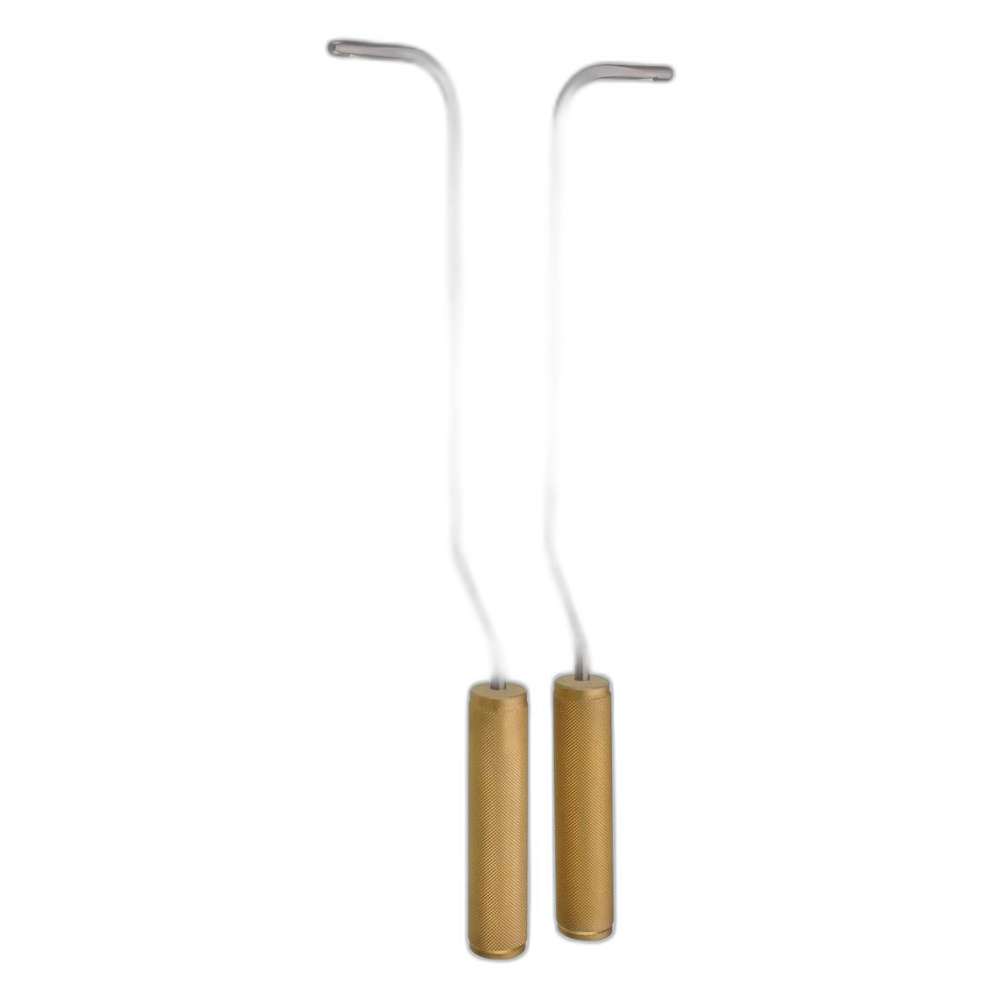

Where We Serve
Fizza Surgical exports to 50+ countries. Browse our country-specific pages with local regulatory guidance and pricing: