Trousseau Tracheal Dilator: Emergency Airway Instrument Guide
Trousseau tracheal dilator sizes, prong dimensions and tray placement for tracheostomy and cricothyrotomy. Adult and paediatric specs compared.
The incision is made. The pretracheal fascia is split, the thyroid isthmus retracted, and a vertical opening cut between the second and third tracheal rings. Then the tube meets resistance and stops. The opening is there — it just will not stay open long enough to accept the cannula.
That moment is what the Trousseau tracheal dilator exists for. It is a small, unglamorous instrument, usually the cheapest thing on the tray, and it is the reason a tracheostomy takes forty seconds instead of four frightening minutes.
What the Instrument Actually Does
Tracheal cartilage is elastic. Cut it and it springs back toward its resting position, closing the stoma you just created. The dilator is inserted closed into the tracheal incision, then the handles are squeezed together — and here is the design quirk that catches new users — which spreads the prongs apart. The action is reversed compared with a hemostat. Squeeze to open.
Two blunt, round-tipped prongs hold the anterior tracheal wall apart while the assistant passes the tracheostomy tube alongside them. The tips are deliberately atraumatic. A sharp tip in that position risks perforating the posterior membranous wall of the trachea, and behind that sits the oesophagus.
The instrument is non-ratcheted. There is no box lock and no catch, because the surgeon needs to release it instantly the moment the tube seats. A ratchet in an airway emergency is a liability, not a feature.
Dimensions and Pattern Variations
Length is the first specification most buyers get wrong. The commonly stocked patterns run from roughly 115 mm to 145 mm overall, and the difference matters more than it looks on paper.
| Overall length | Tip width | Tip length | Typical application |
|---|---|---|---|
| 105–115 mm (4½”) | ~4.5 mm | ~15 mm | Paediatric and neonatal tracheostomy |
| 130 mm (5¼”) | ~5 mm | ~20 mm | Adolescent, small adult necks |
| 140–145 mm (5½–5¾”) | ~6 mm | ~30 mm | Standard adult, obese neck, deep field |
Tip length is the specification that actually determines safety. A 30 mm prong entering a paediatric trachea can strike the posterior wall. Departments running mixed adult and paediatric airway cover should hold both patterns and mark them clearly — colour-coded silicone rings on the finger loops work well and survive autoclaving.
Two-prong versus three-prong
The classic Trousseau pattern has two prongs. A three-prong variant exists, sometimes catalogued under Laborde’s name, where the third prong sits centrally and gives a more circular opening. In practice the two-prong version dominates because it presents a lower profile alongside the tube during insertion. Three prongs open a rounder stoma but occupy more of it.
Finger loops and spring tension
Spring tension on a Trousseau tracheal dilator is the quiet quality differentiator. Too stiff and the surgeon cannot make fine adjustments one-handed while the other hand steadies the tracheal hook. Too soft and the prongs drift closed under tissue recoil. A correctly tempered single-spring dilator should hold a 12 mm spread against tracheal elastic recoil without the operator maintaining full grip pressure.
Where It Sits in the Airway Sequence
On a standard open tracheostomy tray the dilator works as one of a trio:
- Tracheal hook (single sharp or blunt, Jackson or Kilner pattern) — elevates and stabilises the trachea, usually engaging the cricoid or the ring above the incision
- Trousseau dilator — holds the incision open
- Tenaculum or tracheal dilating forceps — occasionally substituted in emergency kits
In cricothyrotomy the sequence compresses. After the membrane is incised, the dilator widens the opening and may be left in situ while the tube passes, or swapped for a hook. Published emergency airway literature describes using the dilator as a bridge instrument in exactly this way, and the technique appears in cricothyrotomy training because it is more forgiving than blind bougie passage for operators who perform the procedure rarely.
Our full tray breakdown for open airway procedures is set out in the emergency tracheostomy kit guide, and the elective set contents are covered in the tracheostomy instrument set guide.
What It Replaces, and What It Does Not
Improvisation in this role is common and mostly bad. Three substitutions turn up repeatedly:
- Artery forceps spread in the stoma. Works, badly. The jaws are flat and profiled to grip, not to spread evenly, so they open a slot rather than a stoma and the serrated inner faces abrade mucosa.
- Nasal speculum. Closer in action, but the blades are far too long for a tracheal opening and the instrument has no fine control at the tip.
- Tracheal hook used alone. Stabilises but does not dilate. A hook and a dilator are complementary instruments, not alternatives.
Conversely, the dilator does not replace the hook. Reaching for a Trousseau tracheal dilator to stabilise a mobile trachea puts the operator in the position of trying to hold and spread with one instrument, which is precisely when the posterior wall gets injured.
Material and Manufacture
These are martensitic stainless steel instruments — typically AISI 420 for the working end where edge retention and spring temper both matter. The specification that governs surgical instrument steels is ISO 7153-1, and a compliant dilator will hold its spring temper across repeated 134 °C autoclave cycles without the prongs taking a permanent set.
Watch the prong tips on inspection. They should be polished round, with no machining ridge on the inner face. A ridge there will score the tracheal mucosa on withdrawal. Under a 10× loupe the tip should read as a continuous dome, not a truncated cylinder with a rounded edge.
The finish debate — satin versus mirror — is largely preference in this instrument. Satin reduces glare under theatre lights in a field where the surgeon is looking into a small dark opening, and most airway surgeons who express a preference choose satin for that reason.
Reprocessing Notes
The spring joint is the failure point. Blood and secretions track into the hinge, and because there is no box lock to open fully, ultrasonic cleaning matters more here than on a ratcheted instrument.
- Ultrasonic at 40 kHz for a minimum of 5 minutes with an enzymatic detergent, instrument held open
- Rinse with deionised water — chloride from tap water pits the tips first
- Lubricate the spring joint with a water-soluble instrument milk before autoclaving
- Inspect spring return before every reissue: released from full spread, the prongs should close fully under their own tension
A dilator whose prongs no longer close completely on release has lost temper and should be withdrawn. It will not open reliably against tissue recoil either.
Frequently Asked Questions
Why does squeezing the handles open the prongs?
The instrument uses a reversed-action single spring. The pivot sits between the finger loops and the prongs in such a way that closing the loops spreads the tips. It lets the surgeon hold the stoma open with a natural grip rather than an awkward reverse pinch, and it releases instantly when the hand relaxes.
Can a Trousseau dilator be used for percutaneous tracheostomy?
Not as the primary dilator. Percutaneous dilatational techniques use a graduated single-taper dilator over a guidewire, or the forceps-based Griggs method. The Trousseau dilator remains an open-technique instrument and a backup for conversion to open tracheostomy if the percutaneous route fails.
What size should a district hospital stock?
Two: a 140 mm adult pattern and a 115 mm paediatric pattern, both duplicated so one is always through sterilisation. Airway instruments should never be single-copy items on a tray that gets used in emergencies.
Is the three-prong Laborde version worth carrying?
Only if your surgeons already prefer it. It opens a more circular stoma but takes up more of the opening during tube passage. Most departments standardise on two-prong and stock a single Laborde as a secondary option rather than duplicating both patterns across every tray.
How do you tell a worn dilator from a serviceable one?
Three checks: prongs must close fully on release, tips must be smooth and symmetrical under magnification, and there must be no lateral play at the pivot when the prongs are spread. Lateral play means the prongs will scissor rather than spread evenly.
Specifying for Procurement
When issuing a tender line for this instrument, name four things: pattern (Trousseau, two-prong), overall length in millimetres, tip width, and steel grade with the ISO 7153-1 reference. “Tracheal dilator, one each” is how departments end up with a paediatric instrument on an adult tray.
Fizza Surgical manufactures airway instruments in Sialkot under ISO 13485, CE marked, in both adult and paediatric patterns. Our airway range sits alongside the wider surgical instruments and laryngoscope catalogues, and quality documentation is available on our certifications page.
Need precision surgical instruments?
Configure complete instrument sets with our team — ISO 13485 certified, CE marked, made in Sialkot since 1980.
Related Guides
View all articles →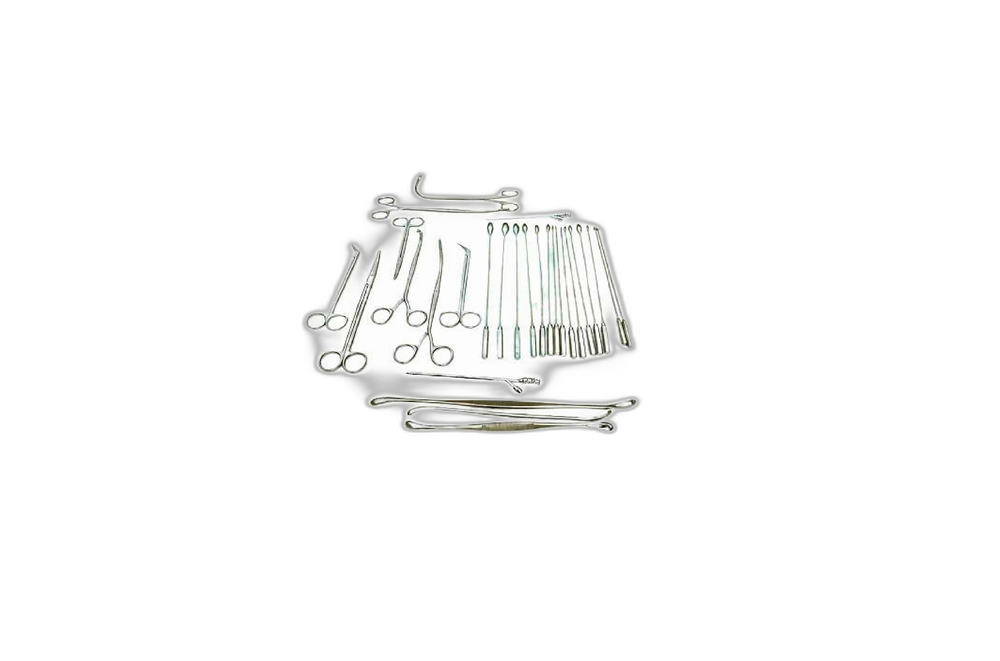
Where We Serve
Fizza Surgical exports to 50+ countries. Browse our country-specific pages with local regulatory guidance and pricing: