Neck Dissection Instrument Set: Head and Neck Tray Guide
Neck dissection instruments explained: full tray list, retractors, fine haemostats, energy devices, reprocessing and the four commonest tray errors.
Count the instruments on a laid-out neck dissection tray and you will get somewhere between 90 and 140 pieces. Count the ones the surgeon actually picks up during a selective dissection and the number drops to around 25. That gap is where most trays go wrong: they are assembled by adding, never by auditing, and the result is a heavy set that takes two people to lift, costs a fortune to reprocess, and still misses the one fine-tipped clamp everybody wanted at the carotid.
This guide works through what a neck dissection set has to contain, why each group is there, and where the common configuration errors sit. It assumes an open procedure — selective, modified radical or radical — rather than a transoral or robotic approach.
What the Anatomy Demands of the Instruments
The neck is a shallow field crowded with structures you cannot afford to injure. The internal jugular vein, the carotid sheath, the spinal accessory nerve, the marginal mandibular branch of the facial nerve, the phrenic nerve on the scalene bed, the thoracic duct on the left, and the brachial plexus laterally are all within a few centimetres of tissue that is being deliberately removed.
Three consequences follow, and they explain almost every instrument choice in the tray.
Working depth is short but access is awkward. Nothing is more than about 6 cm deep, so long instruments are mostly unnecessary. But the field runs from the mandible to the clavicle under skin flaps, and the surgeon works at an angle underneath those flaps rather than straight down. Instruments are therefore medium length with fine tips, not long and heavy.
Dissection is largely blunt and spreading. Lymphatic tissue is teased off vessels and nerves rather than cut across. That puts curved dissecting scissors and fine right-angle clamps at the centre of the set, not scalpels.
Everything bleeds and nothing tolerates a big bite. The venous plexus around the internal jugular tears easily and haemostats must be fine enough to take a small precise bite next to a nerve.
Skin, Flaps and Exposure
The apron or hockey-stick incision is raised in the subplatysmal plane, and flap elevation is where the first specialised instruments earn their place.
Skin hooks do the retraction here. Double-prong hooks on the flap edge give controlled countertraction without crushing skin that has to heal in a cosmetically visible area, and single-prong Gillies hooks handle the corners. We cover the pattern differences in detail in our guide to skin hooks in surgery. A set that substitutes toothed tissue forceps for skin hooks at this stage produces flap-edge necrosis, and it shows six weeks later.
For flap retraction once elevation is complete, most units use hand-held blade retractors rather than self-retaining rings. Langenbeck and Roux patterns dominate, in narrow and medium blade widths — the depth is shallow, so a 40 mm deep blade is usually enough. Our comparison of Roux, Morris and Czerny retractors covers where each blade profile fits.
A small self-retaining retractor of the Weitlaner or mastoid type is worth including for the supraclavicular corner, where an assistant’s hand cannot comfortably reach.
| Stage | Primary retraction | Typical sizes | Common substitution error |
|---|---|---|---|
| Flap elevation | Double-prong skin hooks | Sharp, 2–3 prong, 165–180 mm | Toothed forceps — crushes flap edge |
| Flap retraction | Langenbeck / Roux | Blade 8–13 mm wide, 30–45 mm deep | Deep abdominal blades — levers on the mandible |
| Supraclavicular corner | Weitlaner self-retaining | 130–160 mm, blunt 3×4 prong | Sharp prongs near the plexus |
| Deep vessel work | Narrow malleable or vein retractor | 10–13 mm | Rigid blade against the carotid |
The Dissecting Core
If you strip a neck tray down to the instruments that are genuinely in constant use, you arrive at a surprisingly small group.
Curved Metzenbaum scissors, 180 mm and 200 mm. These do most of the dissection. The blade must be genuinely fine — a Metzenbaum with a heavy blade behaves like a Mayo and tears lymphatics rather than parting them. Tungsten carbide inserts are worth the premium here because the scissors are used almost continuously for three hours and a dulled blade changes the surgeon’s technique without them noticing.
Fine right-angle clamps. The Mixter or Lahey right-angle is the instrument that passes behind a vessel so it can be tied. In the neck, 180–200 mm with a fine tip is the working size. Our detailed look at Lahey pattern instruments covers the jaw geometry that distinguishes these from general-purpose clamps.
Fine haemostats in quantity. Halsted mosquito forceps, curved, 125 mm — and you want 20 to 30 of them, not the six a general tray carries. Neck dissection generates a lot of small vessels needing individual control. Running short mid-procedure is one of the most common complaints from theatre staff about an under-specified set.
DeBakey forceps, 200 mm. Atraumatic vascular forceps for handling the internal jugular and carotid adventitia. A toothed forceps against the jugular wall is how a small tear becomes a large one.
Fine dissecting forceps. Adson with 1×2 teeth for skin, non-toothed Adson-Brown or Gillies for tissue handling under the flap.
Nerve hooks and fine dissectors. A blunt nerve hook for the spinal accessory and a small elevator-type dissector for teasing the fascial planes off the strap muscles.
Vessel Control and Ligation
The internal jugular vein is ligated and divided in a radical or modified radical dissection, preserved in most selective ones. Either way the set has to handle a large vein under low pressure that tears easily and admits air.
Two heavy right-angle clamps and a set of vascular clamps are appropriate for the jugular stump. Suture ligation rather than a simple tie is the norm for a vessel of this calibre, so the set needs needle holders capable of driving a 2-0 or 3-0 vascular needle — a 180 mm Mayo-Hegar with tungsten carbide jaws is the standard choice, backed by a finer 150 mm Crile-Wood for the small vessels.
Ligaclip appliers in small and medium sizes have largely displaced tying for the smaller lymphatic and venous branches. If your unit uses them, the set must carry the appliers, and the reprocessing department needs to know they are in it — clip appliers are among the most frequently damaged instruments in a head and neck tray because the jaws are fine and they get tossed into a wash basket with heavy retractors.
Where Trays Are Most Often Wrong
Across the sets we build and the tray lists customers send us, four errors recur.
Too few mosquito forceps and too many large clamps. Sets assembled from a general surgery template carry 6 mosquitos and 12 Kocher or Rochester-Pean clamps. The neck needs the opposite ratio. Heavy toothed clamps have almost no role in a dissection where nothing is being crushed deliberately.
Scissors that are nominally Metzenbaum but functionally Mayo. Cheaply produced dissecting scissors are frequently made with a thicker blade stock than the pattern specifies because thinner blades are harder to grind and more likely to fail inspection. They look right in the photograph and feel wrong in the hand. This is the single most common quality complaint in head and neck sets and it is worth specifying blade thickness explicitly on the purchase order.
No dedicated fine needle holder. One 180 mm needle holder is expected to drive both the vascular suture and the 5-0 used to repair a nerve sheath or close the platysma. It cannot; a 150 mm fine holder must be in the set.
No thought given to the specimen. The dissected block goes to pathology oriented and marked. A tray that includes a marking pen, orientation pins or tags, and a specimen container that fits saves ten minutes of improvisation at the end of a long case.
A Working Configuration
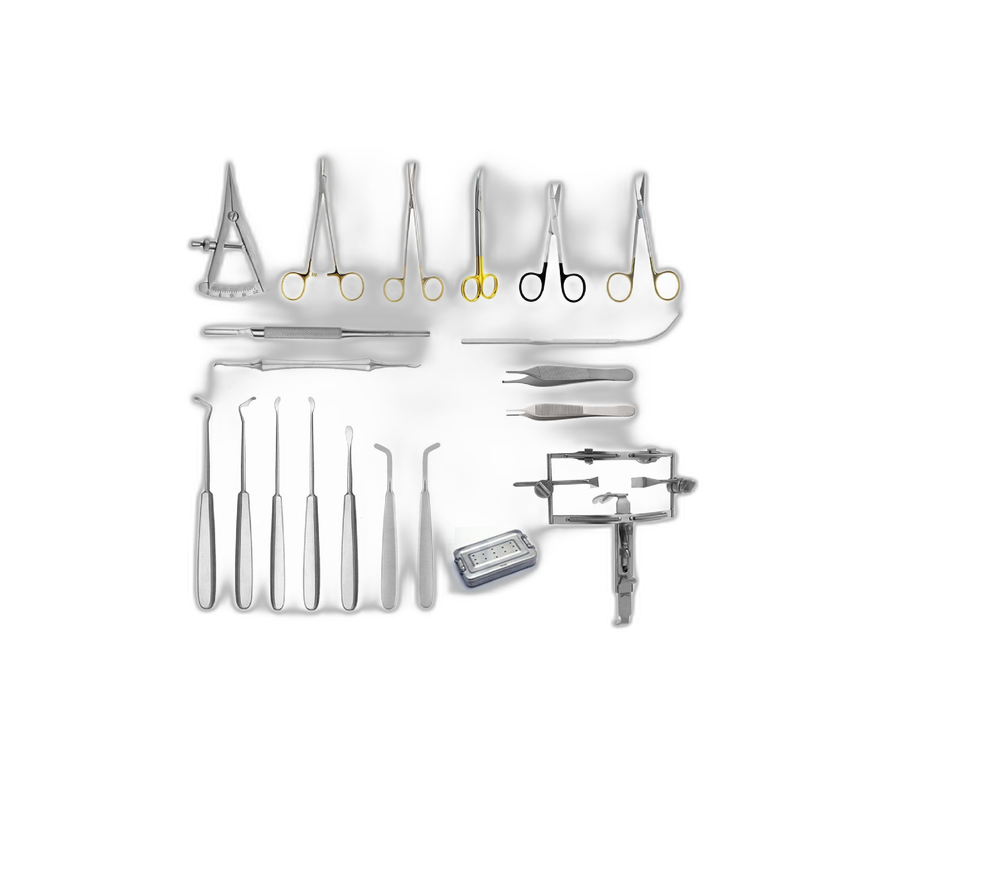
The list below is a serviceable selective neck dissection set for levels I–III or II–IV. It runs to about 95 pieces, which fits a single standard tray and can be lifted by one person.
| Group | Instruments | Qty |
|---|---|---|
| Knives | Scalpel handle No. 3; handle No. 7 for deep work | 2 + 1 |
| Scissors | Metzenbaum curved 180 & 200 mm; Mayo straight 170 mm; fine suture scissors; Joseph 140 mm | 6 |
| Haemostats | Halsted mosquito curved 125 mm | 24 |
| Right-angles | Mixter / Lahey fine 180 mm; heavy 200 mm | 6 + 2 |
| Forceps | DeBakey 200 mm; Adson 1×2; Adson-Brown; Gillies | 8 |
| Needle holders | Mayo-Hegar TC 180 mm; Crile-Wood TC 150 mm | 3 + 2 |
| Retractors | Langenbeck pair; Roux pair; Weitlaner; narrow malleable; vein retractor | 8 |
| Hooks & dissectors | Double-prong skin hooks; Gillies single; blunt nerve hook; fine periosteal elevator | 10 |
| Tissue & towel | Allis 150 mm; Babcock; Backhaus towel clips | 14 |
| Suction | Yankauer 230 mm; fine Frazier 8–10 Fr | 3 |
| Drain | Redon guide needle 10 Fr curved | 2 |
Adjust upward for a radical dissection, which needs additional heavy clamps for the sternocleidomastoid and the jugular, and a periosteal elevator set if the mandible is involved. A set covering a thyroid procedure at the same session should be cross-checked against our thyroidectomy instrument set guide, since the overlap is substantial and duplicating both trays wastes reprocessing capacity.
Energy Devices and What They Displace
Most units now run at least part of the dissection with bipolar forceps, an advanced bipolar sealer or an ultrasonic device. That changes the tray, and units frequently forget to update the list when the technology arrives.
What comes out: a proportion of the mosquito forceps and a good share of the ties. A sealer that handles vessels up to 5 or 7 mm removes most of the small-vessel clamp-and-tie cycle, and departments that have made the switch typically drop from 24 mosquitos to 16 without complaint.
What has to go in: bipolar forceps in at least two tip widths, with the cable, and a means of keeping the tips clean during the case. Bipolar tips char, and a charred tip stops coagulating and starts sticking — which tears the vessel it was supposed to seal. A wet gauze and a tip cleaner on the Mayo stand solve this for pennies.
What does not change: the fine dissecting scissors and right-angle clamps. Energy devices are poor at the delicate spreading dissection along a nerve, and every surgeon we have discussed this with keeps the Metzenbaums in constant use regardless of what else is on the field.
Materials and Reprocessing
Neck dissection instruments live a hard life: long procedures, constant use, fine tips, and blood that is allowed to dry during a three-hour case if the scrub team does not wipe as they go.
Martensitic stainless steel to ISO 7153-1 is the standard — AISI 420 for cutting instruments where hardness matters, AISI 410 for clamps and retractors where corrosion resistance and toughness matter more. Tungsten carbide inserts in needle holders and dissecting scissors are not a luxury on a set used weekly; they roughly triple usable service life and hold their edge through a long case.
Three reprocessing points specific to this tray:
- Box joints on 24 mosquito forceps are 24 places for dried blood to hide. Ultrasonic cleaning with the ratchets open is not optional.
- Fine tips bend. Mosquitos and right-angles should be racked with tips protected, not loose in a basket under retractors. Tip-damaged fine clamps are the largest single line of replacement spend in head and neck departments.
- Micro-serrations on DeBakey jaws trap protein. They need direct inspection under magnification at the point of assembly, not a glance.
Fizza Surgical manufactures complete head and neck sets in Sialkot under ISO 13485, CE marked to the applicable EU regulation, with tungsten carbide options across needle holders and dissecting scissors and full material traceability by batch. We build to a customer’s own tray list rather than a fixed catalogue set, which for most units is the difference between a tray that fits their technique and one they quietly stop using half of. Browse the wider surgical instruments range or review our certifications.
Frequently Asked Questions
How many pieces should a neck dissection set contain?
A selective dissection set works well at 90–110 pieces; a radical set runs to 130–150. Beyond that you are usually carrying general-surgery instruments that never get used, and paying to reprocess them every case. Audit against what actually leaves the tray over ten consecutive procedures rather than against a catalogue list.
Are tungsten carbide inserts worth it for this set?
For the needle holders and the Metzenbaum scissors, yes. Both are in near-continuous use for hours and both degrade in a way surgeons compensate for unconsciously rather than reporting. For retractors, hooks and haemostats the inserts are irrelevant — there is no cutting or gripping surface that benefits.
What is the difference between a Mixter and a Lahey right-angle?
Both are right-angle clamps. The Mixter has a finer, more sharply angled tip and is preferred for passing ties behind small vessels; the Lahey is slightly heavier with a broader curve and doubles as a traction instrument on thyroid and nodal tissue. Most neck dissection instruments lists carry both, in a roughly 3:1 ratio favouring the fine Mixter.
Do nerve monitoring probes change the instrument set?
They add rather than replace. Continuous or intermittent monitoring of the spinal accessory or marginal mandibular nerve requires the stimulator probe and its cable to be included in the sterile field, but the dissection instruments are unchanged. Confirm whether the probe is single-use or reprocessable, because that determines whether it belongs on the tray list at all.
Can a thyroidectomy set be used for a selective neck dissection?
Partially. The overlap in fine haemostats, right-angles and retractors is genuine, but a thyroid tray typically lacks the quantity of mosquito forceps, the skin hooks for flap elevation, and the longer Metzenbaum scissors that a nodal dissection needs. Many units carry a thyroid set plus a supplementary neck dissection tray rather than two full sets.
The best sets we see are the ones that have been cut down at least once. Someone sat with the scrub team, listed what came off the tray over a month of cases, and removed the rest. That exercise almost always finds a dozen heavy clamps nobody has touched in a year, and it almost always funds the extra mosquito forceps and the second fine needle holder that the surgeons have been asking for. If you are specifying neck dissection instruments for a new theatre, start from the procedure and work outward — not from a supplier’s standard set.
Need precision surgical instruments?
Configure complete instrument sets with our team — ISO 13485 certified, CE marked, made in Sialkot since 1980.
Related Guides
View all articles →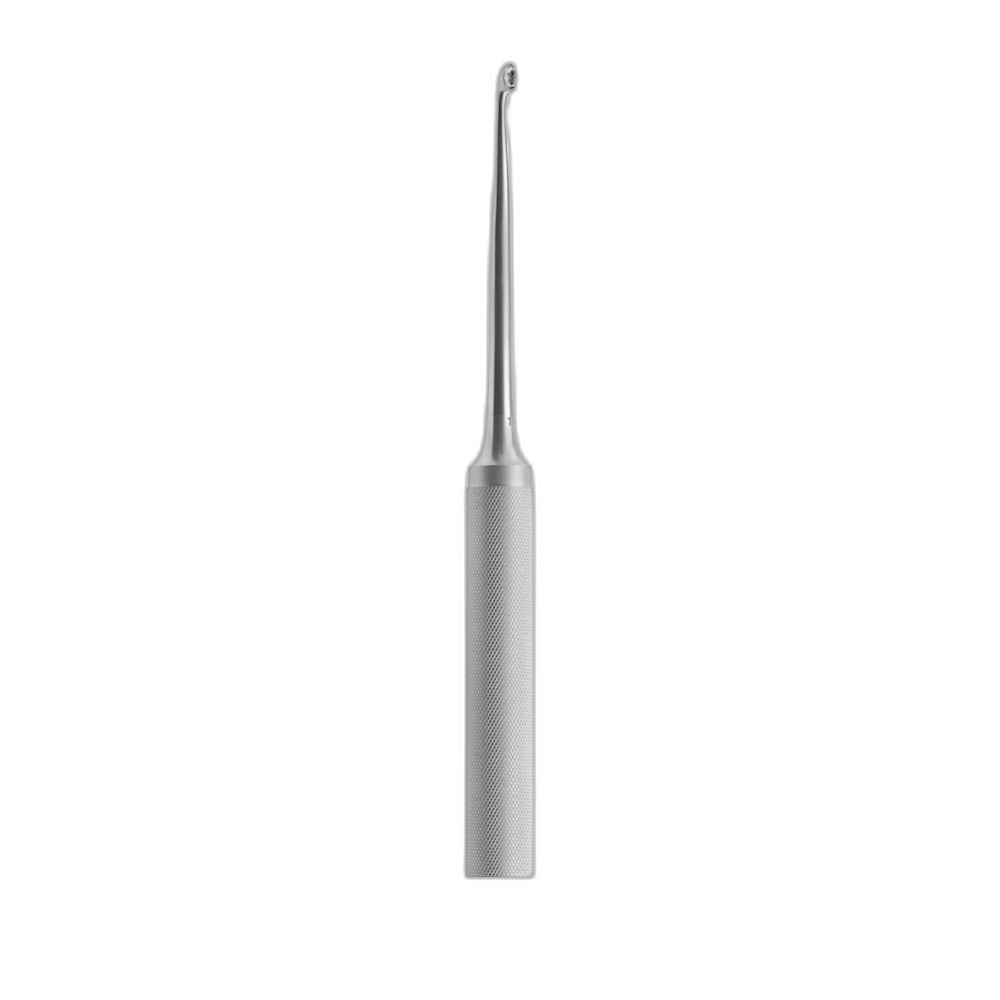
Where We Serve
Fizza Surgical exports to 50+ countries. Browse our country-specific pages with local regulatory guidance and pricing: