Ingrown Toenail Instruments: Nippers, Files & Tools Guide
Ingrown toenail instruments explained: nippers, splitters, elevators and curettes, with sizes, steel grades and sterilization protocols.
 Made in Sialkot · Since 1980
A patient walks in with a red, weeping great toe. The lateral nail fold is swollen, there is granulation tissue climbing over the nail plate, and the corner of the nail is buried somewhere under all of it. Nobody can treat that toe properly with a pair of standard nail clippers.
The right ingrown toenail instruments do three separate jobs: they separate the nail plate from the inflamed fold, they cut a controlled strip of nail without crushing it, and they clear the sulcus of debris and granulation so the wound can drain. Reaching for one tool to do all three is where most treatment failures start.
This guide covers the working set — what each instrument is for, the jaw geometries that matter, and the steel specifications we build to at Fizza Surgical.
The Core Instrument Set for Onychocryptosis
Onychocryptosis — the clinical name for an ingrown nail — is graded I to III. Stage I is erythema and pain with no discharge. Stage II adds infection and drainage. Stage III has hypertrophic granulation tissue over the fold. The instruments you need scale with the stage, but a competent tray covers all three.
Nail Nippers
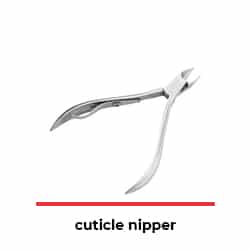
The workhorse. A podiatry nipper is not a scaled-up manicure clipper — it is a box-joint or double-spring instrument with a concave-ground cutting edge, sized by jaw length rather than overall length.
Three jaw patterns cover almost all clinical work:
- Straight jaw, 14–16 mm — general reduction of the nail plate, the default for thickened nails.
- Concave (curved) jaw, 12–15 mm — follows the natural convexity of the plate, useful when trimming along a curled or involuted nail.
- Barrel-spring, blunt-tip — the diabetic pattern. Rounded tips reduce the chance of puncturing the sulcus in a neuropathic foot where the patient cannot feel a slip.
Overall length runs 120–150 mm. The double leaf spring should return the jaws fully open under its own tension; a nipper that stays half-shut has a fatigued spring and belongs in the reject bin, not the autoclave.
Nail Splitters
A splitter looks like a nipper with an elongated, thinner cutting head — often 20–25 mm — with one blade flat and the other bevelled. That geometry lets it slide along the nail bed and cut the plate longitudinally rather than transversely.
This is the instrument for partial nail avulsion. You slide the flat blade under the plate, advance to the eponychium, and cut a 2–3 mm strip cleanly in one action. Trying the same cut with a standard nipper crushes the plate and leaves a jagged spicule — which is exactly what caused the problem in the first place.
Nail Elevators and Probes
Before anything gets cut, the plate has to be freed from the fold. A Freer-pattern elevator or a dedicated blunt nail probe with a 1.5–2 mm working tip slides into the sulcus and lifts the plate away from the soft tissue.
Do this before the splitter, not after. Cutting a plate that is still adherent to an inflamed fold means the blade is travelling through tissue you cannot see.
Nail Curettes
Small spoon-shaped tips, typically 1.0 mm to 3.5 mm in diameter, single- or double-ended. Two uses: scooping subungual debris and keratin out of the sulcus, and debriding granulation tissue at the fold. A sharp-edged curette is correct for granulation; a blunt one is correct for routine sulcus clearance in an atrophic or diabetic foot.
Files and Rasps
After the cut, the remaining nail edge needs smoothing. A diamond-coated or cross-cut file at 100/180 grit takes the corner off the cut margin so a fresh spicule does not form as the plate grows forward. This is the least glamorous step and the one most often skipped — and skipping it is why so many toes recur at six weeks.
Specifications: What to Look For
| Instrument | Typical Size Range | Steel Grade | Key Feature |
|---|---|---|---|
| Nail nipper, straight | 130–150 mm / 14–16 mm jaw | AISI 420 | Double leaf spring, box joint |
| Nail nipper, concave | 120–140 mm / 12–15 mm jaw | AISI 420 | Curved cutting edge |
| Diabetic nipper, blunt | 130 mm / 14 mm jaw | AISI 420 | Rounded tips, barrel spring |
| Nail splitter | 135 mm / 20–25 mm head | AISI 420 | One flat, one bevelled blade |
| Nail elevator (Freer type) | 140–180 mm | AISI 410 | Double-ended, blunt/semi-sharp |
| Nail curette | 130–150 mm / 1.0–3.5 mm cup | AISI 420 | Single or double-ended |
| Sinus / dressing forceps | 125–140 mm | AISI 410 | Serrated tips for packing |
Cutting instruments are martensitic 420 because it hardens to 52–56 HRC and holds an edge through repeated steam cycles. Elevators and forceps sit in 410, which is softer and more corrosion-tolerant — you want a probe that flexes slightly rather than one that snaps. The distinction between grades matters more here than in most trays; if you want the metallurgy behind it, we covered it in detail in our guide to stainless steel grades used in surgery.
Sterilization and Care
Podiatry instruments see keratin debris, blood, and occasionally pus in a single session. That combination dries fast and is unforgiving.
Immerse in an enzymatic solution immediately after use — a dried keratin plug inside a nipper box joint will survive a steam cycle and reappear as a stain. Ultrasonic for 5–10 minutes in the open position, rinse with deionised water, then lubricate the joint with instrument milk before autoclaving at 134 °C for 3 minutes.
Two failure points to watch:
The box joint. It traps debris and it is where corrosion starts. Cycle the jaws under the rinse stream.
The spring. Steam cycles with the jaws closed put the leaf spring under sustained load. Always process nippers open. A spring that has lost its return tension cannot be reset — the instrument is finished.
Choosing Instruments for a Podiatry Clinic
A single-chair clinic doing routine nail care and occasional partial avulsions needs roughly this: three nippers (straight, concave, diabetic blunt), one splitter, one double-ended elevator, two curettes at different cup sizes, one file, and a pair of dressing forceps. That covers stage I and II presentations comfortably.
Add a second full set before you add exotic patterns. Turnaround between patients is the real constraint in a busy clinic, not instrument variety, and a duplicate set beats a wider one every time.
For clinics ordering in volume, the specification to insist on is hardness testing per lot and a passivation certificate — not just a CE mark on the box. Our broader beauty and nail care instrument range is built on the same forging and heat treatment line as our surgical work, and the same QC gates apply. If you are writing a tender specification, the checklist in our post on inspecting instruments before purchase transfers directly to podiatry orders.
Frequently Asked Questions
What is the difference between a nail nipper and a nail splitter?
A nipper cuts across the nail plate to shorten it. A splitter has a longer, thinner head with one flat blade that slides under the plate to cut it lengthwise — the cut you need for a partial nail avulsion. They are not interchangeable.
Which ingrown toenail instruments are safe for diabetic patients?
Blunt-tipped, rounded-jaw nippers and blunt curettes. In a neuropathic foot the patient will not report a slip, so the instrument geometry has to do the protecting. Avoid sharp curettes and fine-tipped probes on that foot type unless you are debriding under direct vision.
What steel grade should podiatry nippers be made from?
AISI 420 martensitic stainless, hardened to 52–56 HRC. It holds a cutting edge through repeated autoclaving. Softer 410 is fine for elevators and forceps but will dull too quickly in a cutting jaw.
How often should nail nippers be replaced?
Judge by function, not calendar. Replace when the leaf spring no longer returns the jaws fully open, when the blades no longer meet along their full length, or when you see pitting inside the box joint. In a busy clinic that is typically 18–30 months.
Can podiatry instruments be autoclaved with the jaws closed?
No. Process them open. A closed spring under repeated steam cycles loses return tension permanently, and closed jaws prevent steam reaching the cutting surfaces and joint.
Fizza Surgical manufactures podiatry and nail care instruments in Sialkot, Pakistan under ISO 13485. For specifications, sample requests, or OEM enquiries, contact our technical team.
Need precision surgical instruments?
Configure complete instrument sets with our team — ISO 13485 certified, CE marked, made in Sialkot since 1980.
Related Guides
View all articles →
Where We Serve
Fizza Surgical exports to 50+ countries. Browse our country-specific pages with local regulatory guidance and pricing: