Roux, Morris and Czerny Retractors: Deep Blade Patterns
Morris retractor vs Roux and Czerny: blade depth, width, dimensions and which pattern suits deep abdominal and pelvic exposure.
Open a general laparotomy tray anywhere in the world and you will find some combination of three retractors that look, to an outsider, like variations on the same idea: Roux, Morris, and Czerny. All three are hand-held. All three are used to hold an abdominal wound open. All three are named after nineteenth-century European surgeons.
They are not interchangeable, and the reason has nothing to do with tradition. Each one solves a different geometry problem, and using the wrong one costs you either exposure or tissue.
The Underlying Problem: Depth Against Width
A hand-held retractor has to do two contradictory things. It has to pull tissue far enough out of the way to expose the target, and it has to distribute that pull over enough surface area that the tissue does not tear or ischaemise under the blade.
Push for depth and the blade gets long and narrow, which concentrates force. Push for width and the blade gets short and broad, which cannot reach. Every retractor pattern in general surgery is a fixed answer to that trade-off, frozen in steel.
Blade depth determines how far into the wound you can reach. Blade width determines how much pressure the tissue actually feels. A 40 mm deep, 20 mm wide blade and a 20 mm deep, 40 mm wide blade both look like “a retractor” in the catalogue photograph and behave completely differently in a wound.
That is the axis on which these three separate.
Morris Retractor: The Deep L-Blade
The Morris is the heavy one. A broad, curved blade set at close to a right angle to a flat, usually fenestrated handle – an L in profile. The blade rim is blunted along its edge specifically to stop it cutting into the structure it holds.
It is built for strong retraction of strong tissue. Abdominal wall muscle, rectus sheath, the bulk of the abdominal wall as a unit. Where a lighter pattern would bend or bury itself in the tissue, the Morris retractor takes the load and holds a wide corridor open.
Where it earns its place
Deep abdominal and pelvic work is the home ground. Once the peritoneum is open and the assistant needs to hold the wall back against real tension – a difficult cholecystectomy in an obese patient, an open colonic resection, a deep pelvic dissection – this is the pattern that does not fold. It also appears routinely in open spinal approaches for the same reason: paraspinal muscle is strong and pulls back hard.
The fenestrated handle is not decoration. It cuts weight from a large forged instrument and gives the assistant a grip that does not rotate in a wet glove over a two-hour case. Assistants who have held a solid-handle deep retractor for that long understand the difference.
Where it is the wrong instrument
Anywhere the corridor is narrow. The blade width that makes a Morris retractor effective in a laparotomy makes it useless in a limited incision – it simply will not fit, and forcing it means levering against the wound edge. It is also too much instrument for superficial work. Holding skin and subcutaneous fat with a deep abdominal blade is how you get a pressure necrosis line along the wound edge that you then have to explain at the post-op review.
Roux Retractor: Two Blades, One Handle
The Roux is double-ended. Two anterior-curved blades, one at each end of a single shaft, deliberately dissimilar in size, sharing a concave upper surface.
That asymmetry is the whole point. The instrument is two retractors in the hand of one assistant. As the dissection deepens and the exposure requirement changes, the assistant flips it rather than calling for a different instrument off the tray. In a busy field with one scrub nurse and a crowded Mayo stand, that is a real workflow advantage rather than a marketing one.
The concave upper surface matters too. Tissue held against a concave blade sits in the curve instead of being flattened against a plate, which spreads the contact area and lets the assistant use less force for the same exposure.
Typical use
Roux patterns are general workhorses – thyroid approaches, hernia repair, superficial to mid-depth abdominal work, and any case where the required depth of retraction changes as the operation progresses. They are also common in teaching sets for exactly that reason: one instrument covers a broader range of situations, which forgives a trainee assistant who has not yet learned to anticipate.
What a Roux will not do is hold an abdominal wall back against serious tension for an hour. It is a versatility instrument, not a load-bearing one.
Czerny Retractor: Prongs at One End, Blade at the Other
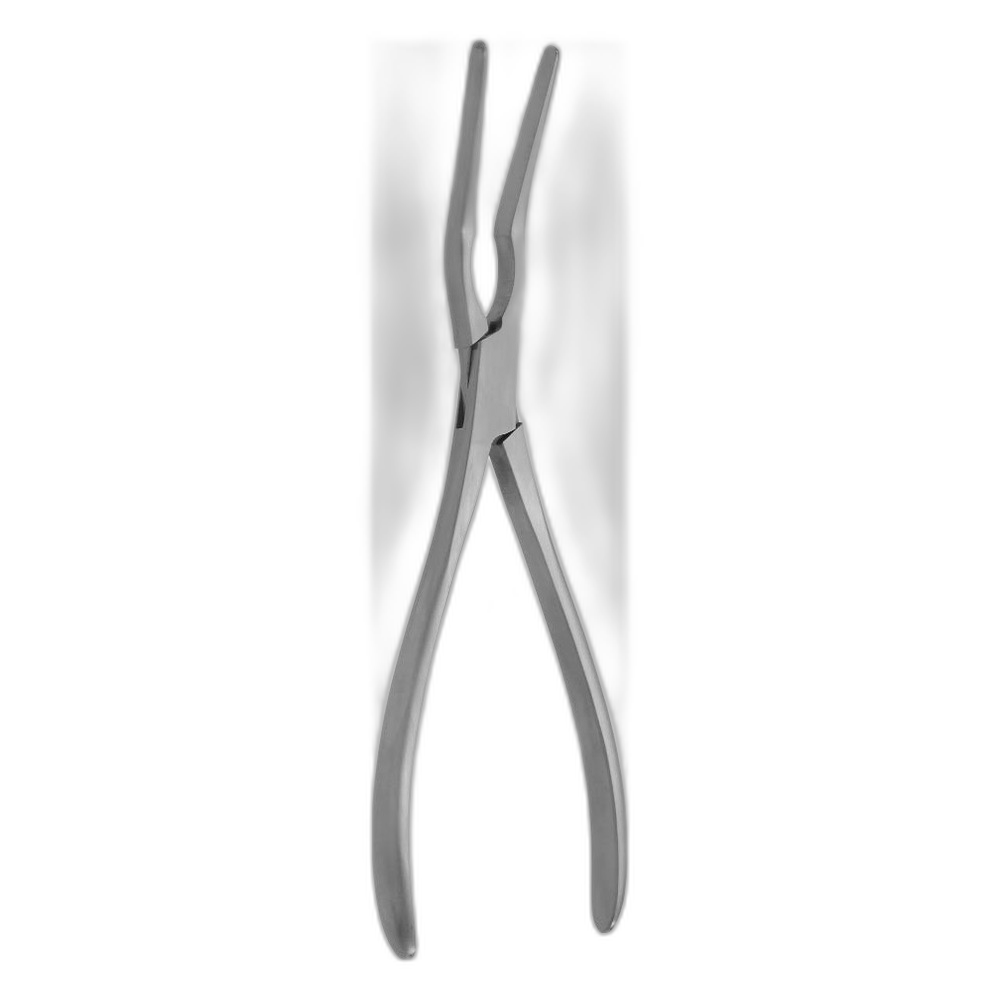
The Czerny is the most distinctive of the three and the most misunderstood. It is double-ended and S-shaped, with two blunt prongs – a bi-flanged fork – at one end and a smooth flat blade at the other.
Reference dimensions from a standard pattern: 175 mm (6 7/8 inches) overall, jaw depth 38 mm at both ends, jaw width 22 mm at both ends, blunt on both. Single-use versions exist at around 18 cm. Note the ratio – 38 mm deep against 22 mm wide. That is a narrow, deep blade, the exact inverse of the Morris geometry.
The two ends do different jobs
The pronged end engages tissue mechanically. Two blunt flanges hook under the wound edge and hold it without the assistant needing to press the instrument into the tissue – useful for skin and fascia at the start of a laparotomy, and for holding a wound edge during closure.
The flat blade end distributes pressure over a broader surface for anything that should not be hooked – bowel, bladder, a structure you want retracted but not gripped.
The practical consequence is that Czerny retractors are heavily used at the two ends of an abdominal case: opening the wound, and closing a midline laparotomy. Between those two points, deeper instruments take over.
The Czerny is not a small Morris
This substitution happens and it should not. The narrow blade means the same retracting force is applied over roughly half the tissue contact area of a Morris blade. In a limited-access field that narrowness is the advantage. Against a full abdominal wall it is a pressure injury waiting to happen.
Side-by-Side
| Morris | Roux | Czerny | |
|---|---|---|---|
| Ends | Single | Double, unequal blades | Double, prong + blade |
| Blade profile | Broad, L-shaped, curved | Anterior curved, concave face | S-shaped, narrow |
| Reference size | Large, pattern dependent | Pattern dependent | 175 mm (6 7/8″) |
| Jaw depth | Deep | Shallow to medium | 38 mm / 38 mm |
| Jaw width | Broad | Two widths in one instrument | 22 mm / 22 mm |
| Tissue load | High | Moderate | Low to moderate |
| Best at | Deep abdominal, pelvic, spinal | Variable-depth general work | Wound edges, limited corridors |
| Handle | Flat, often fenestrated | Flat shaft | Flat shaft |
Choosing by Procedure
Opening and closing a midline laparotomy
Czerny. The pronged end holds the wound edge during the approach through fat and sheath, and again during mass closure when the assistant needs the edges presented without a broad blade sitting in the way of the needle. Skin hooks or a small Langenbeck cover the same job for very superficial work; our Langenbeck and Farabeuf comparison covers where those two fit.
Deep pelvic and lower abdominal exposure
Morris for the wall, then a dedicated deep blade for the pelvis itself. This is where a Morris hands over to a Deaver or, for suprapubic and bladder work, to a Doyen. Trying to reach the pelvic floor with an abdominal wall retractor is a common error in improvised sets and it does not work – the blade is the wrong shape for the cavity.
Thyroid, hernia, and mid-depth general work
Roux. The depth requirement changes several times through these cases and a double-ended instrument tracks that change without a swap.
Paediatric and small-field work
Scaled-down Roux or Czerny patterns. Not a small Morris. The Morris blade geometry does not scale down usefully – shrink the width and you have lost the property that made it worth having.
What to Specify When Buying
Three things determine whether a hand-held retractor lasts, and none of them are visible in a photograph.
Steel and heat treatment. Martensitic grades – AISI 410 and 420 – conforming to ISO 7153-1. A retractor is a bending-load instrument, so what matters is the temper: too hard and the blade cracks at the neck, too soft and it takes a permanent set the first time an assistant leans on it. Ask what hardness the pattern is heat treated to, not just what grade the bar stock was.
The blade-to-shaft transition. This is where hand-held retractors fail, and it is the one place you can inspect with your eyes. The junction should be a smooth radius, not a sharp step. A sharp internal corner is a stress raiser, and a stress raiser under repeated bending load is a crack in eighteen months.
Edge finish. Every rim that will touch tissue should be rolled or radiused, not just deburred. Run a gloved fingertip along the full perimeter of the blade. If you can feel an edge through the glove, the tissue will feel it too.
Satin finish is preferred over mirror polish for retractors used under theatre lights, for the obvious reason – a mirror-finished broad blade held at the wrong angle will put a reflection in the surgeon’s eyes for the length of the case.
Handling and Failure Modes
Hand-held retractors get treated as indestructible. They are not, and they fail in predictable ways.
Permanent set. A blade that has been bent past its elastic limit will not go back. It is usually caused by using the retractor as a lever against bone or against the wound edge rather than as a puller. A retractor with a set blade no longer sits flat against tissue and applies its load along one line. Retire it – do not have it bent back, because reverse bending work-hardens the transition and the next failure is a fracture.
Surface pitting. Blood left in contact with martensitic stainless will pit it, and pitting on a retractor blade is a tissue-contact surface defect, not a cosmetic one. Retractors are large, flat, and easy to clean, which paradoxically means they get less attention than jointed instruments at reprocessing.
Handle wear. Fenestrated handles can develop wear at the fenestration edges from years of gloved grip and washer cycles. Check the perimeter of the fenestration for the same reason you check the blade rim.
Building the Set
A general laparotomy tray does not need all three patterns in every size, and over-specifying is expensive in both purchase cost and reprocessing load. A workable baseline for open general surgery:
- Two Czerny – one for each side of the wound during approach and closure. This pair does the most work per case and should be the first thing you replace when worn.
- Two Morris, matched – both assistants need the same blade geometry, or the wall is held asymmetrically and the corridor twists.
- One or two Roux – the flexible pattern, covering whatever the case turns into.
- Deep blades separately – Deaver, Doyen, or malleable, added by procedure rather than sitting in the base tray.
Matched pairs matter more than most buyers expect. Two nominally identical Morris retractors from different production batches can differ by a few millimetres in blade depth, and an assistant on each side holding different depths produces an exposure that is subtly wrong all case without anyone identifying why. Order pairs together, from the same batch, and keep them together through their service life.
A Note on Naming
Retractor nomenclature is inconsistent across regions and suppliers. What one catalogue calls a Morris, another lists as a deep abdominal retractor with no eponym at all; Czerny patterns appear under several near-identical names; and Roux blades are sometimes catalogued simply by blade dimensions.
The lesson for procurement is straightforward: specify by dimension, not by name. Overall length, blade depth, blade width, blade profile, tip type. An eponym alone is not a specification, and a purchase order that carries only a surgeon’s name is a purchase order that will produce an argument at goods-in.
Frequently Asked Questions
What is the difference between a Morris retractor and a Langenbeck?
Depth and load. A Langenbeck has a relatively short, narrow right-angled blade for superficial and mid-depth exposure. The Morris is broader and deeper, built to hold the full thickness of the abdominal wall against real tension. In practice a Langenbeck holds the approach and a Morris holds the wall.
Can a Czerny retractor replace a Morris in a laparotomy set?
No. The Czerny blade is roughly 22 mm wide against 38 mm deep, which is a narrow, deep geometry. Loading an abdominal wall through that width concentrates pressure over a small contact area. Use the Czerny for wound edges and limited corridors, and keep a broader deep blade in the set for the wall itself.
Why is the Roux retractor double-ended with unequal blades?
So one instrument covers two depths. The assistant flips it as the exposure requirement changes through the case instead of swapping instruments. It is a workflow feature rather than a clinical one, but in a crowded field with a single scrub nurse it saves real time.
Should retractor blades be sharp or blunt at the rim?
Blunt, always, on the tissue-contact rim. Blunted or rolled rims are a defining feature of these patterns precisely to prevent local injury. Sharpness in retraction belongs only on prongs designed to engage tissue mechanically, such as skin hooks or sharp rake retractors.
What steel grade should I ask for?
AISI 410 or 420 martensitic stainless steel to ISO 7153-1. For retractors, ask specifically about the heat treatment and working hardness as well as the grade – the temper decides whether the blade takes a permanent set under load, and grade alone does not tell you that.
Ordering
Fizza Surgical manufactures Roux, Morris and Czerny retractors in Sialkot under ISO 13485 and CE marking, forged from AISI 410 and 420 martensitic stainless steel with satin finish and rolled tissue-contact rims. Patterns are available individually or built into laparotomy, gynaecology and general surgery trays against your own specification list. Browse the full range in our surgical instruments catalogue, or send us your pattern list with dimensions and we will quote directly against it.
Need precision surgical instruments?
Configure complete instrument sets with our team — ISO 13485 certified, CE marked, made in Sialkot since 1980.
Related Guides
View all articles →

Where We Serve
Fizza Surgical exports to 50+ countries. Browse our country-specific pages with local regulatory guidance and pricing: