Doyen Retractor: Suprapubic & Abdominal Retraction in Gynecology
Doyen retractor guide: blade sizes, uses in caesarean section and gynaecology, materials and how to choose the right blade width.
 Made in Sialkot · Since 1980
Named after the French surgeon Eugène-Louis Doyen, this retractor has done essentially the same job for more than a century: hold the bladder down and out of the way so the surgeon can reach the lower uterine segment. In a caesarean section it is the instrument that appears at the same moment every time — after the uterovesical fold is opened and the bladder needs to be kept clear of the hysterotomy.
It is a deceptively simple instrument. A single wide, curved blade on a palm-grip handle. But its shape encodes exactly what lower-pelvic retraction demands, and that is worth understanding before you choose one.
Design and Specifications
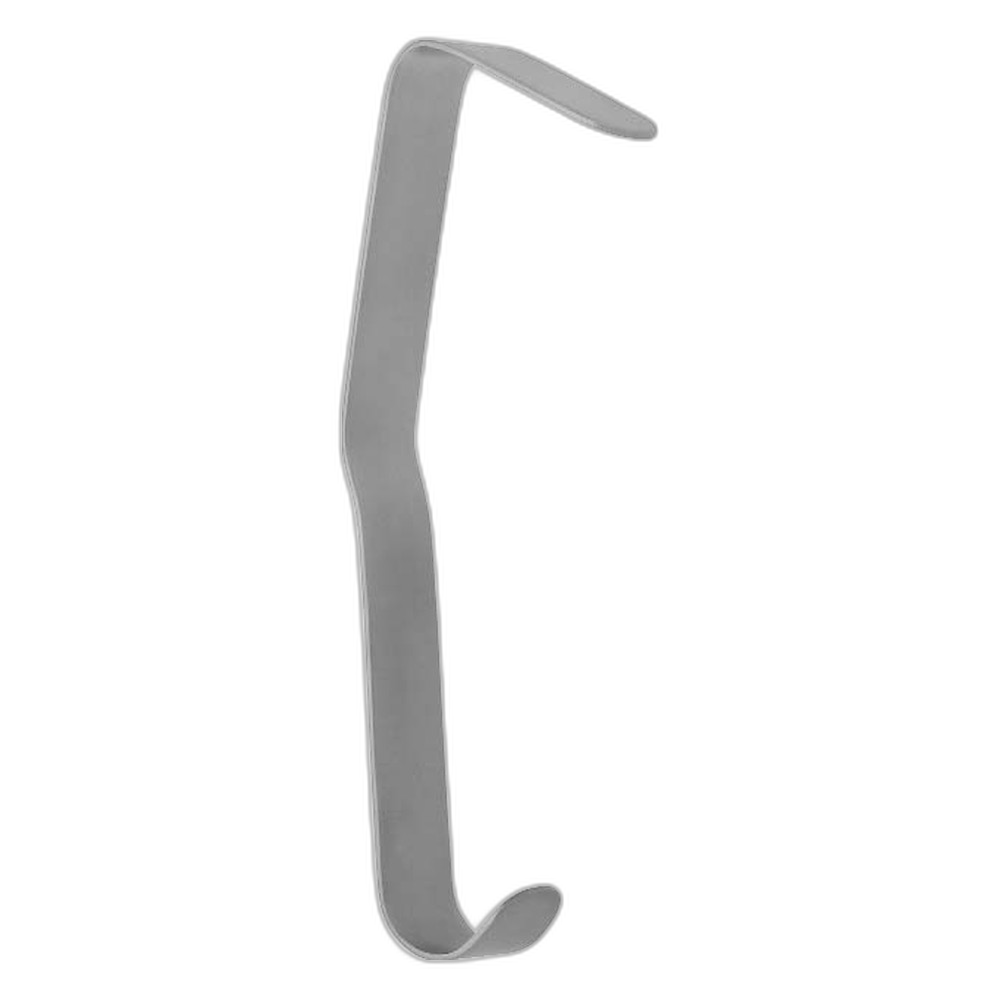
The Doyen retractor has a broad, concave blade set roughly at a right angle to a solid palm-grip handle. The handle carries a thumb rest and a small hook at its end so the assistant can maintain steady downward traction without the instrument slipping. The blade rim is blunted and rounded — this is the feature that lets it press against the bladder and pelvic tissues without cutting or bruising them.
Overall length is typically around 240 to 250 mm. The working difference between models is the blade: it is supplied in a range of widths so the surgeon can match the blade to the patient and the exposure.
| Feature | Specification |
|---|---|
| Overall length | ~240–250 mm (9¾″) |
| Blade type | Wide, concave/convex saddle, blunt rim |
| Blade widths | Approx. 38, 50, 63, 75, 88 mm |
| Handle | Palm grip with thumb rest and end hook |
| Material | AISI 304/316 stainless, passivated |
Primary Uses
Caesarean Section
This is the Doyen’s signature role. In a lower-segment caesarean section, once the visceral peritoneum is incised and the bladder reflected, the Doyen retractor holds the bladder inferiorly and protects it while the surgeon makes and extends the uterine incision and delivers the baby. Its wide blunt blade spreads the retraction force so the bladder wall is not damaged — a real risk given how thin and vascular that tissue is in pregnancy.
Abdominal and Pelvic Gynaecology
The same properties make it useful across open gynaecological surgery. In abdominal hysterectomy it retracts the bladder off the lower uterine segment and cervix; in ectopic pregnancy surgery and other pelvic procedures it holds the bladder or bowel clear of the operative field. Anywhere a broad, atraumatic downward retraction is needed low in the pelvis, the Doyen earns its place on the tray.
How It Compares with Other Retractors
The Doyen is a handheld, single-blade retractor, so it needs an assistant to hold it — unlike a self-retaining Balfour retractor that holds the abdominal wall open on its own. It is broader and more curved than a Richardson retractor, which is built for deeper right-angle wall retraction rather than shielding a soft structure like the bladder. And it is far wider than an Army-Navy retractor, which suits shallower, narrower fields. In practice these instruments are complementary: the Balfour holds the wound open, the Doyen protects the bladder, and the smaller retractors handle superficial layers.
Choosing the Right Blade Width
Blade width is the decision that matters. Too narrow and the blade concentrates pressure on a small area of bladder wall and slips off the tissue; too wide and it crowds an already tight pelvis. A wider blade suits a larger patient or a deep pelvis where broad coverage keeps the bladder fully out of the field; a narrower blade suits a smaller pelvis or a more focused exposure. Many theatres keep two or three widths so the surgeon can call for the size that fits the case rather than forcing the field to fit one blade.
The Doyen in the Caesarean Tray
On a caesarean set the Doyen retractor has a fixed place in the workflow, and the scrub team learns its rhythm. It goes in after the bladder flap is created and comes out the moment the baby is delivered, then often returns during uterine closure to keep the bladder clear of the suture line. Because it is handled by an assistant rather than self-retaining, communication matters: steady, consistent downward traction protects the bladder, while a jerky or over-enthusiastic pull is itself a cause of injury. The end hook on the handle exists precisely so the assistant can maintain that steady traction without the palm cramping over a long case.
Common Mistakes to Avoid
Three errors turn a safe instrument into a hazard. The first is choosing a blade that is too narrow, so it digs into a small patch of bladder wall and repeatedly slips off — the fix is a wider blade matched to the pelvis. The second is excessive traction, where the assistant pulls harder to compensate for poor exposure instead of asking for a better-fitting blade or repositioning; the bladder wall in pregnancy tolerates pressure far better when it is spread over a broad blade than when it is levered. The third is continuing to use a Doyen whose blade rim has been nicked or whose blade has been bent back into shape after damage — both change how the edge and angle sit against tissue, and both should send the instrument for replacement rather than back onto the tray.
Material, Finish and Care
The Doyen is made from austenitic stainless steel — AISI 304 or 316 — for corrosion resistance through repeated autoclaving, and passivated to build the protective chromium-oxide layer. The clinically important finish detail is the blade rim: it must be smoothly rounded and free of any burr, because this edge sits directly against the bladder. A rough or nicked rim turns a protective instrument into a source of injury, so the rim is a key inspection point in our quality control under ISO 13485 and CE standards.
Care is straightforward: ultrasonic clean, autoclave, and inspect the blade rim and the handle hook before returning it to the set. Because the blade is a single solid piece with no joints, the Doyen is one of the more robust retractors on the tray — but a bent blade changes the retraction angle and should be pulled rather than bent back.
The Doyen sits within our broader surgical instrument range, finished to the same standard as the rest of the obstetric and gynaecological set.
Frequently Asked Questions
What is a Doyen retractor used for?
It is a wide, blunt-bladed handheld retractor used mainly to hold the bladder down and out of the way during caesarean section, and to retract the bladder or bowel in abdominal hysterectomy and other pelvic gynaecological surgery.
Why is the Doyen blade so wide and blunt?
The wide, blunt, rounded blade spreads retraction force over a large area so it can press against the thin, vascular bladder wall without cutting or bruising it — essential during a caesarean where bladder injury is a real risk.
What blade sizes does the Doyen retractor come in?
Blade widths commonly range from about 38 mm to 88 mm, on an overall length of around 240–250 mm. Wider blades suit larger or deeper pelves; narrower blades suit smaller or more focused fields.
Is the Doyen a self-retaining retractor?
No. It is a handheld single-blade retractor and needs an assistant to hold it. A self-retaining retractor such as a Balfour holds itself in place; the two are often used together.
Need precision surgical instruments?
Configure complete instrument sets with our team — ISO 13485 certified, CE marked, made in Sialkot since 1980.
Related Guides
View all articles →
Where We Serve
Fizza Surgical exports to 50+ countries. Browse our country-specific pages with local regulatory guidance and pricing: