Adson Forceps: Types, Sizes & Surgical Uses Guide
Adson forceps explained: the 1x2 tissue, serrated dressing and Adson-Brown patterns, with sizes, steel grades and surgical uses.
 Made in Sialkot · Since 1980
A surgeon closing a facial laceration reaches for a forceps small enough to disappear inside a gloved hand, yet precise enough to lift a skin edge no thicker than a postage stamp without crushing it. The fine teeth bite, the platform tip stabilises the dermis, and the suture passes cleanly. That instrument is almost always an Adson forceps. For four decades our workshop in Sialkot has ground, set, and polished these by the thousand, and the small details that separate a good pair from a frustrating one are exactly the details most buyers never get told.
This guide walks through the real distinctions: tooth patterns, jaw geometry, lengths in millimetres, steel grades, and where each variant actually earns its place on the tray.
What Adson Forceps Actually Are
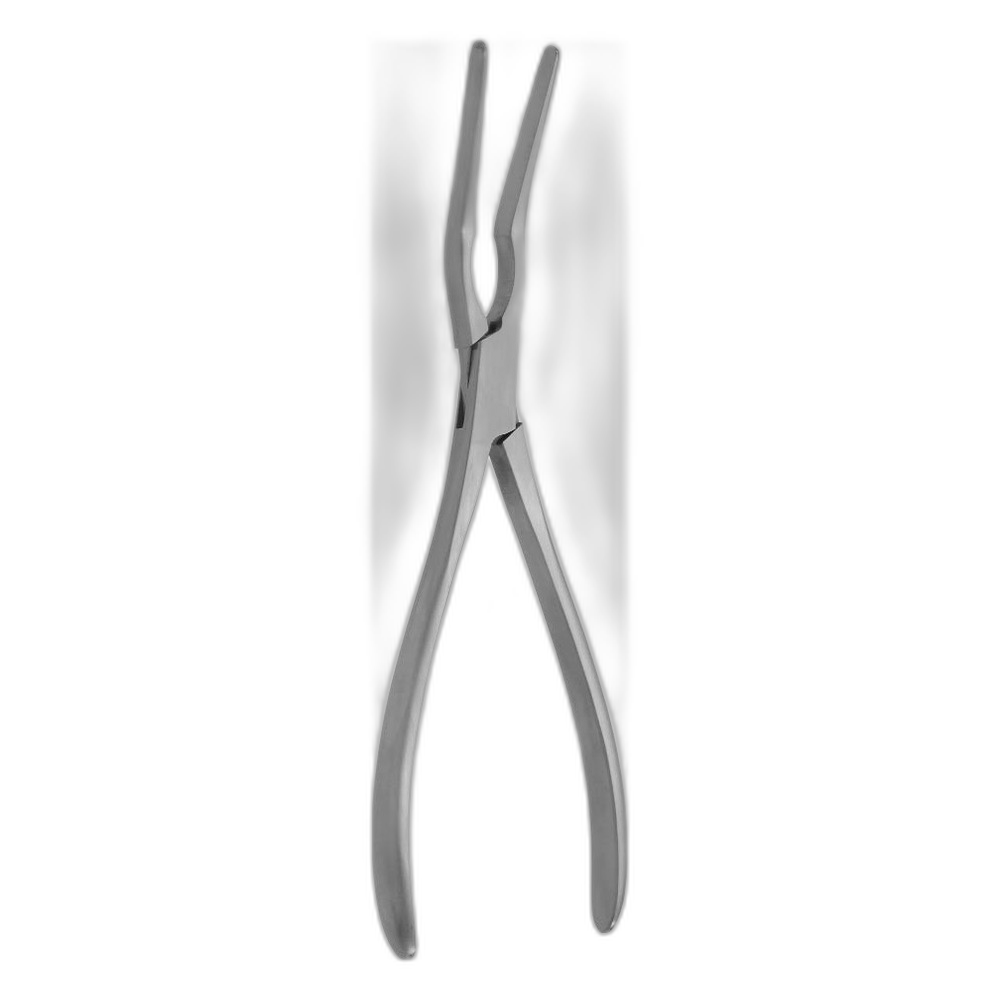
Named after the American neurosurgeon Alfred Washington Adson, this is a thumb (or “pick-up”) forceps with a deliberately wide, ridged spring handle that tapers to a fine working tip. The broad handle is not cosmetic. It spreads pinch force across the fingertips so the surgeon can apply a confident grip on the tip without hand fatigue during long closures.
The defining feature is the contrast between the generous proximal body and the delicate distal jaws. That geometry is why Adson forceps dominate dermatology, plastics, and superficial general surgery, where tissue is shallow and visibility matters more than reach.
The platform width at the very tip matters too. Tissue Adson tips commonly finish at roughly 0.8 to 1.0 mm across the working face, fine enough to slip under a skin edge but broad enough that the teeth do not simply slice through.
Most patterns sit around 12 cm (4.75 inches) in length, a deliberate choice that keeps the tips within a few centimetres of the fingers for maximum control. Where the work runs deeper, longer 15 cm and 18 cm versions exist, though the classic 12 cm is the workhorse.
The confusion almost always comes down to one thing: the tip. Three families share the Adson name but behave very differently.
Adson Tissue Forceps: The 1×2 Toothed Pattern
Adson tissue forceps carry the iconic 1×2 tooth configuration, often called “rat-tooth.” One tooth on one jaw interlocks between two teeth on the opposing jaw. When the jaws close, that single tooth seats cleanly into the gap, locking tissue in place with almost no slip.
The point of teeth is counterintuitive. A toothed grip is actually less traumatic than a serrated one for tougher tissue, because it holds securely at low closing pressure instead of forcing the surgeon to clamp harder on a smooth jaw. Less squeeze, less crush.
That makes the 1×2 pattern the default for grasping skin edges, fascia, and dense connective tissue during suturing. It is the single most common forceps in cutaneous surgery for exactly this reason. The single tooth must land dead-centre between the two opposing teeth; if that spacing drifts in manufacture the point glances off and the forceps loses its bite, which is the one tolerance a surgeon feels instantly at the table.
The trade-off is that teeth perforate. You do not reach for a toothed Adson when handling bowel, vessel walls, or anything you cannot afford to puncture. For a side-by-side look at how this pattern compares with an atraumatic alternative, see our breakdown of DeBakey vs Adson tissue forceps.
Adson Dressing Forceps: Serrated, Toothless Jaws
Swap the teeth for fine transverse serrations and you have Adson dressing forceps. The jaws meet flat, scored with cross-hatched ridges rather than interlocking points, so nothing pierces what it holds.
This is the variant for packing and removing dressings, retrieving sutures, handling swabs, and manipulating tissue you must not penetrate. The serration pitch is fine, typically well under a millimetre between ridges, which grips gauze and delicate material without shredding it.
One distinction worth fixing in your mind: “dressing” here describes function, not just bandages. A serrated Adson is the safe choice any time a tooth would do damage.
Many trays carry both a toothed and a serrated Adson side by side precisely because the two cover opposite needs.
Adson-Brown Forceps: Multi-Tooth 7×7 and 9×9 Jaws
The third member of the family looks similar from across the room but does something quite different at the tip. Adson Brown forceps replace the single 1×2 bite with two opposing rows of fine, intermeshing teeth, commonly in a 7×7 or 9×9 arrangement, meaning seven (or nine) teeth per side that nest together.
Spreading the grip across fourteen or eighteen small contact points does something useful: it holds tissue firmly while distributing pressure over a wider area, so no single point concentrates enough force to tear. It is a broad, secure, comparatively gentle grasp.
That profile makes Adson-Brown forceps a favourite in plastic and reconstructive surgery, where skin flaps, grafts, and delicate edges need to be moved without bruising. The 9×9 pattern offers the widest, most stable purchase; the 7×7 trades a little surface area for slightly finer tips. They also run marginally larger than the standard toothed Adson, with a broader jaw face to accommodate the extra rows of teeth.
Those two rows of micro-teeth, each under half a millimetre tall, must intermesh without binding — the most demanding grind in the whole Adson range, and the reason Adson-Brown forceps reward careful sourcing more than almost any other thumb forceps.
If you are weighing grasping patterns more broadly, the same logic of point-load versus distributed grip drives the choice between other clamps too, as in our Babcock vs Allis comparison.
Sizes, Materials, and Finishes
An Adson forceps is only as good as the steel it is forged from and the precision of its tip alignment. Here is where manufacturing actually matters.
Steel. Adson forceps are typically produced from martensitic stainless steel, AISI 410 or 420 grades, in accordance with ISO 7153-1, the standard governing surgical instrument metals. Martensitic grades are chosen because they can be hardened by heat treatment, which lets the fine teeth and jaw edges hold their geometry through repeated use and sterilisation. Austenitic grades such as AISI 304 and 316 appear elsewhere in surgical instrumentation where corrosion resistance outranks hardness, but the working tips of a precision forceps want the spring and edge retention of a hardened martensitic steel.
Finish. Two options dominate. A mirror (bright polished) finish is smooth and easy to clean but throws glare under operating lights. A satin (matte) finish scatters light, cutting reflection and reducing eye fatigue during fine work, which is why many surgeons prefer it for close detailed procedures.
Tungsten carbide inserts. Premium Adson forceps are fitted with tungsten carbide jaw inserts, brazed into the tips. TC is far harder than stainless steel, so the teeth and gripping surfaces resist wear and stay sharp dramatically longer. Carbide-insert instruments are conventionally identified by gold-plated handle rings, a long-standing visual code on the tray.
| Pattern | Typical Length | Tip Type | Typical Use | Finish |
|---|---|---|---|---|
| Adson tissue (1×2) | 12 cm / 4.75 in | Rat-tooth, 1×2 | Skin edges, fascia, suturing | Satin or mirror |
| Adson dressing | 12 cm / 4.75 in | Serrated, toothless | Dressings, sutures, swabs | Satin or mirror |
| Adson-Brown (7×7) | 12 cm / 4.75 in | Multi-tooth, 7+7 | Plastics, flap handling | Satin preferred |
| Adson-Brown (9×9) | 12 cm / 4.75 in | Multi-tooth, 9+9 | Grafts, delicate edges | Satin preferred |
| Adson tissue, long | 15-18 cm / 6-7 in | Rat-tooth, 1×2 | Deeper general closure | Satin or mirror |
Surgical Uses Across Specialties
The Adson family travels well beyond the dermatology clinic. The pattern of grip determines the discipline.
- Dermatology and minor surgery: 1×2 toothed Adson for grasping skin during excisions and suturing.
- Plastic and reconstructive surgery: Adson-Brown 7×7 or 9×9 for moving flaps and graft edges with minimal bruising.
- Neurosurgery: fine toothed and dressing patterns for scalp and superficial closure, true to the instrument’s origin.
- General surgery: toothed Adson for fascia and skin; serrated dressing pattern wherever tissue must not be pierced.
- Dental and oral surgery: elevating and handling mucoperiosteal and gingival tissue.
In practice, a closing tray often carries all three: a 1×2 for the tough holds, a serrated for the safe holds, and a Brown for the gentle distributed holds.
How to Choose, Handle, and Sterilise
Choosing comes down to three questions. What tissue are you holding? How much can it tolerate being pierced? And how delicate must the grip be? Tough, pierceable tissue wants the 1×2. Non-pierceable tissue wants the serrated dressing jaw. Delicate tissue that needs a broad secure hold wants the Adson-Brown.
Handling: align the tips before every closing case. The teeth must mesh exactly; even a fraction of a millimetre of misalignment means the jaws skip and tissue slips. This is the most common reason a forceps gets quietly retired, and it is almost always a manufacturing-tolerance issue, not wear.
One habit pays off: never use a fine Adson to grasp needles or wire. Crushing hard objects between precision teeth bends them out of register.
Sterilisation: clean immediately after use to stop blood and saline drying in the serrations, which is where pitting corrosion starts. Open the jaws fully during steam autoclaving so every surface is exposed, and dry thoroughly to prevent staining. Hardened martensitic steel tolerates standard autoclave cycles well, but chloride residue from improper rinsing is its enemy.
Every instrument we ship is manufactured under an ISO 13485 quality system and CE marked. You can review our full certifications for the documentation behind that.
Frequently Asked Questions
What is the difference between Adson and Adson-Brown forceps?
A standard Adson tissue forceps has a single 1×2 rat-tooth tip, while Adson-Brown forceps have two opposing rows of fine teeth, usually 7×7 or 9×9. The 1×2 gives a firm piercing grip on tough tissue; the multi-tooth Brown gives a broad, distributed grip ideal for delicate skin flaps in plastic surgery.
What size are Adson forceps?
The standard length is 12 cm (4.75 inches), which keeps the tips close to the fingertips for control. Longer 15 cm and 18 cm versions exist for deeper general-surgery closure.
Are Adson dressing forceps toothed?
No. Adson dressing forceps have fine transverse serrations and meet flat, with no teeth, so they grip dressings, sutures, and delicate tissue without piercing it.
What steel are Adson forceps made from?
Most are forged from martensitic stainless steel, AISI 410 or 420, per ISO 7153-1. These grades harden under heat treatment so the fine teeth hold their edge through repeated sterilisation. Premium versions add tungsten carbide jaw inserts, marked by gold handle rings.
What is the 1×2 teeth pattern on Adson forceps?
It means one tooth on one jaw seats between two teeth on the opposing jaw when closed. This interlock locks tissue securely at low closing pressure, which is why it is the most common pattern for grasping skin during suturing.
Need precision surgical instruments?
Configure complete instrument sets with our team — ISO 13485 certified, CE marked, made in Sialkot since 1980.
Related Guides
View all articles →

Where We Serve
Fizza Surgical exports to 50+ countries. Browse our country-specific pages with local regulatory guidance and pricing: