Dental Luxator vs Elevator: When to Use Each for Extraction
Dental luxator vs elevator: the design difference, how each works on the periodontal ligament, and when to reach for which during tooth extraction.
 Made in Sialkot · Since 1980
Two instruments sit side by side in almost every extraction kit, look broadly similar to the untrained eye, and are routinely used for the wrong job. The luxator and the elevator share a handle shape and a working blade — but they apply force in fundamentally different ways, and confusing them is a fast route to fractured roots and damaged bone.
The short version: a luxator cuts and severs the periodontal ligament; an elevator levers and lifts the tooth. Everything else follows from that distinction.
The Design Difference
Look at the working tips and the difference becomes obvious.
| Feature | Luxator | Elevator |
|---|---|---|
| Blade tip | Thin, sharp, chisel-like, slightly curved | Thicker, blunter, often concave/spoon |
| Primary action | Severing the periodontal ligament | Leverage to mobilise and elevate |
| Motion | Apical pressure with gentle rocking | Rotational / wheel-and-axle leverage |
| Fulcrum | Tooth and ligament space itself | Alveolar bone crest |
| Bone effect | Preserves bone | Loads bone as the fulcrum |
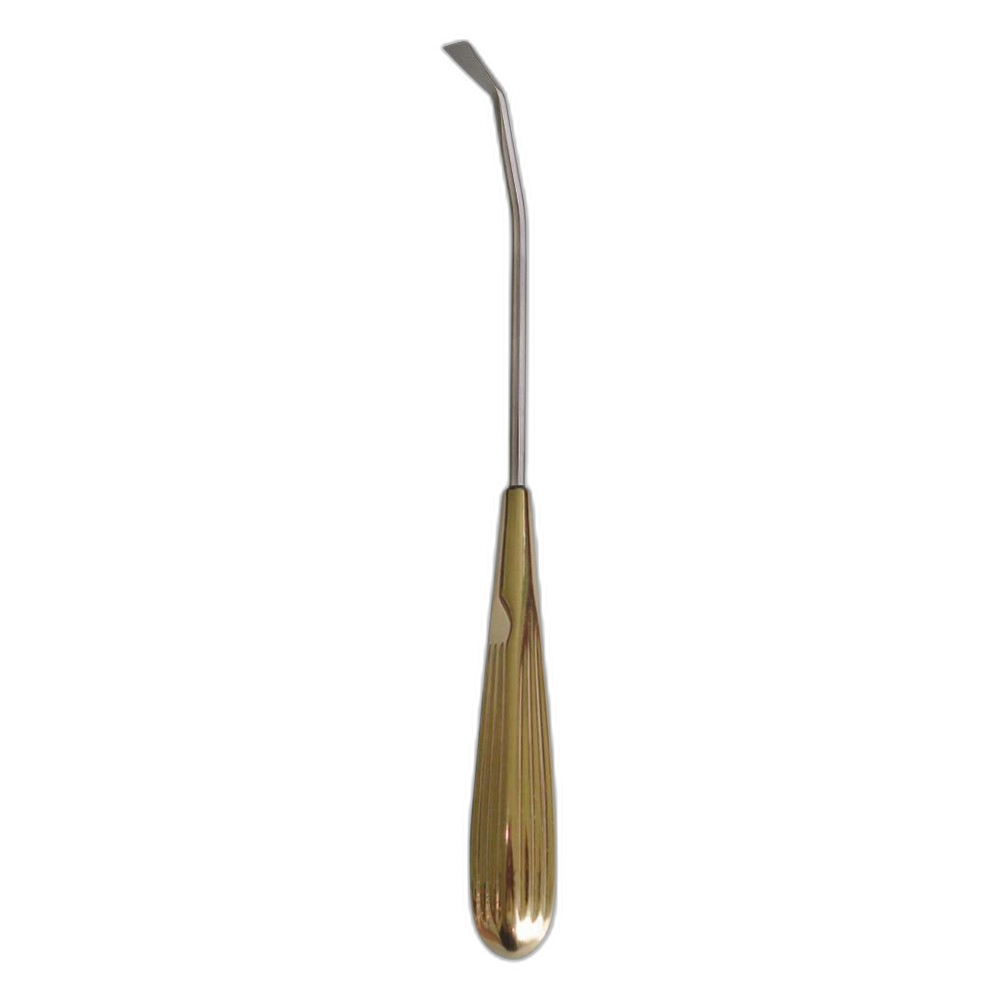
The luxator’s blade is deliberately thin and sharp so it can be driven into the narrow periodontal ligament space and slice the collagen fibres holding the tooth. The elevator’s blade is stouter because it is built to take leverage load — it works as a lever and a wheel-and-axle against the bone to lift a tooth that has already loosened.
How a Luxator Works
A luxator is an instrument of finesse, not force. The blade is inserted into the periodontal ligament space between the tooth and the alveolar bone, then advanced apically with firm, controlled pressure and a small rocking or rotational movement. The sharp edge severs the ligament fibres and gently expands the bony socket as it descends.
Done patiently, this cuts the tooth’s attachment progressively until it is loose enough to lift — often with very little leverage afterward. The key discipline is that the luxator is never used as a lever. Prying with a luxator snaps the slender blade and risks driving it where it should not go.
Because it cuts rather than tears, the luxator preserves the buccal plate and surrounding bone. That is why it is the instrument of choice when bone volume matters most:
- Extractions in the aesthetic zone, where ridge preservation protects the gum contour
- Sites planned for an implant, where every millimetre of bone counts
- Teeth with firm, stubborn roots that resist conventional mobilisation
How an Elevator Works
The elevator is the leverage instrument. Once a tooth has some mobility — whether from luxation, sectioning, or its own condition — the elevator is worked between the tooth and the bone and rotated to lift the tooth out of its socket. It exploits three classic mechanical principles: the lever, the wedge, and the wheel-and-axle.
That power is exactly why the elevator suits the harder cases:
- Multi-rooted teeth, often after sectioning the crown
- Fractured or carious teeth with no crown to grip with forceps
- Retained roots and root tips
- Impacted teeth, where leverage delivers the tooth after bone removal
The trade-off is that the elevator uses alveolar bone as its fulcrum. Heavy or careless leverage can crush the buccal plate or fracture surrounding bone — the very bone a luxator is trying to protect. Controlled, deliberate force is the rule.
A Note on the Periotome and the Luxating Elevator
Two related instruments cause confusion. A periotome is even thinner than a luxator, designed purely to cut the ligament with minimal socket expansion — the gentlest option for implant-site preservation. A luxating elevator is a hybrid: a sharper, luxator-style blade on an instrument intended to take some leverage. Useful, but it does not replace either pure instrument, and treating it like a heavy elevator will still damage bone.
When to Use Each: A Practical Sequence
In most extractions the question is not “luxator or elevator” but “in what order.” A typical bone-conserving sequence runs:
- Luxator first. Sever the ligament circumferentially and begin expanding the socket without prying.
- Elevator next. Once the tooth has movement, apply controlled leverage to elevate it.
- Forceps last. Deliver the mobilised tooth.
Reaching straight for the elevator on a firm, fully attached tooth is the classic error — it forces the bone to absorb the work the luxator should have done. Conversely, trying to lever a stubborn root out with a luxator alone will fracture the blade.
| Clinical situation | Reach for |
|---|---|
| Implant site / aesthetic zone | Luxator (or periotome) |
| Firm tooth, intact crown | Luxator, then elevator |
| Multi-rooted molar (sectioned) | Elevator |
| Fractured or carious tooth, no crown | Elevator |
| Retained root tip | Elevator / root-tip elevator |
Material and Edge Quality
The luxator depends entirely on its edge. A dull luxator stops cutting and tempts the operator to pry — turning a finesse instrument into a bone-breaking lever. We forge our luxators and elevators from hardened martensitic stainless (AISI 420 grade) so the cutting edge holds and the elevator shank resists the bending stress of leverage. Every instrument is passivated for corrosion resistance through repeated autoclave cycles.
Two care habits matter most: keep luxator edges sharp (have them re-sharpened or replaced before they go blunt), and never autoclave a chipped blade back into service. You can browse the full dental instruments range for available luxator and elevator patterns and tip widths, and our certifications page documents the ISO 13485 and CE standards behind every instrument.
Luxator Tip Widths and How to Choose
Luxators come in a graded range of blade widths, and matching the width to the tooth is half the technique. Too wide and the blade will not enter the ligament space; too narrow and it does not engage enough of the root surface.
| Approx. blade width | Profile | Typical application |
|---|---|---|
| 2–3 mm | Straight | Lower incisors, narrow roots |
| 3–4 mm | Straight or curved | Premolars, upper incisors |
| 5 mm | Curved | Molars, broader roots |
| Curved / contra-angle | Angled blade | Posterior access, distal roots |
Curved blades let the operator follow the curve of a root and reach the distal surfaces of molars that a straight blade cannot address. Most clinicians keep a small graded set rather than a single instrument, stepping up in width as the socket expands.
Five Mistakes That Fracture Roots and Bone
Most extraction complications with these instruments trace back to a handful of habits:
- Levering with the luxator. The single most common error. The slender blade is for cutting, not prying — lever with it and it snaps.
- Skipping the luxator entirely. Going straight to elevator force on a firmly attached tooth makes the bone absorb work the luxator should have done, fracturing the buccal plate.
- Working a dull edge. A blunt luxator stops cutting and tempts the operator to push harder, which converts controlled cutting into uncontrolled force.
- Excessive apical pressure. Forcing the blade deep risks pushing a root tip into the sinus or mandibular canal. Steady, incremental pressure with a rocking motion is the discipline.
- Using a finger rest poorly. Without a controlled rest, a slip drives a sharp blade into soft tissue. A firm rest keeps the force where it belongs.
Sharpening, Sterilization and Service Life
An edge instrument lives or dies by its edge. Luxators dull with use and should be re-sharpened on a fine stone or replaced before they reach the point where the operator compensates with force. A chipped blade is retired, not autoclaved back into rotation — a fractured tip in a socket is a complication, not an inconvenience.
Both luxators and elevators are cleaned, inspected and steam-sterilized between patients. The hardened martensitic steel takes repeated autoclave cycles, and passivation maintains the corrosion-resistant surface that keeps the edge clean. Inspect elevator shanks for any bending and luxator blades for chips at every reprocessing cycle; both faults change how the instrument transmits force and both warrant retirement.
Frequently Asked Questions
What is the main difference between a dental luxator and an elevator?
A luxator has a thin, sharp blade that cuts and severs the periodontal ligament with apical pressure. An elevator has a thicker, blunter blade built to lever and lift a tooth using the bone as a fulcrum. The luxator cuts; the elevator levers.
Can I use a luxator as an elevator?
No. A luxator is not designed to take leverage. Prying with it snaps the slender blade. Use the luxator to sever the ligament first, then switch to an elevator for the lifting force.
Which instrument preserves more bone?
The luxator. Because it cuts the ligament and expands the socket rather than levering against the bony wall, it conserves the buccal plate — which is why it is preferred for implant sites and the aesthetic zone.
What is the difference between a luxator and a periotome?
A periotome is even thinner than a luxator and designed purely to cut the periodontal ligament with minimal socket expansion, making it the gentlest option for implant-site preservation. A luxator both severs the ligament and expands the socket slightly.
In what order should luxator and elevator be used?
Generally luxator first to sever the ligament and start socket expansion, then the elevator to apply controlled leverage once the tooth has movement, then forceps to deliver the tooth.
Need precision surgical instruments?
Configure complete instrument sets with our team — ISO 13485 certified, CE marked, made in Sialkot since 1980.
Related Guides
View all articles →

Where We Serve
Fizza Surgical exports to 50+ countries. Browse our country-specific pages with local regulatory guidance and pricing: