Gallipot vs Medicine Cup vs Dressing Bowl: Holloware Guide
Gallipot medicine cup and dressing bowl compared: sizes, capacities, 304 vs 316L steel and correct hospital holloware use.
 Made in Sialkot · Since 1980
Three small stainless vessels sit on almost every dressing trolley in the world, and ward staff routinely use the wrong one for the job. Here is what separates them:
| Item | Typical Capacity | Typical Diameter | Profile | Primary Use |
|---|---|---|---|---|
| Gallipot | 30–500 ml | 46–110 mm | Deep, straight-sided, small footprint | Antiseptic decanting, ointments, small-volume lotion |
| Medicine cup | 30–60 ml | 40–50 mm | Tapered, graduated | Measured oral dosing |
| Dressing bowl | 200–2000 ml | 100–208 mm | Wide, shallow, open | Soaking gauze, irrigation, swab handling |
The distinction is not cosmetic. Each shape solves a different fluid-handling problem, and substituting one for another has real consequences — spilled antiseptic, inaccurate dosing, or a sterile field broken because a nurse reached across an open bowl.
The Gallipot
A gallipot is a small, deep, straight-sided stainless vessel. The name is genuinely old — it comes from the glazed earthenware pots that apothecaries shipped in on galleys, and the shape survived into steel largely unchanged.
Its defining characteristic is a high wall relative to its diameter. That geometry does two things. It resists slosh when the trolley moves, and it keeps the fluid surface small, which slows evaporation of alcohol-based antiseptics like chlorhexidine in isopropyl.
Standard sizes cluster around three working volumes:
| Nominal | Capacity | Dimensions (dia × ht) | Common Application |
|---|---|---|---|
| 4 oz | ~112 ml | 60 × 40 mm | Single-patient skin prep |
| 6 oz | ~175 ml | 75 × 45 mm | General dressing rounds |
| 8 oz | ~230 ml | 85 × 50 mm | Larger wound irrigation prep |
Manufacturers extend the range from about 30 ml up to 1900 ml, with heights running 29–84 mm across the series. Lidded versions exist for holding prepared solutions between cases.
In practice the gallipot is where you pour a working aliquot of antiseptic from a stock bottle, so that the bottle itself never enters the sterile field. That single function accounts for most gallipot use in any hospital.
The Medicine Cup
A medicine cup is a measuring instrument, and that is the whole point of it. Stainless versions carry stamped or etched graduations — typically in millilitres and sometimes drams — and taper from a wider rim to a narrower base.
The taper is deliberate: it makes the meniscus easier to read at low volumes and lets cups nest for storage.
Capacity is almost always 30 ml or 60 ml, because that is the range in which oral liquid medication is dispensed. Anything larger stops being a dosing tool.
Where hospitals get this wrong is gallipot medicine cup substitution — reaching for a gallipot to give an oral dose. A gallipot has no graduations. Estimating 15 ml by eye in an ungraduated vessel is not measurement, and in paediatric or cardiac dosing that margin matters.
The Dressing Bowl
Dressing bowls — also sold as lotion bowls or solution bowls — are wide and comparatively shallow. Diameter typically runs 100–208 mm with capacities from roughly 200 ml to two litres.
The open mouth is the functional feature. You need to get a gloved hand, forceps, and folded gauze in and out without touching the rim, and a wide aperture makes that possible. A deep narrow vessel forces the hand down inside the wall, which is exactly how sterile technique breaks.
Bowls take saline for gauze soaking, irrigation fluid, and used-swab collection. Many wards run two per trolley — one clean, one dirty — and colour-coded or size-differentiated bowls reduce the chance of confusing them under pressure.
Material: Why 304 and 316L Both Appear
Hospital holloware is overwhelmingly austenitic stainless — AISI 304 (18/8) as the workhorse and 316L where chloride exposure is higher.
304 gives good corrosion resistance, deep-draws cleanly, and autoclaves at 121 °C indefinitely. It handles ordinary saline and antiseptic contact well.
316L adds molybdenum, which substantially improves resistance to pitting from chloride ions. Vessels that hold saline for extended periods, or that are processed in hard water, hold up measurably better in 316L. We covered that trade-off in detail in our article on why 316L stainless steel matters for hospital holloware.
Two finish details worth specifying at purchase:
- Satin rather than mirror finish. Mirror polish reflects theatre lighting into the operator’s eyes. Satin diffuses it.
- Rolled or beaded rims. A raw drawn edge is both a laceration risk and a glove-puncture risk. The rim should be turned over.
Seamless deep-drawn construction is preferable to welded. A weld seam is a crevice, and crevices are where pitting corrosion starts and where organic soil resists cleaning.
Lids, Covers, and Why They Change the Workflow
Lidded gallipots and covered bowls cost more and are frequently skipped at procurement. That is usually a false economy on wards running multi-patient dressing rounds.
An open vessel of antiseptic starts degrading the moment it is poured. Alcohol-based preparations lose concentration to evaporation, and any open surface on a moving trolley is an airborne contamination route. A cover means a prepared solution stays usable across several patients instead of being discarded and re-poured for each one.
Two cover styles are common. A loose-fitting drop lid sits inside the rim and is quick to remove one-handed — the practical choice for active use. A close-fitting cap seals more thoroughly and suits storage or transport, but needs two hands to open, which is awkward mid-procedure.
One caution: a covered vessel must be sterilised with the lid off or ajar. A sealed container in a steam autoclave prevents steam contacting the interior, and the contents simply do not reach sterilising conditions. Lids are processed alongside their vessels, not fitted to them.
Common Specification Errors
Four mistakes recur across purchase orders:
- Ordering by capacity alone. Two 200 ml vessels can have completely different diameters. For a dressing bowl the aperture is the functional dimension, so specify diameter as well as volume.
- Accepting welded construction to save cost. Seams are crevices; crevices trap soil and seed pitting corrosion.
- Mirror finish by default. It photographs well in a catalogue and glares under theatre lighting.
- Mixing grades within a set. A 304 bowl and a 316L bowl of identical shape are indistinguishable on a shelf but age differently, which makes stock rotation and failure investigation unnecessarily confusing. Standardise per ward.
Reprocessing
All three items are fully autoclavable and reusable. Practical points:
- Nest vessels only after drying. Water trapped between nested bowls will not reach sterilising temperature reliably and leaves mineral staining.
- Load bowls inverted or on edge so condensate drains. A bowl left concave-up in a steam autoclave collects a pool of condensate and comes out wet — and a wet pack is a contaminated pack.
- Watch for grey-brown staining, which is usually mineral deposit from hard water rather than true rust, but which does eventually seed pitting. Our guide to instrument rust and staining covers identification and removal.
Specifying for a Ward or CSSD
A functional dressing trolley set for general ward use pairs gallipot medicine cup and bowl quantities to the round rather than to the bed count:
| Item | Qty per Trolley | Spec |
|---|---|---|
| Gallipot | 2 | 6 oz / 175 ml, 304 SS, satin |
| Dressing bowl | 2 | 600 ml, 304 or 316L, rolled rim |
| Medicine cup | 4 | 30 ml graduated |
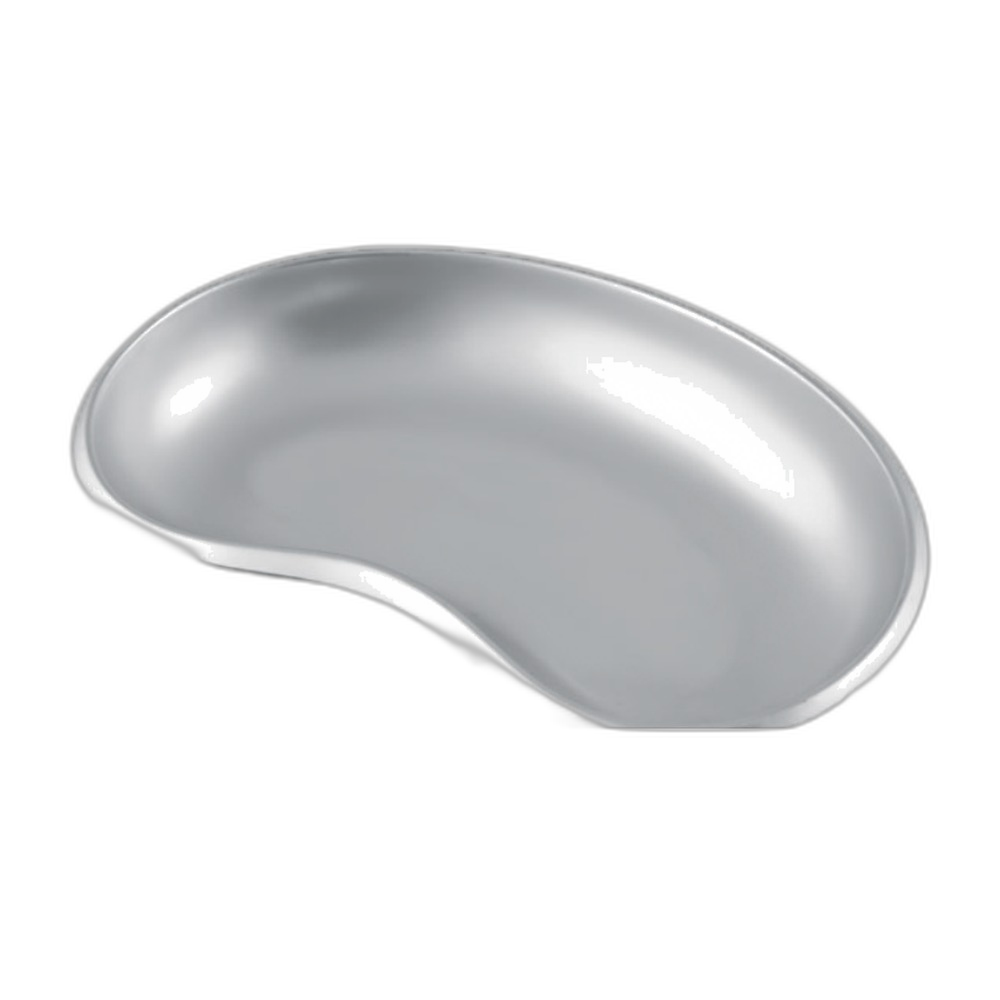
| Kidney dish | 1 | 825 ml |
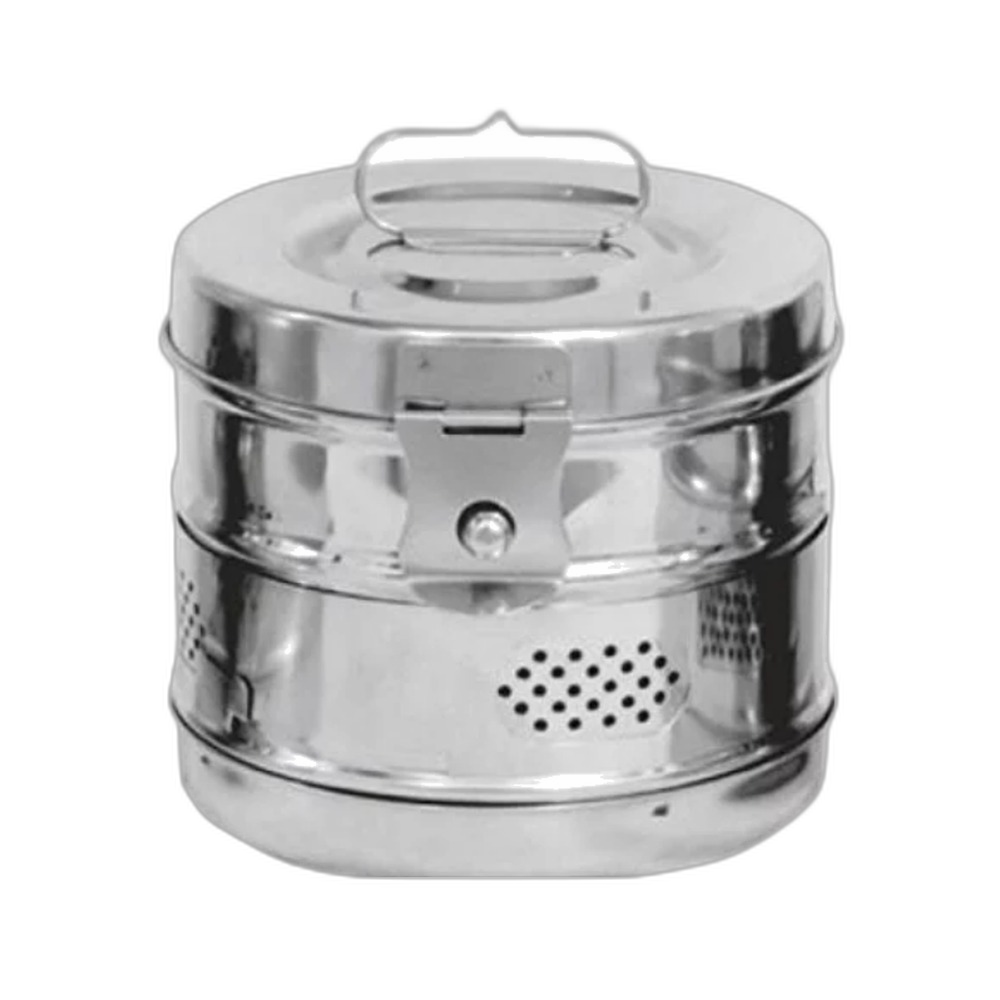
| Instrument tray | 1 | With lid |
Buy in multiples of your autoclave load rather than by ward count — holloware turnaround, not holloware quantity, is what actually limits a dressing round. The related kidney dish buying guide and our hospital holloware range cover the rest of the trolley.
Frequently Asked Questions
What is the difference between a gallipot and a dressing bowl?
Depth relative to width. A gallipot is small and deep — designed to hold a working volume of antiseptic without spilling. A dressing bowl is wide and shallow, designed so gloved hands and forceps can work in and out of it without breaking sterile technique.
Can a gallipot be used to measure medication?
No. Gallipots are ungraduated. Use a graduated medicine cup for any measured dose. Estimating volume by eye in an ungraduated vessel is not acceptable practice for oral dosing.
What stainless steel grade should hospital holloware be?
AISI 304 (18/8) is the standard and performs well for general use. Specify 316L where items hold saline for prolonged periods or where water hardness is high, because the added molybdenum resists chloride pitting considerably better.
Why do stainless bowls come out of the autoclave wet?
Almost always a loading fault. Concave-up bowls collect condensate. Load them inverted or on edge so water drains, and leave space for steam circulation between nested items.
None of these three vessels is complicated. But specifying the right size, grade, and rim finish at purchase — and loading them correctly for sterilisation — is the difference between holloware that lasts fifteen years and holloware that stains and pits within two.
Need precision surgical instruments?
Configure complete instrument sets with our team — ISO 13485 certified, CE marked, made in Sialkot since 1980.
Related Guides
View all articles →
Where We Serve
Fizza Surgical exports to 50+ countries. Browse our country-specific pages with local regulatory guidance and pricing: