Green-Armytage Forceps: Cesarean Hemostasis Guide
Green Armytage forceps explained: design, uses in cesarean section hemostasis, specifications, care and inspection points.
 Made in Sialkot · Since 1980
In 1937, the London obstetrician Vivian Bartley Green-Armytage had a specific complaint about the lower segment cesarean section — then a relatively new alternative to the classical vertical incision. The cut edges of the uterine muscle bled briskly, retracted, and disappeared from view exactly when the surgeon needed to find them for closure. Standard hemostats crushed the myometrium; sponge forceps slipped off it. His answer was a clamp with wide, flat, non-crushing jaws that could hold the uterine edge, stop the bleeding, and mark the angle for suturing all at once.
Nearly ninety years later, the Green-Armytage forceps is still on every cesarean tray, essentially unchanged.
Design: Why the Jaws Are Flat and Wide
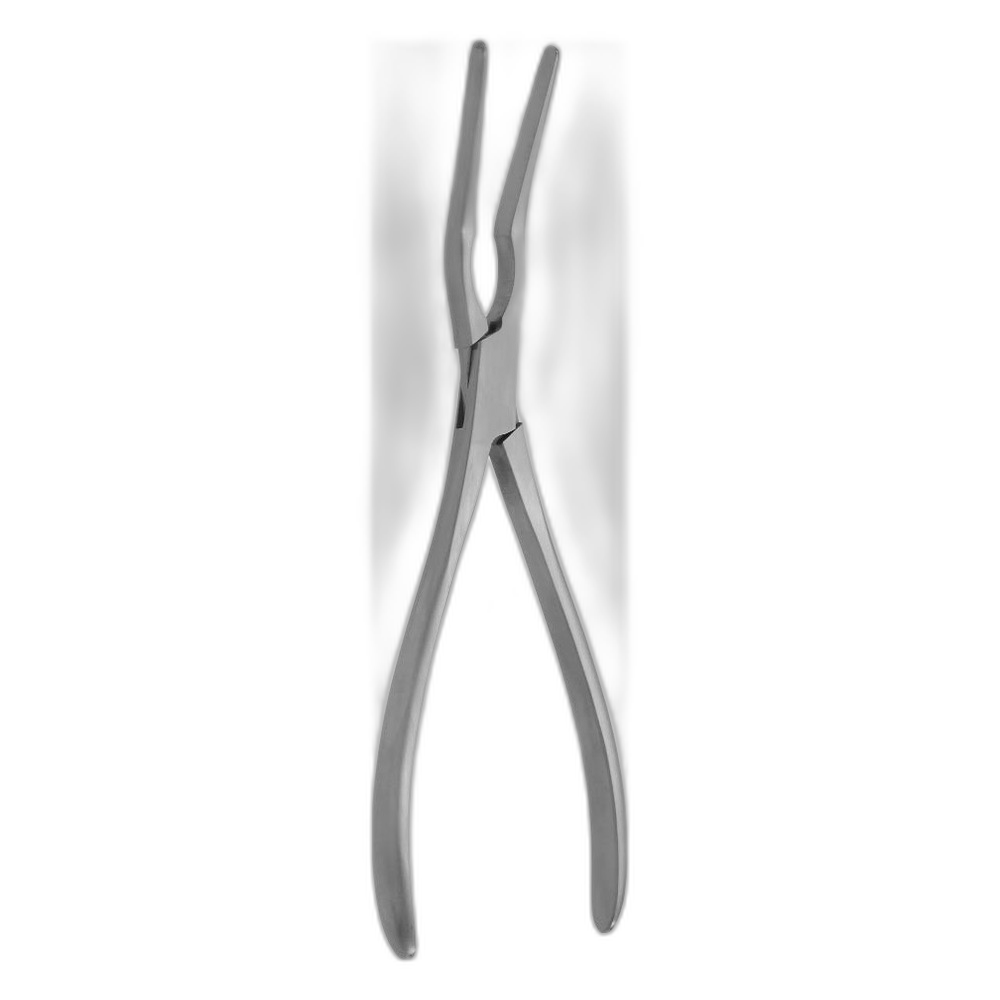
The standard pattern is 21 cm (8¼”) overall, ring-handled, with a 2- or 3-step ratchet lock. What distinguishes it from every other clamp on the tray is the jaw geometry:
- Broad, flattened triangular blades, roughly 10–12 mm wide at the tip — the load spreads across the full jaw face instead of concentrating on a serrated line
- Fine transverse serrations — enough friction to hold contracting myometrium, not enough to cut it
- Curved and straight variants — the curved pattern follows the arc of the lower segment incision; most trays carry four curved
- Working pressure distributed so the clamp achieves hemostasis by apposition, not crushing — the difference matters because clamped myometrium must hold sutures minutes later
Compare that with a Rochester-Carmalt, which is engineered to crush and secure a vascular pedicle permanently — the design philosophy is covered in our Carmalt guide. The Green-Armytage sits at the opposite end of the spectrum: temporary, tissue-preserving control.
The Four Jobs It Does in a Cesarean
1. Edge hemostasis. Applied to the cut myometrial edges immediately after delivery of the baby and placenta, the clamps compress the venous sinuses in the muscle. Four clamps — one at each angle, one on each free edge — convert a bleeding incision into a defined, dry closure line.
2. Angle marking. The lateral angles of a lower segment incision retract and can hide behind bladder edge or broad ligament. A missed angle is the classic source of postpartum bleeding after an apparently well-closed hysterotomy. The clamps physically tag both angles so the first suture goes exactly beyond them.
3. Traction for closure. Lifting the clamps presents the uterine edge into the field, letting the surgeon run the closure without an assistant’s fingers in the suture line.
4. Atony triage. In postpartum hemorrhage from the incision region, the clamps buy time — controlled compression while uterotonics take effect, without adding trauma the way repeated blind suture attempts do.
Outside obstetrics, the same non-slip, non-crushing grip earns it a place in myomectomy (holding the capsule edge) and occasionally in trachelectomy and hysterotomy closure. Trays for those procedures are covered in our hysterectomy set guide.
Specifications
| Attribute | Standard |
|---|---|
| Overall length | 21 cm (8¼”) |
| Patterns | Curved, straight |
| Jaw width at tip | 10–12 mm, fine transverse serrations |
| Lock | 2–3 step ratchet, ring handles |
| Material | Martensitic stainless steel (AISI 410/420, ISO 7153-1) |
| Finish | Satin (anti-glare) or mirror |
| Quantity per cesarean tray | 4–6 |
| Sterilization | Steam autoclave 134 °C, fully ratchet-open |
Inspection Points at Purchase and in Service
Three things to check on a Green-Armytage — new or in the tray:
Jaw apposition. Close the clamp on a single thickness of paper at the first ratchet click: it should hold at the tip and along the full jaw face. Tip-only grip means sprung shanks.
Ratchet security under torsion. The clamp hangs on contracting uterine muscle and gets knocked constantly. Lock the first click and twist the rings — a clamp that pops open under mild torsion goes back to the supplier.
Serration finish. Run a gloved thumb across the serrations. Any snag indicates burrs from incomplete finishing — on myometrium that means petechial tearing along the clamp line and ooze after removal.
Why Examiners Love This Instrument
Green-Armytage forceps appear in obstetric viva and OSCE instrument stations with remarkable regularity, and for good reason: the instrument tests whether a candidate understands hemostasis by design rather than by force. The examinable points are exactly the ones that matter clinically — that the jaws appose rather than crush, that the clamp doubles as an angle marker, and that its whole purpose is to preserve the suture-holding integrity of the tissue it controls.
The classic distractor question pairs it against the sponge-holding forceps, which shares the ring handles and a superficially similar blade. The tell is the jaw face: the sponge holder has large oval fenestrations for gauze, while the Green-Armytage presents a solid, serrated triangular face for muscle. Candidates who reach for “it holds swabs” have identified the wrong instrument — and, more importantly, would reach for the wrong clamp when the uterine angle is bleeding.
Care and Sterilization
The Green-Armytage is a robust instrument with one vulnerable feature: the fine transverse serrations. Blood dried into those grooves is the start of staining and, eventually, pitting along the jaw face — the exact surface that must stay smooth. Reprocessing follows the standard ring-instrument pathway with two emphases:
- Pre-clean within 30 minutes — cesarean cases generate heavily blood-loaded instruments, and myometrial blood clots fast in serration grooves; an enzymatic pre-soak at the point of use prevents the brush-resistant residue that shows up later as brown staining
- Autoclave fully ratchet-open — a clamp sterilized closed traps steam-condensate against apposed jaw faces and stresses the box joint through thermal cycling; racks or pins that hold instruments open solve both
- Lubricate the box joint with instrument milk after ultrasonic cleaning; a stiff joint on an obstetric clamp gets forced, and forced joints crack
Service life for a properly maintained pair runs well over a decade of weekly cesarean lists. The usual retirement causes are sprung shanks from being used as a heavy grasper on thick tissue it was never designed for, and ratchet wear from repeated one-handed pop-off release.
Frequently Asked Questions
What are Green-Armytage forceps used for?
Primarily to grasp the cut edges of the uterus during a cesarean section — controlling bleeding from the myometrium, marking the incision angles, and providing traction during closure. They also appear in myomectomy and postpartum hemorrhage management.
How many are used in one cesarean section?
Typically four: one on each lateral angle and one on each free edge of the hysterotomy. Trays usually carry six so replacements are available without breaking scrub.
Are Green-Armytage forceps traumatic or atraumatic?
Functionally atraumatic for their purpose: the wide flat jaws with fine serrations compress tissue over a large area rather than crushing it, so the clamped myometrium still holds sutures well. They are gentler than a Kocher or Carmalt but grip more securely than sponge forceps.
What is the difference between Green-Armytage and Allis forceps on a cesarean tray?
Allis forceps have narrow, toothed jaws that concentrate force on a small tissue bite — fine for fascia, damaging on a contracting uterine edge. The Green-Armytage’s broad flat jaws distribute the same grip over ten times the surface area, which is why it took over uterine edge duty.
Fizza Surgical manufactures Green-Armytage hemostatic forceps in curved and straight patterns as part of complete cesarean section instrument sets, forged in Sialkot under ISO 13485 with CE marking. The full obstetric line is in our surgical instruments range.
Need precision surgical instruments?
Configure complete instrument sets with our team — ISO 13485 certified, CE marked, made in Sialkot since 1980.
Related Guides
View all articles →
Where We Serve
Fizza Surgical exports to 50+ countries. Browse our country-specific pages with local regulatory guidance and pricing: