Large Animal Surgical Instruments: Equine & Bovine Kit Guide
A practical guide to large animal surgery instruments for equine and bovine work: kit contents, steel grades, sizing and field durability.
 Made in Sialkot · Since 1980
A human laparotomy tray and a bovine flank-surgery tray look like they belong to different trades — and functionally they do. The bovine set is longer, heavier in the shank, and built to work at arm’s depth through a standing incision in a conscious animal. Scale changes everything about how a large-animal instrument is designed, and it is the single most common thing a new mixed-practice vet underestimates when ordering a kit.
This guide covers what belongs in a set of large animal surgery instruments for equine and bovine work, why the geometry differs from small-animal and human instruments, and how to spec a kit that survives farm conditions.
Why Large-Animal Instruments Are Built Differently
Three forces drive the design of large animal surgery instruments. First, reach: a bovine rumenotomy or a cesarean on a standing cow means working through a body wall that can be 30–40 mm thick, with the target organ well beyond the incision. Instruments run long — forceps and needle holders of 220–300 mm are routine where a small-animal pack tops out around 150 mm.
Second, load. Equine and bovine tissue is dense, and the surgeon often works against a moving, tensioned field. Box joints are heavier, ring handles are larger to spread grip force, and jaws are cut with deeper serrations to hold slippery, fat-laden tissue without crushing through it.
Third, environment. Much large-animal surgery happens in a crush, a stock, or a field — not a climate-controlled OR. The steel has to shrug off aggressive cleaning, repeated autoclaving, and the occasional knock against a metal gate. That is a strong argument for instruments forged from martensitic grades such as AISI 410 or 420 for the cutting and clamping tools, with 304 or 316 where corrosion resistance outranks edge-holding.
The Core Categories in a Large-Animal Set
Cutting and Dissecting
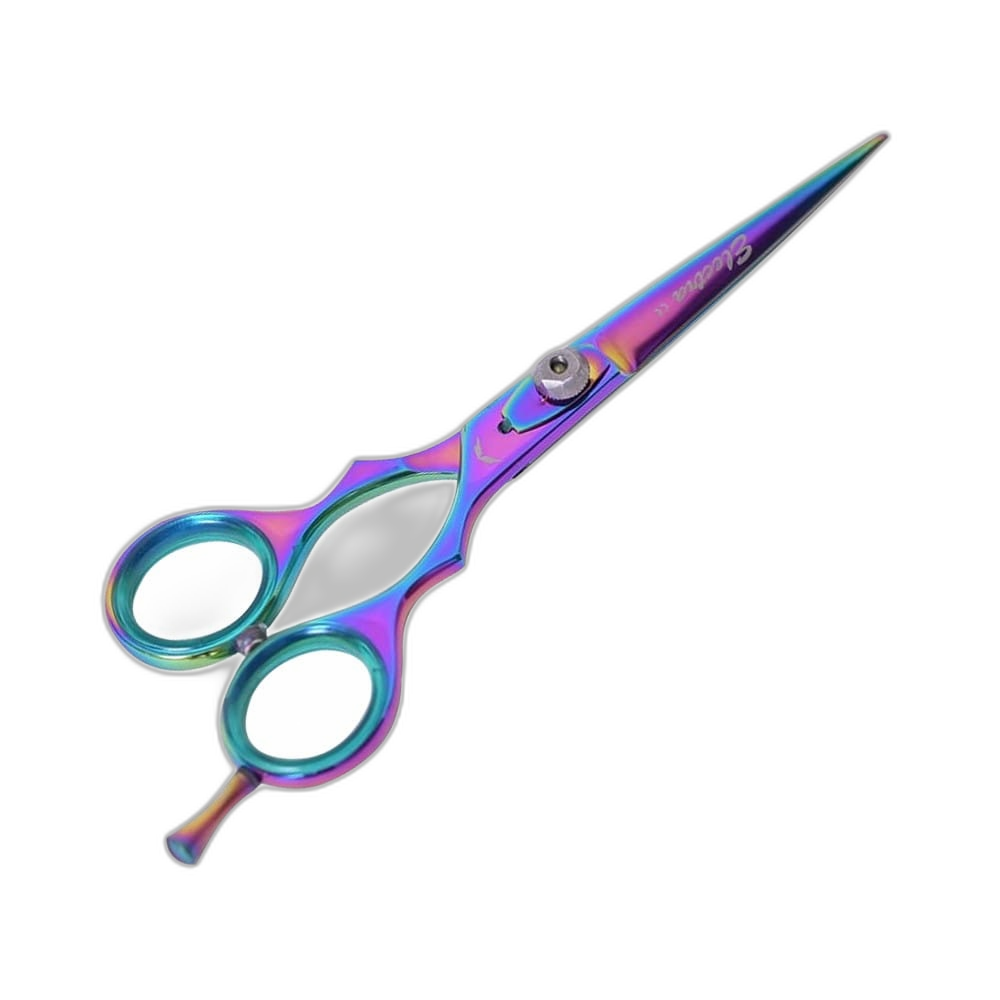
Long-handled scalpel handles (a #4 handle taking #20–24 blades rather than the #3/#15 of fine work), heavy Mayo scissors in straight and curved patterns, and Metzenbaum scissors in extended lengths for deeper dissection. For obstetric work, fetotomy wire and the Gigli-type embryotomy saw sit in their own category — heavy wire cutting for a dead fetus that cannot be delivered whole.
Grasping and Holding
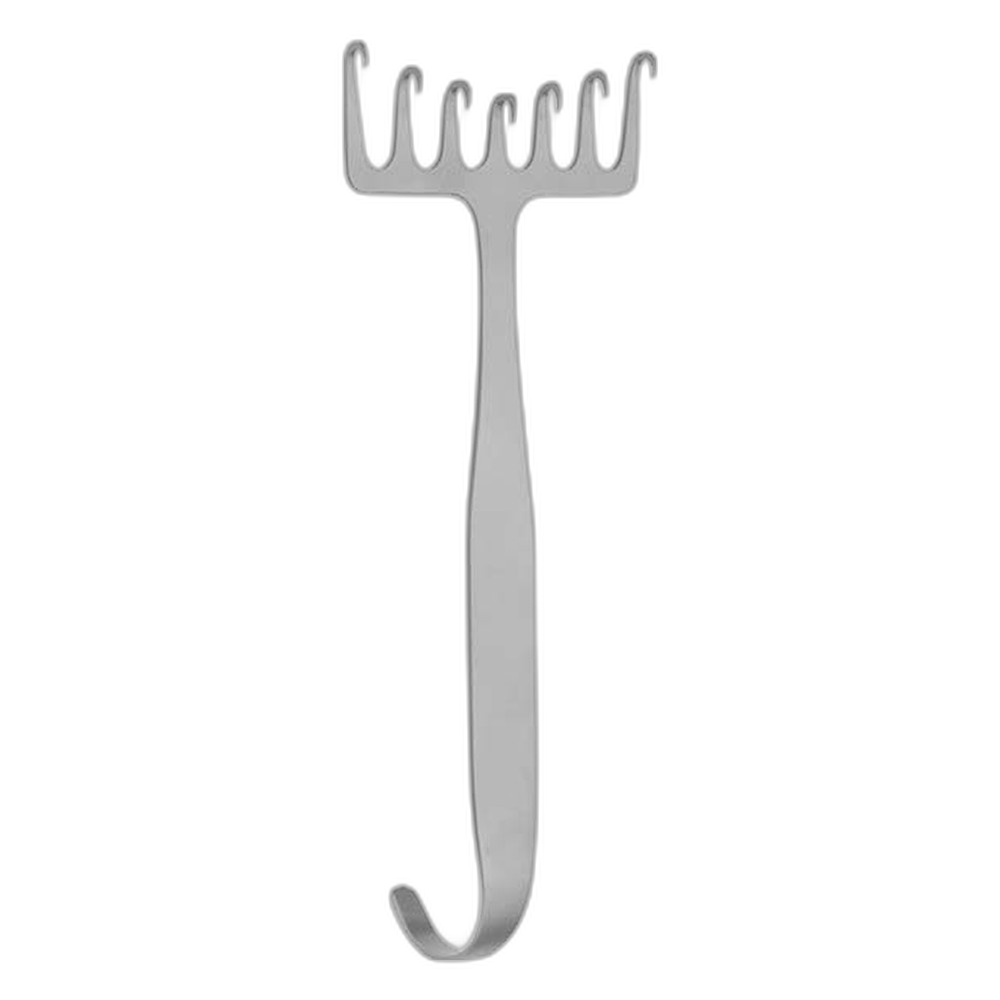
Tissue forceps here mean serious hardware: long Allis and Babcock forceps, heavy rat-tooth and dressing forceps, and Doyen intestinal clamps sized for the bovine gut. Bullnose and Richardson-type retractors give the assistant something to hold a heavy body wall open with. In equine abdominal work, atraumatic bowel clamps matter enormously — the equine large colon does not forgive rough handling.
Clamping and Hemostasis
Large arterial forceps — long Rochester-Carmalt and Rochester-Pean patterns — handle the sizeable vessels of a pedicle or a broad ligament. For castration, the emasculator is the signature instrument: it crushes and cuts the spermatic cord in one action, with the crushing edge oriented to the animal’s body. Newberry knives and elastrator equipment cover other castration and docking methods.
Suturing
Heavy needle holders — Mayo-Hegar and Gillies patterns in long lengths, often with tungsten carbide inserts — drive the large curved needles used for body-wall closure. Carbide-jaw holders are worth the premium here because closing a bovine flank in three layers puts real wear on a plain-steel jaw.
Specialty and Farm-Specific
Dehorners (Barnes-type gouge dehorners, embryotomy wire, and cup dehorners), hoof knives and hoof testers, teat instruments (teat slitters, bistouries, and tumor extractors), obstetric chains and handles, and trocars/cannulas for relieving rumen bloat. This species-specific layer is what separates a true large-animal kit from a scaled-up small-animal one.
A Representative Equine/Bovine Instrument Spec
| Instrument | Typical length | Steel grade | Primary use |
|---|---|---|---|
| Long Mayo scissors | 200–230 mm | AISI 420 | Heavy tissue & fascia |
| Rochester-Carmalt forceps | 240–260 mm | AISI 410/420 | Pedicle & vessel clamping |
| Mayo-Hegar needle holder (TC) | 230–300 mm | 420 body, TC jaws | Body-wall closure |
| Doyen intestinal clamp | 230 mm | AISI 304/316 | Atraumatic bowel occlusion |
| Emasculator | 250–300 mm | AISI 420 | Castration — crush & cut |
| Obstetric chain | 750–1500 mm | AISI 316 | Calving/foaling traction |
| Barnes dehorner | 350–450 mm | 420 blades | Horn removal |
Equine vs Bovine: Where the Kits Diverge
Both share the long, heavy backbone, but the emphasis shifts. Equine practice leans toward the abdomen and the limb — colic surgery, laparoscopic ovariectomy, arthroscopy, and orthopedic repair — so atraumatic bowel handling and fine long instruments for laparoscopic ports feature heavily. The horse’s colon and the catastrophic cost of an anastomotic leak make instrument gentleness a clinical priority, not a nicety.
Bovine practice is dominated by the standing flank approach — left-flank rumenotomy, cesarean, abomasal surgery (correcting a displaced abomasum), and obstetric intervention. Here the priority is reach and grip through a thick, tensioned body wall in a conscious animal, plus a robust obstetric and dehorning sub-kit. A practice building a bovine bias will weight its order toward long retractors, heavy needle holders, and obstetric hardware.
Orthopedic work in either species — and it is common in equine practice — pulls in a separate layer of bone instruments: periosteal elevators, bone-holding forceps, drills, and plating sets. Those overlap heavily with the bone surgery instruments used in human orthopedics, just scaled and lengthened.
Materials and Durability in Field Conditions
The decision that determines how long a farm kit lasts is steel selection and finish. Martensitic grades (410, 420) can be hardened to hold a cutting or crushing edge — essential for scissors, emasculators, and osteotomes. Austenitic grades (304, 316) resist corrosion far better but cannot be hardened to the same edge, so they suit clamps, retractors, and anything exposed to prolonged moisture like obstetric chains.
Finish matters as much as grade. A properly passivated instrument grows a stable chromium-oxide layer that resists the pitting corrosion field cleaning provokes. Instruments that stain or pit after a season on farm almost always failed at passivation, not at the base metal. When comparing suppliers, ask what grade each instrument is made from and whether it is passivated to a recognised standard — a claim of “surgical steel” alone tells you nothing.
Cleaning Realities
Large-animal instruments come off the field caked in organic matter that dries fast. The reprocessing rule is the same as in any OR — an instrument that is not clean cannot be sterilized — but the soil load is heavier. Pre-soak in an enzymatic solution, brush the box joints and serrations, then autoclave. Hinged instruments should be sterilized in the open position and lubricated periodically. The same passivation logic that keeps a human instrument corrosion-free applies here, and buying from a manufacturer that documents it protects the investment; you can review our quality certifications for how that is verified.
Building a Kit Without Overbuying
Start from the procedures you actually do. A predominantly bovine dairy practice needs a strong obstetric and DA/rumenotomy core; it does not need an equine arthroscopy set. Build a general large-animal laparotomy pack first — scalpel handles, long scissors, tissue and hemostatic forceps, needle holders, retractors, and towel clamps — then add species- and procedure-specific sub-kits as caseload justifies.
Buy the needle holders and scissors at the quality tier you can afford, because those wear fastest and a carbide-jaw holder outlasts three cheap ones. Retractors and clamps tolerate a more economical spec. And standardise on one supplier’s pattern where you can, so replacements match and reprocessing is predictable across the veterinary instrument range.
Frequently Asked Questions
Can I use small-animal instruments for large-animal surgery in a pinch?
For superficial work occasionally, but not for body-cavity procedures. Small-animal instruments are too short to reach the target and their joints are not built for the load of dense equine or bovine tissue. Working through a bovine flank with 150 mm forceps is unsafe and exhausting.
What steel grade is best for a large-animal set?
There is no single answer — match grade to function. Use hardenable martensitic 410/420 for scissors, emasculators, and cutting tools; use corrosion-resistant austenitic 304/316 for clamps, retractors, and obstetric chains. Proper passivation matters more than the grade label.
Do obstetric chains need sterilizing between animals?
Yes. Chains contact the birth canal and should be cleaned and autoclaved like any invasive instrument. Stainless 316 chains tolerate repeated cycles; nylon calving straps are single-patient or disposable by design.
Are tungsten carbide needle holders worth it for farm work?
For anyone closing body walls regularly, yes. The carbide insert grips the large curved needles used in bovine and equine closure and resists the wear that rounds off a plain-steel jaw. The higher upfront cost is recovered in service life.
How do I stop field instruments from rusting?
Clean off organic matter promptly, pre-soak in enzymatic detergent, dry thoroughly, and store dry. Rust on a quality passivated instrument is almost always a cleaning-and-drying failure rather than a steel failure. Persistent staining points to a passivation problem with the instrument itself.
Bottom Line
A large-animal surgical kit is not a bigger small-animal kit — it is a different tool set shaped by reach, tissue load, and farm conditions. Spec the length, choose steel grade by function, insist on documented passivation, and build the kit around your real caseload rather than a catalogue’s “complete set.” Get those four right and the same instruments will serve through years of standing flanks, calvings, and colics.
Need precision surgical instruments?
Configure complete instrument sets with our team — ISO 13485 certified, CE marked, made in Sialkot since 1980.
Related Guides
View all articles →
Where We Serve
Fizza Surgical exports to 50+ countries. Browse our country-specific pages with local regulatory guidance and pricing: