Washer-Disinfector A0 Value: What the Number Means
Washer disinfector A0 value explained: what A0 60, 600 and 3000 mean, time-temperature equivalents, ISO 15883 cycle phases and validation checks.
A cycle record from a washer-disinfector usually ends with a line such as “A0 3000 — PASS”. It is the single most important number on the printout, and it is also one of the most misunderstood. It is not a temperature, not a time, and not a measure of how clean the instruments are. It is an equivalence: a way of expressing any time-temperature profile as a lethality figure that can be compared against a target.
For CSSD managers, infection-prevention teams and the buyers who specify instrument trays, understanding the washer disinfector A0 value explains why cycles are set the way they are, why some loads fail, and what the number cannot tell you.
Where the A0 Concept Comes From
Moist heat kills microorganisms at a rate that depends on temperature. Microbiologists describe this with two constants. The D value is the time needed at a given temperature to reduce a population by 90%. The z value is the temperature rise needed to make that D value ten times shorter.
Thermal disinfection standards simplify this into one reference. A0 is defined as the equivalent time in seconds at 80 °C delivered by a process, using a z value of 10 K. Every 10 °C above 80 °C is treated as ten times more lethal per second; every 10 °C below is ten times less lethal.
The calculation integrates the temperature record over the holding period:
A0 = Σ 10(T − 80)/10 × Δt
where T is the measured temperature in °C for each logging interval and Δt is the length of that interval in seconds. The ISO 15883 series, which covers washer-disinfectors, sets a floor for the calculation: temperatures below 65 °C are not counted, because the z = 10 model does not hold reliably at lower temperatures.
Because the formula accumulates lethality second by second, two very different cycles can reach the same value. A long, gentle hold at 80 °C and a short hold at 93 °C may both deliver A0 3000. That flexibility is the whole point of the concept — it lets manufacturers design cycles around throughput, material compatibility and energy use without changing the disinfection outcome.
A0 60, 600 and 3000: Which Number Applies
Three reference levels appear repeatedly in standards and national guidance. They are not arbitrary steps; each corresponds to the heat resistance of the organisms that matter for that class of item.
| A0 level | Typical application | Organisms addressed | Reference context |
|---|---|---|---|
| A0 60 | Bedpans, urine bottles and other human-waste containers | Vegetative bacteria and heat-sensitive organisms on non-critical items | ISO 15883-3 (human-waste container washers) |
| A0 600 | Minimum for items with low contact risk; common floor for instruments that will be sterilised afterwards | Vegetative bacteria, mycobacteria, fungi and heat-sensitive viruses | ISO 15883-1 and -2 (surgical instrument washers) |
| A0 3000 | Surgical instruments and items that may carry heat-resistant viruses | As above plus heat-resistant viruses such as hepatitis B | Widely specified in European national guidance for instrument reprocessing |
In practice, most hospital CSSDs run their instrument programmes at A0 3000 even when the tray goes on to steam sterilisation. The reasoning is simple: the washer is the step that makes instruments safe for staff to handle during inspection and assembly, and hepatitis B is a real occupational risk in the packing room. Where a local guideline or the instrument manufacturer’s reprocessing instructions state a different target, those take precedence.
Time and Temperature Equivalents
Because A0 is an integral, it is easier to reason about with a table. The holding times below are calculated directly from the formula, assuming the load itself is held at the stated temperature for the whole period (ramp-up and cool-down contribute a little extra in a real cycle).
| Load temperature | Lethality factor | Time for A0 60 | Time for A0 600 | Time for A0 3000 |
|---|---|---|---|---|
| 70 °C | 0.1 | 10 min | 100 min | about 8.3 h |
| 80 °C | 1 | 60 s | 10 min | 50 min |
| 85 °C | 3.16 | 19 s | about 3.2 min | about 15.8 min |
| 90 °C | 10 | 6 s | 60 s | 5 min |
| 93 °C | 19.95 | 3 s | 30 s | about 2.5 min |
This is why most instrument programmes hold the final rinse at 90–93 °C for a few minutes. At 70 °C the A0 3000 target is effectively unreachable in a working day; at 93 °C it takes less time than drying. The table also shows why a small temperature shortfall matters: a load that only reaches 87 °C instead of 90 °C needs roughly twice the hold time for the same result.
A Worked Example: Calculating A0 from a Logged Cycle
Suppose a thermal logger strapped to a pair of Mayo scissors in the centre of a rack records the load temperature every 30 seconds during the disinfection phase. The water circuit reaches set point quickly, but the steel lags behind it.
| Interval | Load temperature | Lethality factor | A0 contribution (30 s) |
|---|---|---|---|
| 0–30 s | 62 °C | not counted (below 65 °C) | 0 |
| 30–60 s | 75 °C | 0.32 | 9 |
| 60–90 s | 86 °C | 3.98 | 119 |
| 90–120 s | 90 °C | 10 | 300 |
| Each further 30 s at 91 °C | 91 °C | 12.6 | 378 |
After two minutes the load has accumulated about 428. Each additional half-minute at 91 °C adds roughly 378, so reaching A0 3000 needs about seven more intervals — a total disinfection phase of a little under six minutes.
Two lessons fall out of the arithmetic. The first minute of heat-up contributes almost nothing, so a machine that is slow to bring the load up to temperature loses time that no setting recovers. And a load sitting two degrees cooler than the water — 89 °C instead of 91 °C — needs about 60% more hold time for the same result. That gap between water and steel is exactly what validation loggers exist to find.
Anatomy of an Instrument Cycle
Thermal disinfection is one phase of several. The phases before it decide whether heat can reach the surface at all, so the whole sequence is worth knowing.
| Phase | Typical conditions | Purpose |
|---|---|---|
| Cold pre-rinse | Cold water, kept well below protein-fixing temperatures | Removes loose blood and debris before heat can bake protein onto steel |
| Main wash | Enzymatic or mildly alkaline detergent at the temperature the detergent maker specifies, commonly 40–60 °C | Breaks down and lifts organic soil |
| Neutralisation (if alkaline) | Acidic neutraliser dose | Removes alkaline residue and reduces spotting |
| Intermediate rinse | Warm water | Flushes detergent from joints and serrations |
| Thermal disinfection | Treated (demineralised or RO) water, typically 90–93 °C hold | Delivers the A0 target |
| Drying | Hot air | Removes moisture that would otherwise stain or corrode instruments before packing |
The pre-rinse deserves emphasis. If a load is heated before protein is removed, blood coagulates on the steel and in box joints. The A0 value for that cycle can be perfect while the instruments come out visibly soiled — heat has disinfected a layer of fixed protein, not cleaned the instrument. Our guides to enzymatic cleaners and ultrasonic cleaning cover the chemistry and mechanics of the cleaning stages in more detail.
What the Number Does Not Tell You
A0 is a lethality figure. It is easy to over-read it. Four limits are worth stating plainly.
It does not measure cleaning
A cycle can reach A0 3000 on a heavily soiled load. Cleaning efficacy is verified separately — by visual inspection under magnification, by protein residue tests on selected items, and by periodic soil tests during validation. The ISO 15883 series includes test soils and methods specifically for this purpose.
It is not sterilisation
Thermal disinfection does not reliably inactivate bacterial spores. Instruments that enter sterile tissue still need a validated sterilisation process after washing, and that process is monitored with its own tools, such as the chemical and biological indicators used in steam cycles.
It does not address prions
Prion proteins are exceptionally resistant to heat and are not inactivated by any A0 level. Where transmissible spongiform encephalopathy is a concern, national prion guidance governs instrument handling, and the washer cycle is only one element of it.
It is only as good as the sensor
A washer calculates A0 from its own temperature probes, usually in the water circuit or chamber. What matters is the temperature at the instrument surface. During validation, independent data loggers are placed on load items — inside a closed tray, on a dense instrument, in the middle of a rack — to prove that the load, not just the water, reaches the target.
Validation and Routine Monitoring
Washer-disinfectors are validated when installed, after major repairs and at defined intervals — commonly annually. The work normally falls into three stages:
- Installation qualification — services, water supply, drainage, dosing and ventilation are confirmed against the manufacturer’s specification.
- Operational qualification — the machine is tested empty, with thermometric loggers checking that chamber temperatures are uniform and that the controller’s readings match independent measurement.
- Performance qualification — representative loads are run with loggers placed on the instruments, and cleaning is challenged with test soils. Repeat runs demonstrate that the result is consistent, not a one-off.
Between validations, routine checks carry the load. Each cycle record is reviewed and signed before release; the displayed A0, hold temperature and hold time are compared with the validated values; spray arms are checked for blocked nozzles; detergent dosing volumes are verified; and cleaning is spot-checked with protein residue tests. A rising trend in cycle time to reach A0 is often the earliest sign of a failing heater or scale build-up.
For a wider view of how the washer fits into the decontamination flow, see our CSSD workflow guide.
Why Loads Fail to Reach A0
When a cycle aborts or a logger shows the load fell short, the causes tend to repeat:
- Overloaded racks. Instruments stacked on top of each other shadow the spray and add thermal mass; the bottom layer lags behind the water temperature.
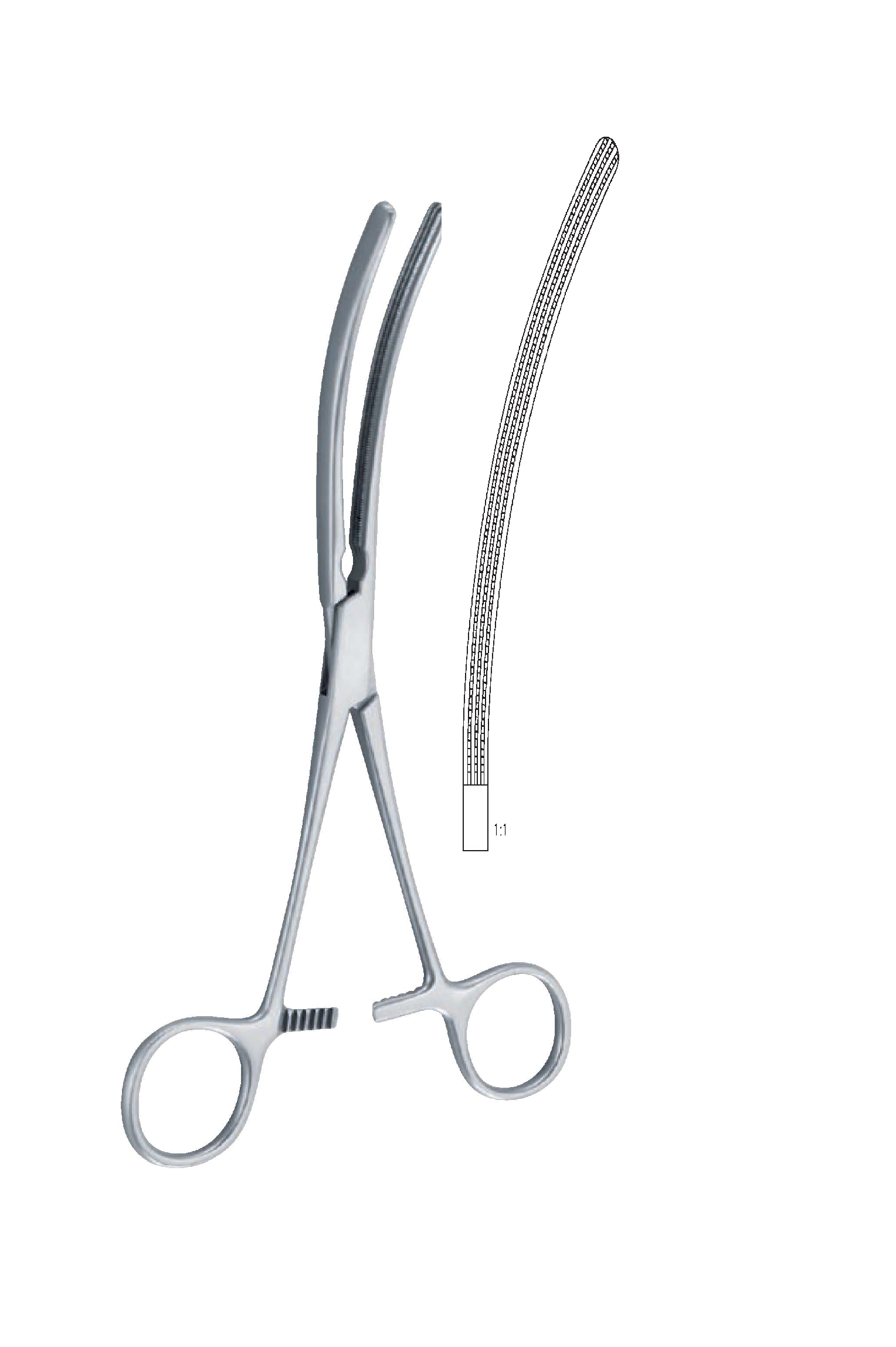
- Closed hinged instruments. Artery forceps and needle holders processed with ratchets locked keep water out of the jaws and box joint. Open them, or close on the first ratchet tooth only.
- Dense or heavy instruments. Bone-cutting forceps, mallets and large retractors heat more slowly than fine forceps. A tray built entirely from heavy orthopaedic items behaves differently from a general set, which is why loggers go on the heaviest item during validation.
- Unconnected lumens. Suction tubes and cannulated instruments must be connected to the injector ports on a dedicated rack. Water that does not flow through a lumen cannot heat it.
- Service faults. Scale on heating elements, low incoming water temperature or a failing circulation pump extend the time to reach the hold temperature and can trigger a cycle fault.
How Instrument Design and Material Interact with the Cycle
The instrument itself contributes to whether a thermal disinfection cycle succeeds, and this is where manufacturing choices show up in the CSSD.
Joint design. Box joints that are machined with tight but clean clearances let water in and out. Poorly finished joints with rough internal surfaces trap soil that no cycle removes. Screw joints on scissors should sit flush, without crevices under the screw head.
Steel grade. Martensitic grades such as AISI 410 and 420, used for cutting and gripping instruments, tolerate repeated 93 °C cycles without difficulty when properly passivated. What damages them is chemistry, not heat: chloride-rich water, detergent residue left by a skipped neutralisation step, and moisture left behind by inadequate drying. Our guide to passivation and corrosion resistance explains the mechanism.
Water quality. The final thermal rinse should use demineralised or reverse-osmosis water. Hard water at 90 °C leaves mineral spots, and chlorides concentrate as droplets evaporate during drying, starting pitting corrosion that becomes visible only weeks later.
Non-steel components. Anodised aluminium containers and colour-coded parts can discolour in strongly alkaline detergents. Silicone and polymer handles have their own temperature limits. Where a tray mixes materials, the reprocessing instructions for the most sensitive component set the cycle.
What to Ask Your Instrument Supplier
ISO 17664-1 requires device manufacturers to provide validated information for processing their products. For reusable surgical instruments, a buyer should expect that information to confirm compatibility with automated washer-disinfector cleaning and thermal disinfection, including any limits on detergent pH, temperature or number of cycles. If a supplier cannot say whether an instrument tolerates an A0 3000 thermal rinse, that is worth knowing before a hospital tender, not after the first batch shows staining.
Fizza Surgical manufactures reusable instruments in Sialkot under an ISO 13485 quality system, with CE marking; documentation is listed on our certifications page, and the full range sits under surgical instruments.
A Short Checklist for Reading a Cycle Record
- Is the program the one validated for this load type?
- Did the displayed washer disinfector A0 value meet or exceed the target (for most instrument loads, 3000)?
- Were the hold temperature and hold time within the validated range?
- Did the pre-rinse temperature stay low?
- Were detergent and neutraliser doses recorded and within limits?
- Is there any fault, alarm or interrupted phase on the record?
- Do the instruments pass visual inspection before they go to packing?
If any answer is no, the load is not released — regardless of how good the A0 figure looks.
Frequently Asked Questions
What does the washer disinfector A0 value mean?
It is the equivalent time in seconds at 80 °C delivered by a thermal disinfection process, calculated with a z value of 10 K. An A0 of 3000 means the cycle delivered the same microbial lethality as 3000 seconds (50 minutes) at 80 °C, however the actual time and temperature were combined.
Is A0 600 enough for surgical instruments?
A0 600 is the minimum commonly referenced for instrument washers and addresses vegetative bacteria, fungi and heat-sensitive viruses. Many national guidelines specify A0 3000 for surgical instruments because it also addresses heat-resistant viruses such as hepatitis B, protecting staff who inspect and pack the load. Follow local guidance and the manufacturer’s reprocessing instructions.
How long does A0 3000 take at 90 °C?
About 5 minutes if the load is held at 90 °C throughout. At 93 °C it takes about 2.5 minutes, and at 80 °C about 50 minutes. Real cycles also gain a small amount of A0 during heat-up above 65 °C.
Does a high A0 mean instruments are sterile?
No. Thermal disinfection does not reliably kill bacterial spores and does not inactivate prions. Instruments for sterile body sites still need validated sterilisation after washing and inspection.
Which standard defines A0 for washer-disinfectors?
The ISO 15883 series. Part 1 sets general requirements and the A0 concept, Part 2 covers washer-disinfectors for surgical instruments and similar items, and Part 3 covers machines for human-waste containers such as bedpans.
Need precision surgical instruments?
Configure complete instrument sets with our team — ISO 13485 certified, CE marked, made in Sialkot since 1980.
Related Guides
View all articles →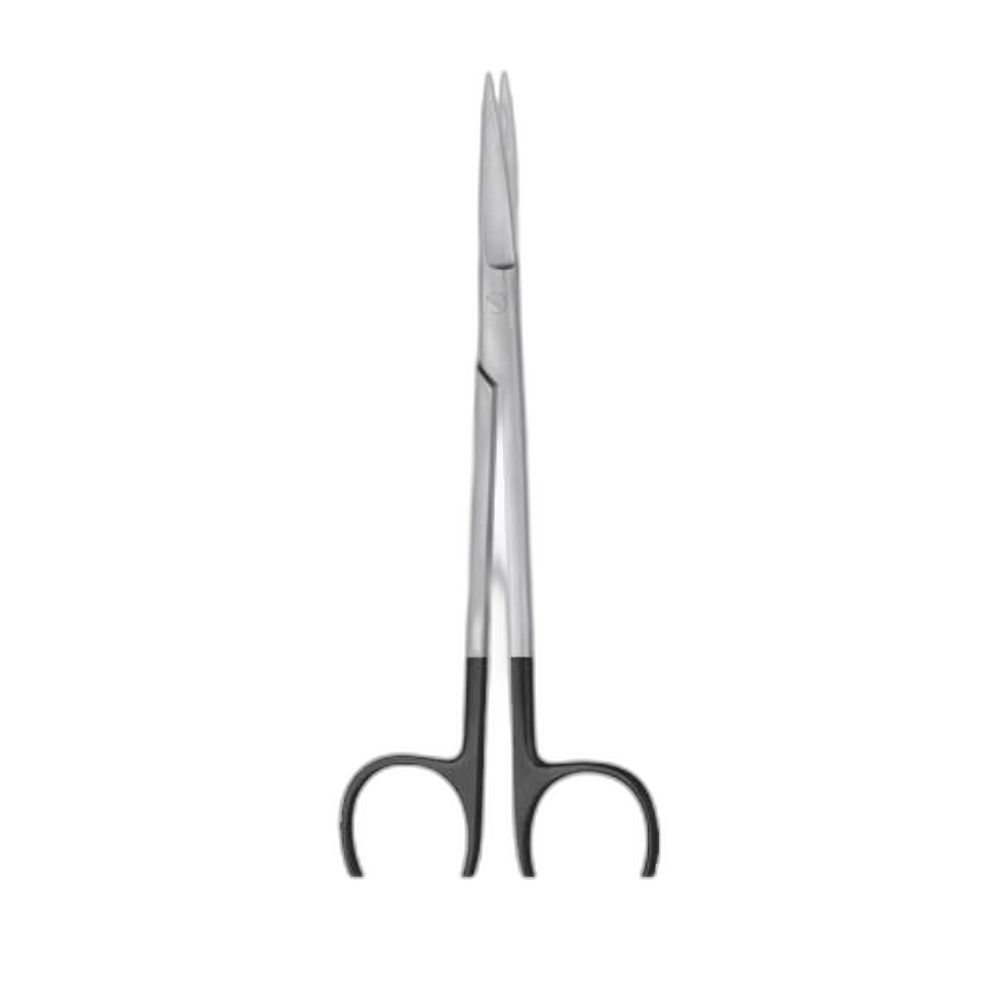

Where We Serve
Fizza Surgical exports to 50+ countries. Browse our country-specific pages with local regulatory guidance and pricing: