Coupland Elevators: Chisel Sizes 1, 2 and 3 Explained
Coupland elevator sizes 1, 2 and 3 compared: blade widths, the 1-2-3 luxation sequence, root splitting, safe fulcrums and what to check when buying.
A lower first molar arrives with the crown broken off at the gingival margin. There is nothing for a forceps beak to hold, the roots are divergent, and the patient has already had one failed attempt elsewhere. This is the case the Coupland elevator was built for — and the reason almost every oral surgery tray carries three of them, numbered 1, 2 and 3.
The instrument looks simple. The detail that matters is in how the three sizes work together, and in the forces a Coupland can safely deliver compared with a luxator or a Warwick James.
What a Coupland Elevator Actually Is
It is a straight, chisel-ended elevator with a concave, half-round blade and a sharpened, bevelled tip. The design is credited to Dr Douglas Coupland, a Toronto-trained dental surgeon who practised in Ottawa and specialised in extraction work. Many catalogues list the same instrument as a Coupland chisel.
Three features define the pattern:
- A concave (gouge) blade placed against the root, so it follows the root’s curvature instead of touching at a single point.
- A sharp working edge that enters the periodontal ligament space and, when needed, pares away a sliver of crestal bone.
- A straight, rigid shank in line with the handle — good control on anterior teeth, premolars and mesial molar surfaces, limited reach to distal surfaces at the back of the mouth.
Handles are usually pear-shaped palm grips, often hollow in modern stainless versions. Overall length typically falls in the 14–15 cm range.
Sizes 1, 2 and 3: The Specification Table
The number is a blade width, not a pattern change. Exact widths differ slightly between makers, so treat these as the widely quoted nominal values and measure a sample before ordering in volume.
| Size | Nominal blade width | Typical role | Common sites |
|---|---|---|---|
| No. 1 | approx. 3.0 mm | First entry into the ligament space; initial wedging | Incisors, premolars, retained single roots |
| No. 2 | approx. 3.6 mm | Widening the space; progressive luxation | Canines, premolars, individual molar roots |
| No. 3 | approx. 4.2 mm | Final luxation; splitting sectioned multi-rooted teeth | Lower and upper molars, broad roots |
The set steps up by roughly 0.6 mm per size. That small increment is deliberate: each blade enters a space the previous one has already opened, so a broad blade is never forced into a tight socket.
The 1-2-3 Sequence in Practice
- With the gingival attachment released, the No. 1 goes into the ligament space mesially or distally, concave face toward the root, shank roughly parallel to the long axis of the tooth.
- Gentle apical pressure advances the blade; a quarter turn of the handle wedges the root away from the socket wall.
- Once the No. 1 moves freely, the No. 2 follows into the enlarged space and repeats the action with more purchase.
- The No. 3 completes luxation. Many single-rooted teeth are then mobile enough to deliver with a root forceps.
Three actions are at work: wedging, rotation and leverage. Good technique leans on the first two and uses the third sparingly.
Splitting multi-rooted teeth
On a crownless molar the roots are usually sectioned first with a surgical bur through the furcation. A No. 3 placed into the cut and rotated separates them so each root can be elevated along its own path. Delivering a molar with divergent roots in one piece is how buccal plates fracture.
Creating a point of application
Where no ligament space is accessible, the sharp tip can remove a sliver of crestal bone to create a purchase point. It is a small, controlled cut — the instrument is not a bone chisel and should never be struck with a mallet.
Safety: Fulcrums, Force and Finger Guards
- Never use an adjacent tooth as a fulcrum unless it is also being extracted.
- Support the alveolus with the other hand. Finger and thumb either side of the ridge sense movement and catch a slipping blade before it reaches the floor of the mouth or the palate.
- Avoid apical force on upper molar and premolar roots near the maxillary sinus, where a root can be displaced into the antrum.
- Respect the mandible. In an atrophic jaw, heavy leverage on a lower third molar can contribute to fracture.
If a No. 3 will not move the root after reasonable effort, stop and reassess. The answer is usually more sectioning or a small bone window, not more force.
Coupland vs Luxator, Warwick James and Cryer
| Instrument | Blade | Primary action | Best suited to |
|---|---|---|---|
| Coupland | Straight, concave, sharp, 3 graded widths | Wedge, rotate, moderate lever | Luxating roots; splitting sectioned molars |
| Luxator | Thin, very sharp, flat or slightly curved | Cutting the ligament; minimal lever | Atraumatic extraction, implant site preservation |
| Warwick James | Small, curved left/right or straight | Fine lever in tight spaces | Third molars, small roots, restricted access |
| Cryer | Triangular, paired left/right | Strong rotational lever | Removing a root once its partner socket is empty |
The most common misuse is substituting a luxator. Its thin blade is designed to sever ligament fibres; used as a lever it bends or snaps at the tip. Conversely, a Coupland is too thick for truly atraumatic ligament cutting ahead of an immediate implant. Our luxator vs elevator guide and the broader dental root elevators guide cover the other patterns.
What to Check When Buying a Set
- Steel and hardness. A martensitic stainless grade such as AISI 420, hardened so the edge holds without chipping. Ask for the batch hardness value; ISO 7153-1 sets out material requirements for instrument steels.
- Edge and concavity. An even bevel with no rolled corners, and a symmetrical hollow — an off-centre gouge rotates unpredictably in the socket.
- Width step. Measure all three. A set where No. 2 and No. 3 are almost identical defeats the graded sequence.
- Shank-to-handle joint and marking. No gap where debris can lodge, and a laser-marked size number that survives reprocessing.
Fizza Surgical manufactures Coupland elevators and the wider extraction range in Sialkot under an ISO 13485 quality system — see the dental instruments catalogue and our certifications page. For the forceps that usually follow elevation, read the American pattern extraction forceps numbering guide.
Care, Sharpening and Retirement
Clean immediately after use — dried blood and bone debris in the concavity resist even an ultrasonic bath. Light sharpening on a fine stone, working only the original bevel at its original angle, restores the edge; grinding the concave face changes the profile and is specialist work. Retire the instrument when the tip is chipped, the shank is bent, or repeated sharpening has narrowed the blade below its size.
Frequently Asked Questions
What are the sizes of Coupland elevators?
They come as a set of three. Widely quoted nominal blade widths are about 3.0 mm for No. 1, 3.6 mm for No. 2 and 4.2 mm for No. 3, with slight variation between manufacturers. The blade shape is the same across all three; only the width changes.
Is a Coupland chisel a different instrument?
No. The names are used interchangeably. “Chisel” reflects the sharp bevelled tip, which can remove a small amount of crestal bone as well as luxate a root.
Why use the sizes in order 1, 2, 3?
Each size enters a space the smaller one has already opened. Graded expansion allows controlled wedging and rotation instead of forcing a wide blade into a tight ligament space, lowering the risk of slipping or fracturing the socket wall.
Can a luxator be used instead?
Not reliably. A luxator’s thin blade is intended to cut periodontal ligament fibres and bends or breaks when used as a lever. The Coupland pattern is thicker and made to wedge, rotate and apply moderate leverage.
Need precision surgical instruments?
Configure complete instrument sets with our team — ISO 13485 certified, CE marked, made in Sialkot since 1980.
Related Guides
View all articles →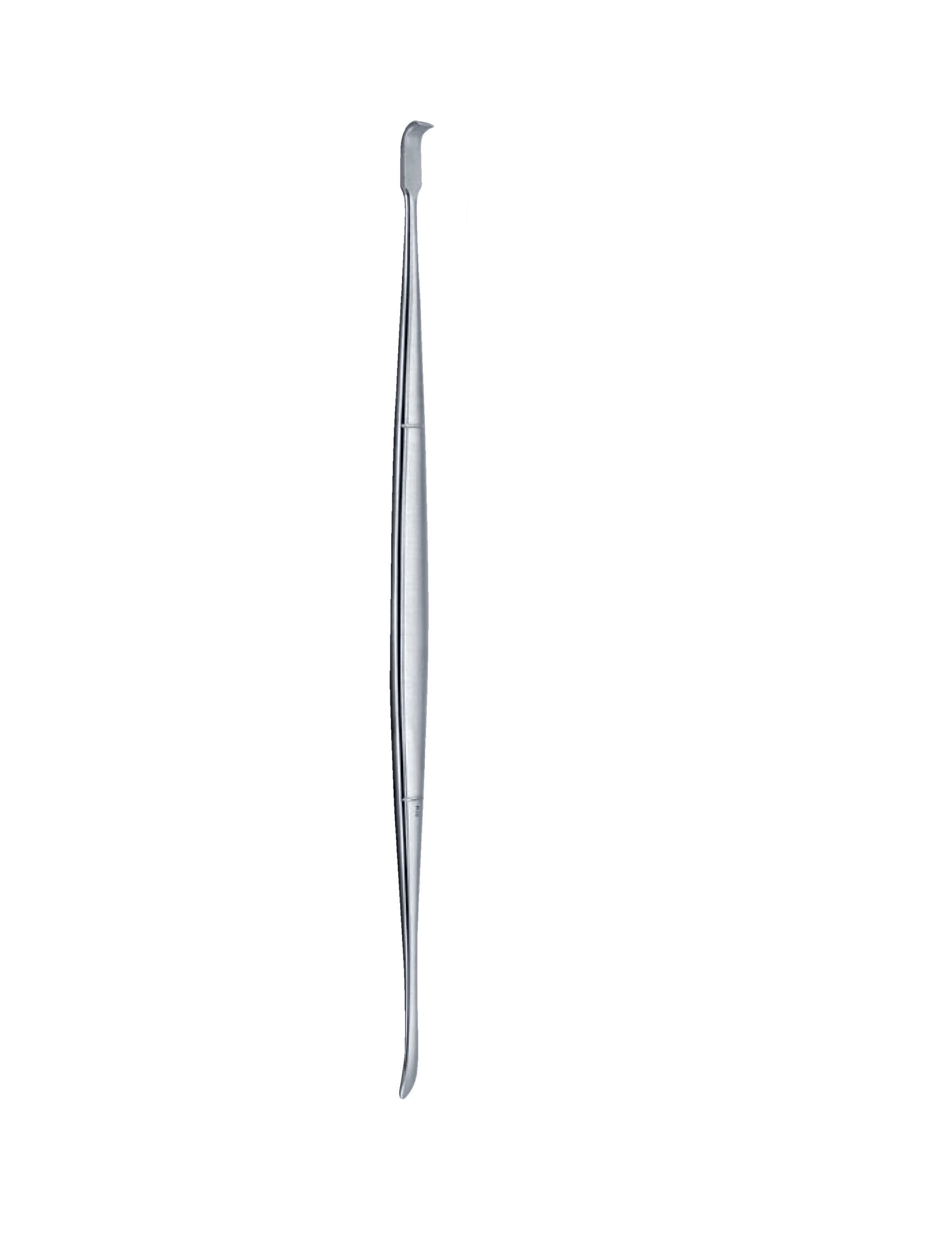
Where We Serve
Fizza Surgical exports to 50+ countries. Browse our country-specific pages with local regulatory guidance and pricing: