Plastic Filling Instrument Kit: 5-Piece Dental Set Guide
Inside the 5-piece dental plastic filling instrument kit: specs, steel grades, cassette sterilization and a procurement checklist from an ISO 13485 maker.
 Made in Sialkot · Since 1980
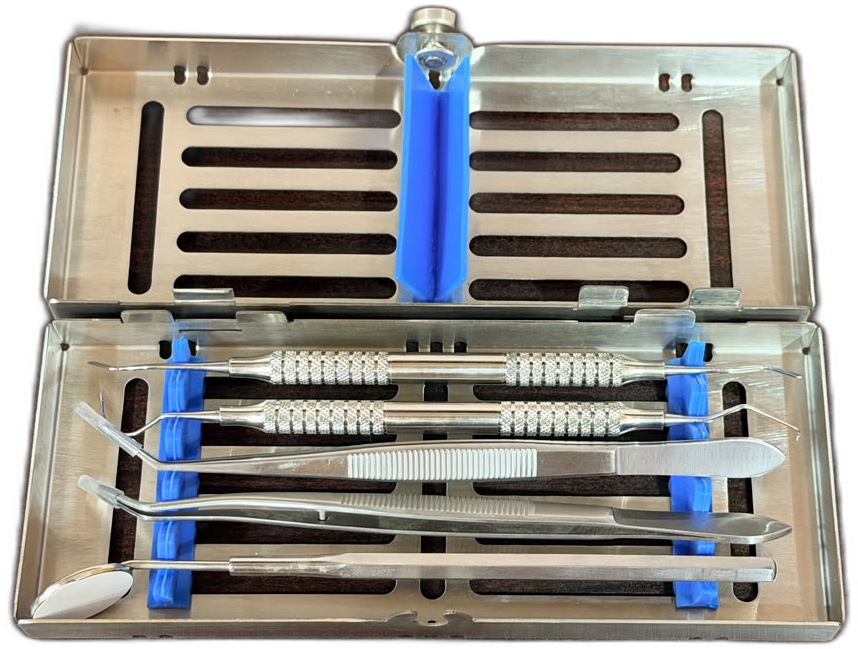
Open any restorative tray in a general dental practice and five instruments do most of the work: a mirror, an explorer, two pairs of tweezers and a double-ended plastic filling instrument. That is the entire logic behind the 5-piece plastic filling instrument kit — it packages the core placement set for composite and glass ionomer restorations into a single autoclavable cassette, so the tray is always complete and the count is always right.
The name confuses buyers outside dentistry, so let’s clear it up first: the instruments are not made of plastic. “Plastic” refers to the filling material in its mouldable, unset state — composite resin, glass ionomer or amalgam before it hardens. A plastic filling instrument is the stainless steel tool that carries, packs and shapes that material inside the cavity.
What’s inside the 5-piece kit
The configuration Fizza Surgical supplies follows the standard restorative examination-and-placement layout:
- Plastic filling instrument, 2 mm / 2 mm double-ended — a flat paddle on one end for carrying and shaping increment layers, a cylindrical condenser on the other for packing the material against the cavity walls without voids.
- Explorer 17/23 — the double-ended probe for checking margins, detecting overhangs and testing the set restoration. The #17 tine reaches interproximal surfaces; the shepherd’s-hook #23 sweeps occlusal anatomy.
- College tweezers, 15 cm — angled, serrated tips for carrying cotton pellets, wedges and articulating paper to and from the field.
- Meriam tweezers, 16 cm — the stouter angled pattern for heavier carrying work and matrix band handling.
- Mouth mirror #4 — 22 mm head for indirect vision, soft-tissue retraction and light reflection into the preparation.
The five sit in a stainless steel sterilization cassette with silicone rail inserts. The cassette is not packaging — it is part of the workflow: instruments go from chairside to ultrasonic bath to autoclave to storage without being handled individually, which protects the tips and keeps the set together through hundreds of cycles.
Instrument specifications
| Instrument | Working ends | Length | Primary use |
|---|---|---|---|
| Plastic filling instrument | 2 mm paddle / 2 mm condenser | 17 cm | Placing & packing composite, GIC, amalgam |
| Explorer | #17 / #23 tips | 17 cm | Margin checks, caries detection |
| College tweezers | Angled, serrated | 15 cm | Cotton pellets, wedges, paper points |
| Meriam tweezers | Angled, heavy pattern | 16 cm | Matrix bands, heavier transfer work |
| Mouth mirror | #4 head, 22 mm | 17 cm with handle | Indirect vision, retraction |
| Sterilization cassette | 5-instrument rails | 18 × 9 × 3 cm | Autoclave at 134°C, storage, transport |
Why the plastic filling instrument earns its place
Composite dentistry is incremental. Each 2 mm layer has to be adapted to the cavity floor and walls before curing, and the instrument doing that work decides whether the restoration bonds cleanly or traps voids. The 2 mm paddle matches the recommended increment depth — that is not a coincidence. A wider paddle drags material away from line angles; a narrower one wastes strokes. The condenser end packs each increment with controlled pressure, which matters most in Class II boxes where a void at the gingival margin becomes a recurrent caries case two years later.
One detail worth checking on any plastic filling instrument: the surface finish of the working ends. Composite resin sticks to rough steel. Fizza’s instruments are mirror-polished on the working ends specifically so unset composite releases cleanly rather than lifting with the instrument on the back-stroke.
Material and sterilization standards
Every instrument in the kit is forged from martensitic stainless steel (AISI 410/420), hardened and tempered, then passivated for corrosion resistance under ISO 7153-1. The cassette body is austenitic AISI 304 — softer than the instruments it carries but far more resistant to the chloride attack of repeated autoclave cycles. The full kit is autoclavable at 134°C and manufactured under Fizza Surgical’s ISO 13485 quality system with CE marking for EU supply.
For practices buying in volume, the cassette format also standardises the count: five instruments, five rails, one glance before and after every procedure. Missing-instrument audits get dramatically faster when every tray has the same fixed layout.
Who this kit is specified for
The 5-piece configuration suits general practices running high volumes of direct restorations, dental colleges equipping student clinics with identical trays, and NGOs or mobile clinics that need complete, self-contained sets that survive field sterilization. Distributors typically order it alongside extraction instruments to cover both restorative and surgical trays from one supplier — the full range is in our dental instruments catalogue, manufactured under the certifications documented on our certifications page.
Care that keeps the kit in service
A restorative kit fails at the tips first. Three habits extend its life from months to years:
- Wipe composite off before it cures. Set resin on a paddle end has to be scraped or ultrasonically stripped, and both roughen the polish that makes the instrument non-stick in the first place. A dry gauze wipe between increments costs two seconds.
- Keep instruments racked through cleaning. Loose instruments in an ultrasonic basket chip each other’s working ends. The cassette’s silicone rails exist precisely to stop steel-on-steel contact during the wash cycle.
- Dry before the autoclave, not after. Water spotting and chloride staining start when instruments enter the sterilizer wet. A quick compressed-air pass over the cassette prevents the brown staining that gets mistaken for rust.
Explorers are the consumable of the set — the #23 tine loses its point with normal margin-checking work. Practices running full books typically rotate replacement explorers into the cassettes every 12–18 months while the mirrors, tweezers and filling instruments run on for years. Mirror heads on Fizza’s #4 pattern are replaceable on the same cone-socket handle, so a scratched mirror is a head swap, not a new instrument.
Specifying the kit for tenders and bulk orders
Procurement teams comparing quotes on dental kits should pin down four things in the specification line, because “5-piece filling kit” covers a wide quality range between suppliers:
- Steel grades in writing — instruments in AISI 410/420 to ISO 7153-1, cassette in AISI 304. Unspecified “stainless steel” on a quote usually means a softer grade that bends at the explorer tine.
- Working-end finish — mirror polish on the plastic filling instrument’s paddle and condenser. This is the difference between composite releasing cleanly and lifting on the back-stroke.
- Manufacturer certification — ISO 13485 and CE marking at manufacturer level, not just distributor level, so the paperwork survives a regulatory audit.
- Cassette included, not optional — some quotes drop the cassette to hit a price point, which quietly moves sterilization packaging costs back onto the practice.
Frequently Asked Questions
Why is it called a plastic filling instrument if it’s made of steel?
“Plastic” describes the filling material, not the instrument. Composite, glass ionomer and amalgam are plastic — mouldable — before they set, and this stainless steel instrument places and shapes them during that working window.
What is the plastic filling instrument kit used for?
Direct restorative procedures: placing and condensing composite resin, glass ionomer and amalgam fillings. The kit also covers the examination basics — mirror, explorer and two tweezers — so a single cassette equips the whole procedure.
Can the kit be autoclaved in its cassette?
Yes. The AISI 304 stainless cassette with silicone rails is designed for steam sterilization at 134°C. Instruments stay racked through ultrasonic cleaning, autoclaving and storage, which protects the polished working ends from tip damage.
What steel are the instruments made from?
Hardened martensitic stainless steel (AISI 410/420) conforming to ISO 7153-1, with mirror-polished working ends so unset composite releases cleanly. Manufacturing runs under an ISO 13485 quality system with CE marking.
Is this kit suitable for composite as well as amalgam?
Yes. The 2 mm paddle and condenser handle both. For composite, the non-stick polished finish matters most; for amalgam, the condenser end packs increments against the cavity walls the same way.
Fizza Surgical is an ISO 13485-certified, CE-marked manufacturer of dental and surgical instruments based in Sialkot, Pakistan, supplying hospitals, dental practices and distributors worldwide since 1980. To order the 5-piece plastic filling instrument kit or configure a custom restorative tray, contact our team through the dental instruments catalogue.
Need precision surgical instruments?
Configure complete instrument sets with our team — ISO 13485 certified, CE marked, made in Sialkot since 1980.
Related Guides
View all articles →

Where We Serve
Fizza Surgical exports to 50+ countries. Browse our country-specific pages with local regulatory guidance and pricing: