Difficult Airway Cart Setup: Complete Anesthesia Equipment Guide
A drawer-by-drawer difficult airway cart setup mapped to the escalation algorithm, with blade specs, ISO 7376 fitting and a maintenance schedule.
 Made in Sialkot · Since 1980
Ask five anaesthetists in the same department what is in drawer three of the difficult airway cart, and you will get five answers. That is the problem in one sentence.
The cart exists to compress decision-making. When the primary plan has failed and the operator is working against desaturation, the cart should present the next device without a search. Instead, most carts accumulate — a video laryngoscope arrives, someone adds a fibrescope, a rep leaves samples, and within two years the trolley holds forty items in no particular order.
This guide sets out a drawer-by-drawer configuration keyed to the failure points in the difficult airway algorithm, the instrument specifications that matter, and the maintenance discipline that keeps a difficult airway cart functional rather than decorative.
Design Principle: One Drawer Per Algorithm Step
The 2022 ASA practice guidelines restructured difficult airway management around limiting attempts and escalating deliberately rather than repeating failed techniques. A cart organised by device category — “all the scopes here, all the tubes there” — fights that structure. A cart organised by algorithm step supports it.
Five drawers, five decisions:
| Drawer | Algorithm step | Contents |
|---|---|---|
| 1 | Optimised direct laryngoscopy | Alternative blade designs and sizes, bougies, stylets |
| 2 | Video laryngoscopy | Video device, hyperangulated and Macintosh-geometry blades, rigid stylet |
| 3 | Supraglottic rescue | SGAs sizes 3–5, intubating LMA, gastric drain tubes |
| 4 | Flexible scope intubation | Fibrescope, airway conduits, topicalisation and atomiser set |
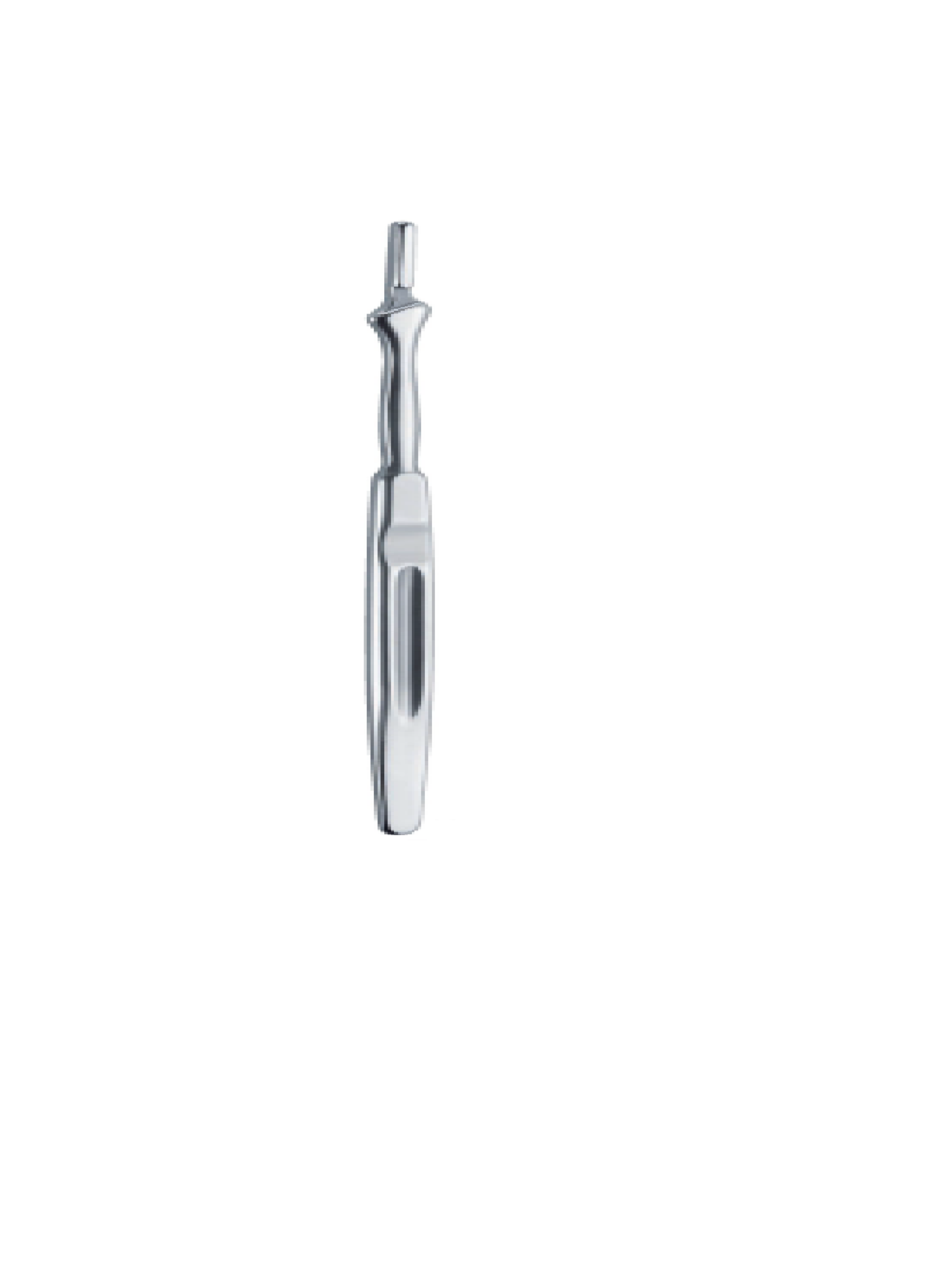
| 5 | Emergency invasive airway | Scalpel, tracheal hook, Trousseau dilator, bougie, 6.0 cuffed tube |
Label the drawer fronts with the step, not the contents. Under pressure, the operator is thinking “supraglottic rescue”, not “size 4 LMA”. A drawer labelled by the decision they have just made is found faster than one labelled by the object inside it.
Top of the Cart Stays Empty
This sounds trivial. It is not. The cart surface becomes the working platform when it arrives at the bed — somewhere to lay out the bougie, open the tube, park the syringe. Carts with a monitor bolted to the top surface, or with a permanent tangle of suction tubing, force the operator to work off the mattress. Mount screens on an arm and keep the deck clear.
Drawer 1 — Optimised Direct Laryngoscopy
Escalation begins with doing the same thing better, not something different. This drawer supports a second, optimised attempt: different blade geometry, different length, better adjunct.
- Macintosh blades sizes 3 and 4, plus a size 4 in reduced-flange geometry for the patient with restricted mouth opening or a prominent chest. The flange is where the standard Macintosh loses in obese and obstetric patients — our guide to the reduced flange Macintosh blade covers the geometry.
- Miller blades sizes 2 and 3 for the anterior larynx and the floppy epiglottis. The straight-blade approach lifts the epiglottis directly rather than indirectly, and it retrieves a proportion of grade 3 views. The Macintosh versus Miller comparison sets out when each geometry wins.
- McCoy levering-tip blade, size 3 and 4. The hinged distal tip elevates the epiglottis on demand and converts a proportion of Cormack-Lehane grade 3a views to grade 2. Detail in our McCoy blade guide.
- Bougies, 15 Fr adult and 10 Fr paediatric, coudé tip.
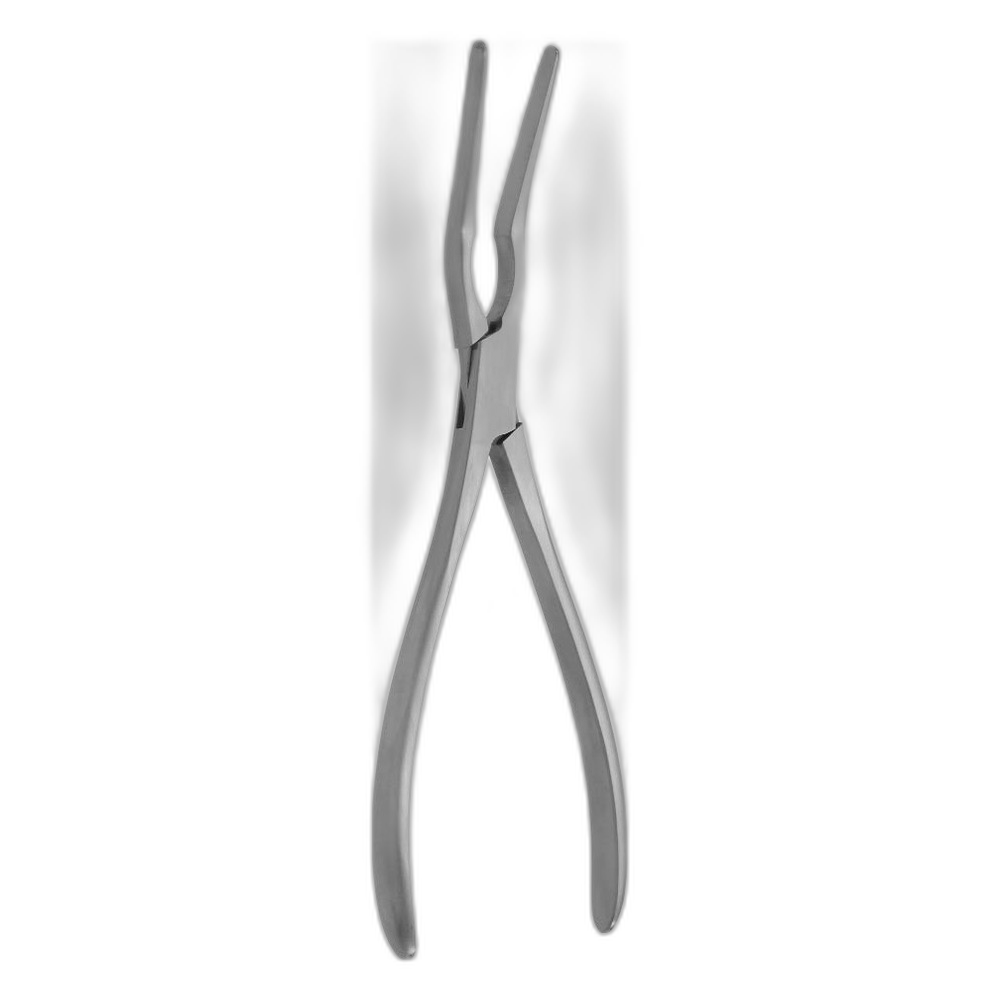
- Malleable stylets, and a set of Magill forceps for foreign-body retrieval and nasal tube direction — see the Magill forceps guide.
Blade specification matters more here than in any other drawer. Insist on ISO 7376 compliance for the handle-to-blade fitting so that any blade in the cart mates with any handle in the department. Mixed-standard stock is a genuine hazard: a blade that will not seat, discovered at the point of use, costs an attempt.
Green-spec conventional blades and fibre-optic blades are not interchangeable in the dark. Standardise the whole cart on one illumination type.
Drawer 2 — Video Laryngoscopy
Video laryngoscopy has become the second attempt for most departments rather than the third. Stock the drawer accordingly.
Carry both blade geometries. A Macintosh-profile video blade allows the operator to use a familiar technique with a camera view and pass a tube without a rigid stylet. A hyperangulated blade delivers a view around the corner in the genuinely anterior larynx but demands a rigid preformed stylet to steer the tube into a view the operator can see but cannot reach in a straight line.
The single most common video laryngoscopy failure is a good view with no route for the tube. That is a stylet problem, not a scope problem. Keep the matched rigid stylet in the same drawer as the blade, physically bundled if necessary.
Two spare charged batteries and a spare camera cable live here. A flat battery is the most banal way for a difficult airway cart to fail, and it is entirely preventable.
Drawer 3 — Supraglottic Rescue
This is the oxygenation drawer, and it is the one that saves the patient while the team decides what to do next.
- Second-generation supraglottic airways with a gastric drain channel, sizes 3, 4 and 5
- An intubating laryngeal mask with its dedicated tube and pusher rod
- Gastric tubes sized to the drain channels
- Lubricant sachets — kept in this drawer, not centrally, because nobody detours for lubricant during a rescue
Size 3, 4 and 5 covers the adult population. Departments that stock only size 4 discover the gap on a 95 kg patient at exactly the wrong moment.
Drawer 4 — Flexible Scope Intubation
The awake or asleep fibreoptic drawer is used least often and audited least often. It is where dead equipment hides.
Contents: the flexible scope with a working light source, an oral intubating conduit, a bite block, an atomiser or mucosal atomisation device for topical anaesthesia, and lignocaine in the concentration your department’s protocol specifies.
Two practical failures recur. First, the scope is off charge or its light source is dead, because nobody checks a device used twice a quarter. Second, the tube on the shelf is the wrong material — a standard PVC tube catches on the arytenoids during railroading far more than a flexometallic or a tapered-tip tube does. Stock a tube designed for the technique.
Drawer 5 — Emergency Invasive Airway
The bottom drawer is the one that must be openable with one hand while the other holds a mask seal. It should contain nothing except the surgical airway set.
Scalpel handle with a No. 10 blade — the broad belly cuts a usable aperture on a single pass where a fine-pointed No. 11 buries itself. A single sharp tracheal hook to retract the cricoid caudally. A Trousseau three-bladed dilator to open the incision transversely. A 15 Fr bougie. A 6.0 mm cuffed tube. A 10 mL syringe. Cotton tie.
Instrument material for this set: AISI 420 martensitic stainless hardened to 48–52 HRC for the hook, austenitic 304 or 316 for the dilator so the reverse-action spring survives repeated autoclave cycling. Satin finish throughout — a mirror polish reflects theatre light back into the operator’s eyes at the moment of incision.
Nothing else goes in this drawer. Not the spare tubes, not the tape, not the ties for other equipment. One decision, one drawer, seven items.
What Does Not Belong on the Cart
Carts fail from accumulation more often than from omission. Remove the following:
- Drugs. Airway drugs belong in the anaesthetic machine or the resuscitation trolley, under their own stock control. Drugs on an airway cart go out of date unseen.
- Duplicate device families. Three brands of supraglottic airway means staff are unfamiliar with two of them. Pick one, stock it in every size.
- Rep samples. If it is not on the department’s agreed list and in the training programme, it is clutter.
- Paediatric equipment on an adult cart, unless clearly partitioned and labelled. Mixed sizing under pressure produces wrong-size selection.
Maintenance and Check Discipline
A cart is a piece of equipment with a failure rate, and it needs a service schedule like any other.
| Interval | Check |
|---|---|
| Daily (theatre days) | Tamper seal intact; cart in its designated location; unobstructed |
| Weekly | Battery charge on video device and light source; spare batteries present |
| Monthly | Full drawer inventory against the laminated list; expiry dates; cuff patency |
| Quarterly | Function test of flexible scope; blade lamp output; dilator spring action |
| Annually | Contents review against current guidance and department incident log |
Seal the cart. A numbered tamper seal converts “is anything missing?” into a one-second visual check, and it stops the slow drain of bougies and lubricant to other clinical areas. Log the seal number.
Reprocessing discipline is the other half of this. Reusable blades and handles returning to the cart must clear the department’s validated cycle — our laryngoscope sterilisation protocol covers handle contamination, which is routinely the weak point, and the broader CSSD workflow guide sets out the dirty-to-sterile chain.
Location and Number
One cart per theatre suite is not enough. Site a cart in every location where a general anaesthetic or deep sedation is administered: main theatres, obstetric theatre, ICU, emergency department, endoscopy, cardiac catheter lab, and interventional radiology.
Obstetric theatre warrants specific mention. It has the highest per-case incidence of difficult intubation of any location in the hospital, and it is frequently the furthest from the main airway trolley. It gets its own cart, configured identically.
Identical configuration across every location is the point. An anaesthetist covering ICU at 3 a.m. must open drawer five and find the surgical airway set in the same place it sits in theatre. Standardisation of layout is worth more than any individual device on the cart.
Fizza Surgical manufactures laryngoscope blades, handles and airway instrumentation in Sialkot, working to ISO 13485 with CE marking across the surgical range. Blades are produced to ISO 7376 fitting geometry in both conventional and fibre-optic illumination. See the full laryngoscope range, the wider surgical instrument catalogue, and our certifications.
Frequently Asked Questions
How many drawers should a difficult airway cart have?
Five works well, mapped one-to-one onto the escalation steps: optimised direct laryngoscopy, video laryngoscopy, supraglottic rescue, flexible scope intubation, and emergency invasive airway. Fewer drawers force unrelated devices together; more drawers add search time. Label each drawer with the decision it serves rather than a list of its contents.
Should the cart carry drugs?
No. Airway drugs belong in the anaesthetic machine or resuscitation trolley where stock rotation is already managed. Drugs stored on an airway cart sit unexamined between uses and expire unnoticed. The cart carries devices and instruments only, with the exception of topical local anaesthetic and lubricant tied to specific techniques.
How often should the cart be checked?
Daily seal check on theatre days, weekly battery check, monthly full inventory against a laminated list, quarterly function testing of the flexible scope and light sources, and an annual contents review against current guidance. Record every check on a card attached to the cart — an unlogged check did not happen.
Do we need both hyperangulated and Macintosh-geometry video blades?
Yes. A Macintosh-profile video blade lets the operator use familiar technique and pass a tube without a rigid stylet, which suits most cases. A hyperangulated blade gives a view in the genuinely anterior larynx but requires a matched rigid stylet to deliver the tube. Keep the stylet physically bundled with the hyperangulated blade.
Where should carts be located in a hospital?
Every location administering general anaesthesia or deep sedation: main theatres, obstetric theatre, ICU, emergency department, endoscopy, cardiac catheter lab, and interventional radiology. Obstetric theatre is the highest-risk location and needs its own cart rather than relying on the main suite. Configure every cart identically so layout is transferable.
Need precision surgical instruments?
Configure complete instrument sets with our team — ISO 13485 certified, CE marked, made in Sialkot since 1980.
Related Guides
View all articles →
Where We Serve
Fizza Surgical exports to 50+ countries. Browse our country-specific pages with local regulatory guidance and pricing: