Amalgam Carriers and Condensers: Restorative Kit Guide
Amalgam carrier bore sizes, condenser tip geometry and condensation pressure explained, plus cleaning rules that stop barrels jamming.
A clogged barrel in the middle of a class II restoration is one of those small failures that costs three minutes and a whole mix. The amalgam sets in the chamber, the plunger jams, and the assistant is triturating a fresh capsule while the isolation slowly degrades. Nine times out of ten the instrument is not defective — it is the wrong bore for the preparation, or it was cleaned after the material had already begun to harden.
This is a short field guide to the two instruments that carry and pack dental amalgam: the carrier and the condenser. Both look simple. Both have geometry that decides whether the restoration marginally leaks in eighteen months.
What the Barrel Diameter Actually Controls
An amalgam carrier is a hollow barrel with a spring-loaded plunger and a thumb lever. Freshly triturated alloy is scooped into the bore, the barrel is placed over the preparation, and the lever ejects a measured increment.
The bore diameter is the specification that matters. Too wide and the increment overflows a conservative occlusal box, wasting material and forcing you to carve away bulk that was never condensed. Too narrow and you are making six trips into a deep distal box while the alloy’s working time runs out.
Most clinical work is covered by three bores:
| Bore designation | Typical internal diameter | Best suited to |
|---|---|---|
| Mini / small | 1.5 mm | Conservative class I, pit-and-fissure preparations, deciduous teeth |
| Regular / medium | 2.0 mm | Standard class I and class II occlusal-proximal boxes |
| Large / jumbo | 2.5 – 3.0 mm | Wide MOD preparations, complex amalgam build-ups, cusp replacement |
A double-ended instrument with a mini end and a regular end handles the overwhelming majority of a general practice list. Single-ended jumbo carriers earn their place in restorative-heavy clinics doing foundation build-ups under crowns.
Barrel angulation is the second variable. A straight barrel gives the cleanest line of sight to an upper occlusal surface; a curved or contra-angled barrel reaches lower second molars without the handle fouling the opposing arch. Kits that pair a straight end with a curved end on one instrument are the most economical way to cover both.
Barrel Material and Sticking
Amalgam sticks to bare steel. Manufacturers deal with this three ways: polishing the bore to a mirror finish, fitting an aluminium or plastic insert barrel, or applying a titanium-nitride coating. Anodised aluminium barrels release cleanly and are common in the mid market, but they are softer and deform if levered against a matrix band. Solid stainless barrels in AISI 420 hold their geometry far longer and tolerate repeated ultrasonic cycles, which is why they dominate hospital dental departments.
Check the plunger travel on any new instrument before it enters a tray. The plunger face should finish flush with the barrel mouth — not recessed. A plunger that stops 0.5 mm short leaves a compacted plug of alloy behind on every use, and that plug is where the next jam starts.
Condensers: Small Tips Generate Big Pressure
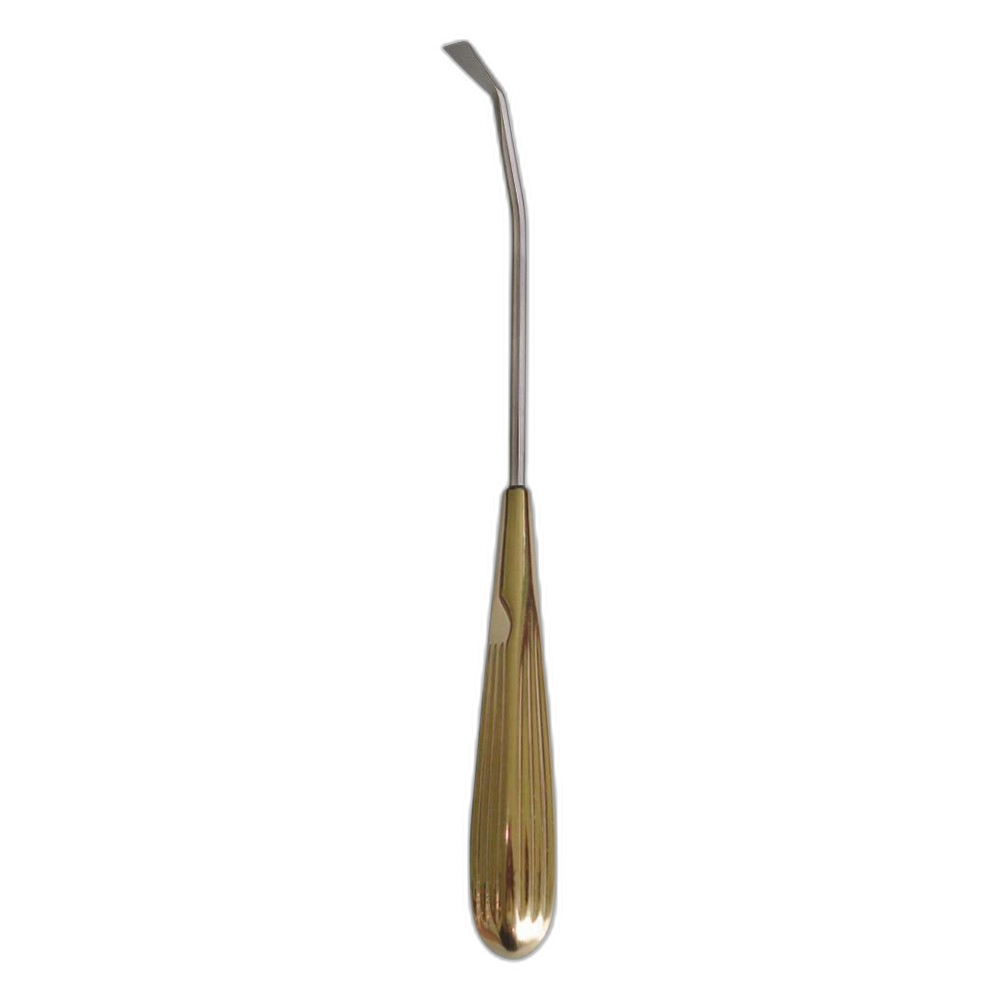
A condenser — also called a plugger — packs each increment against the cavity floor and walls, driving out mercury-rich matrix and adapting the alloy to the margins. The instrument does the work through pressure, and pressure is force divided by area, so tip size is everything.
Clinical measurement studies put maximum condensation pressure around 8.9 MPa with a small plugger and 5.5 MPa with a large one, with working averages closer to 3.7 MPa and 2.2 MPa respectively. That is a two-fold difference from tip diameter alone. It is why a full condenser sequence runs small to large: the small tip develops the pressure needed to adapt alloy into line angles and retention grooves, and the large tip then consolidates the bulk without over-stressing the remaining tooth structure.
| Condenser tip | Diameter range | Role in the sequence |
|---|---|---|
| Small round | 1.0 – 1.2 mm | First increments; line angles, retention grooves, proximal box floor |
| Medium round | 1.5 mm | Body of the restoration |
| Large round | 2.0 mm | Final bulk and overpacking before carving |
| Parallelogram / rectangular | 1.0 × 2.0 mm typical | Proximal box walls, lateral condensation against the matrix band |
Non-round tips are underused. A parallelogram or rectangular face lets you direct pressure laterally against the band to establish a proper proximal contact, which a round tip will not do efficiently. Anyone restoring class II cavities routinely should have at least one in the setup.
Serrated Versus Smooth Faces
The working face is either smooth or cross-cut with fine serrations. The serrations create mechanical interlock between successive increments and grip the alloy so the tip does not skate.
The selection rule follows the alloy particle shape. Spherical alloys flow readily and need light pressure with fewer thrusts; a smooth face is adequate and reduces the risk of dragging material out of the box. Admixed and lathe-cut alloys resist condensation and need heavy pressure with a greater number of thrusts, and the serrated face earns its keep there. Lateral condensation matters more with spherical alloys than with admixed, despite the lower force — the material will simply slump away from the band if you only push vertically.
What Else Belongs in the Restorative Setup
A carrier and two or three condensers are the core, but the tray only works as a sequence:
- Matrix retainer and bands — the proximal wall you are condensing against. Our Tofflemire matrix retainer guide covers band thickness and retainer selection.
- Carvers — Hollenback and discoid-cleoid patterns for occlusal anatomy and marginal definition.
- Burnishers — ball or football shaped, used post-carve to seal margins and improve surface smoothness.
- Amalgam well — a stainless or glass reservoir that keeps the mix off the bracket table.
- Explorer and mirror — margin verification before the material reaches final set.
Fizza Surgical manufactures the full restorative range in Sialkot under ISO 13485, and the pattern coverage is listed under dental instruments. Material certification and CE documentation sit on our certifications page.
Cleaning: Timing Beats Technique
Reprocess the carrier immediately. Amalgam that has reached initial set inside a 2 mm bore will not come out in an ultrasonic bath — it has to be driven out mechanically, and that is how plungers get bent.
The workable protocol: eject any residual increment at chairside, wipe the barrel mouth, then submerge the instrument in enzymatic solution before the material sets. Ultrasonic for the standard cycle, rinse with deionised water, dry fully, then autoclave. Amalgam residue trapped in a barrel during a steam cycle is both a mercury-vapour concern and a corrosion source, because the dissimilar metals sitting in contact under moisture set up galvanic attack on the stainless.
Condensers need less ceremony but repay inspection. Run a loupe over the serrations every few months — flattened serrations no longer interlock increments and the instrument should be retired or re-cut. Check that tip faces remain perpendicular to the shank; a bent plugger delivers pressure off-axis and will push the alloy away from the margin rather than into it.
Frequently Asked Questions
What size amalgam carrier should a general practice buy first?
A double-ended instrument with a 1.5 mm mini bore and a 2.0 mm regular bore. That pairing covers conservative occlusal preparations and standard class II boxes, which together account for most restorative work. Add a jumbo bore only if you routinely place core build-ups.
Are aluminium-barrel carriers better than stainless steel?
They release amalgam more cleanly, which is a genuine advantage. They are also softer, so they dent if levered against a matrix band and wear faster in ultrasonic cleaning. Stainless barrels in AISI 420 last considerably longer; the trade-off is that they need more disciplined immediate cleaning.
Should I use a serrated or smooth condenser?
Serrated for admixed and lathe-cut alloys, which need heavy thrusts and benefit from mechanical interlock between increments. Smooth for spherical alloys, which condense under light pressure and can be dragged out of the preparation by an aggressive serrated face.
Why does my amalgam carrier keep jamming?
Usually one of two causes: material left to set inside the bore, or a plunger that does not travel flush with the barrel mouth. Check plunger travel first — if the face stops short of the opening, every use leaves a residual plug and the jams will recur no matter how carefully you clean.
Can amalgam condensers be autoclaved?
Yes. Stainless steel condensers are fully steam-sterilisable at 134 °C. The requirement is that all amalgam residue is removed before the cycle — trapped residue under steam is both a mercury-vapour issue and a galvanic corrosion risk against the instrument surface.
Need precision surgical instruments?
Configure complete instrument sets with our team — ISO 13485 certified, CE marked, made in Sialkot since 1980.
Related Guides
View all articles →
Where We Serve
Fizza Surgical exports to 50+ countries. Browse our country-specific pages with local regulatory guidance and pricing: