Colectomy Instrument Set: Colon Surgery Instruments Guide
Colectomy instruments guide: non-crushing vs crushing bowel clamps, retraction and the anastomosis set for open and laparoscopic colon surgery.
 Made in Sialkot · Since 1980
What separates a bowel resection tray from a general laparotomy set? One answer above all: the clamps that decide whether an anastomosis heals. Colon surgery lives and dies on atraumatic bowel control, and a colectomy instrument set is organised around that single, unforgiving requirement. The best colectomy instruments are chosen not for their number but for how gently they control bowel.
Whether the indication is cancer, diverticular disease, Crohn’s, ischaemia, or obstruction, the mechanics are the same — mobilise the segment, control its blood supply, divide it, and rejoin healthy bowel without crushing the edges that must knit together. Here is how the set is built, group by group, for both open and laparoscopic colectomy.
The Instrument That Defines the Set: Intestinal Clamps
Get this group right and the rest follows. Colectomy uses two clamp families, and confusing them is a real safety issue.
| Clamp Type | Pattern | Placed On | Purpose |
|---|---|---|---|
| Non-crushing | Doyen, Bainbridge | Bowel that will be rejoined | Occlude without tissue damage |
| Crushing | Payr, Kocher, Carmalt | Specimen side (discarded) | Secure and seal the removed segment |
The non-crushing Doyen intestinal clamp is the workhorse. Its long, finely serrated, flexible blades occlude the lumen to prevent spillage while protecting the tissue that will form the anastomosis. Crushing clamps such as the Payr or a Rochester-Carmalt go on the side coming out. A well-built tray carries both, clearly separated on the mayo stand so they are never mixed up under pressure.
Retraction for the Colon
The colon runs the full perimeter of the abdomen, so exposure needs vary with the segment. A right hemicolectomy works in the right gutter; a sigmoid or left colectomy demands deep pelvic access; a total colectomy needs the whole abdomen open. Self-retaining retraction earns its place in all of them.
- Balfour self-retaining retractor with centre blade
- Bookwalter modular frame for total or difficult cases
- Deaver retractors, 2.5 cm and 5 cm, for the pelvis and flexures
- Malleable ribbon retractors to pack the small bowel away
- Two Richardson retractors for the working incision
For deep sigmoid and rectal mobilisation, the same long, narrow blades used in pelvic surgery apply — see our Balfour retractor guide for how the centre blade helps hold the bladder and small bowel out of the pelvis.
Mobilisation, Dissection, and Pedicle Control
Taking down the colon means dividing the peritoneal attachments along the white line of Toldt, mobilising the flexures, and controlling the mesenteric vessels. This is scissor-and-clamp work, with right-angle forceps for the named pedicles.
- Long curved Metzenbaum scissors, 23 cm, for the mesocolon
- Curved Mayo scissors for tougher attachments
- Mixter right-angle forceps for the ileocolic and mesenteric pedicles
- Rochester-Pean and Kelly haemostats, 18–24 per tray
- Lahey and tonsil forceps for passing ligatures
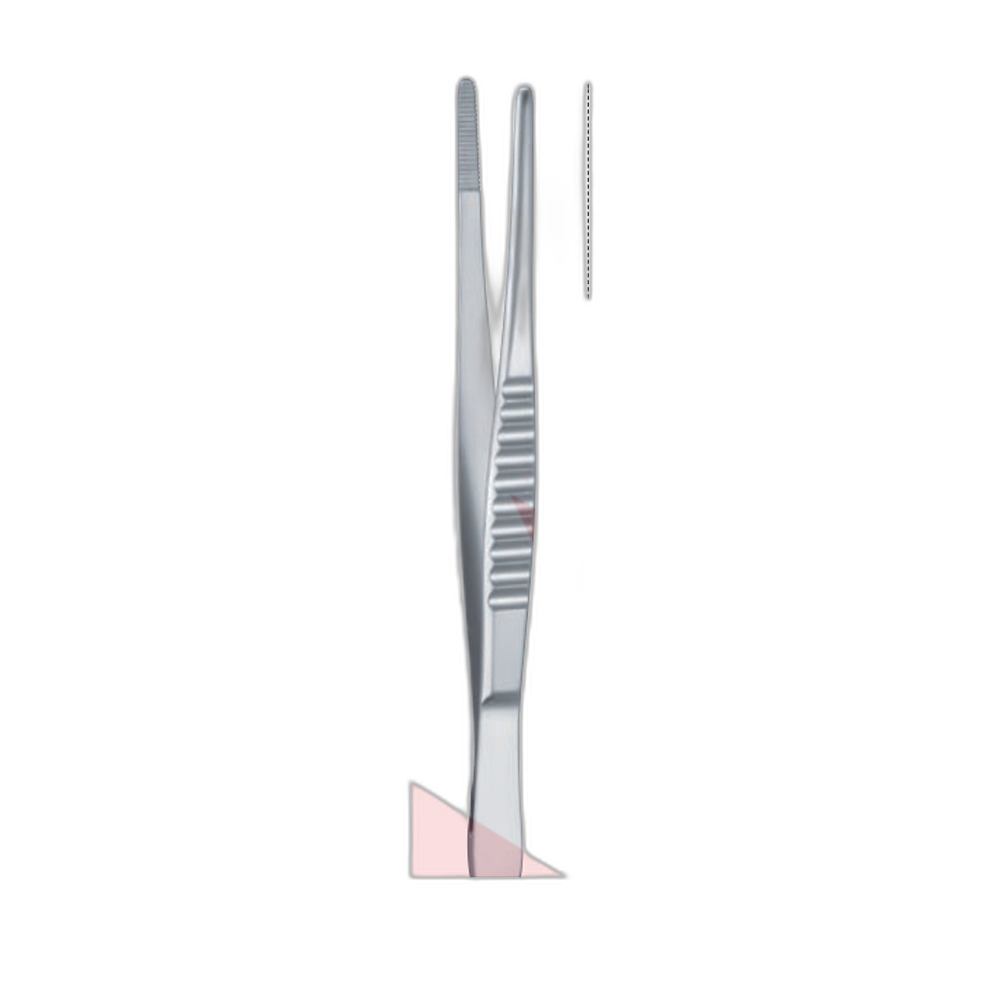
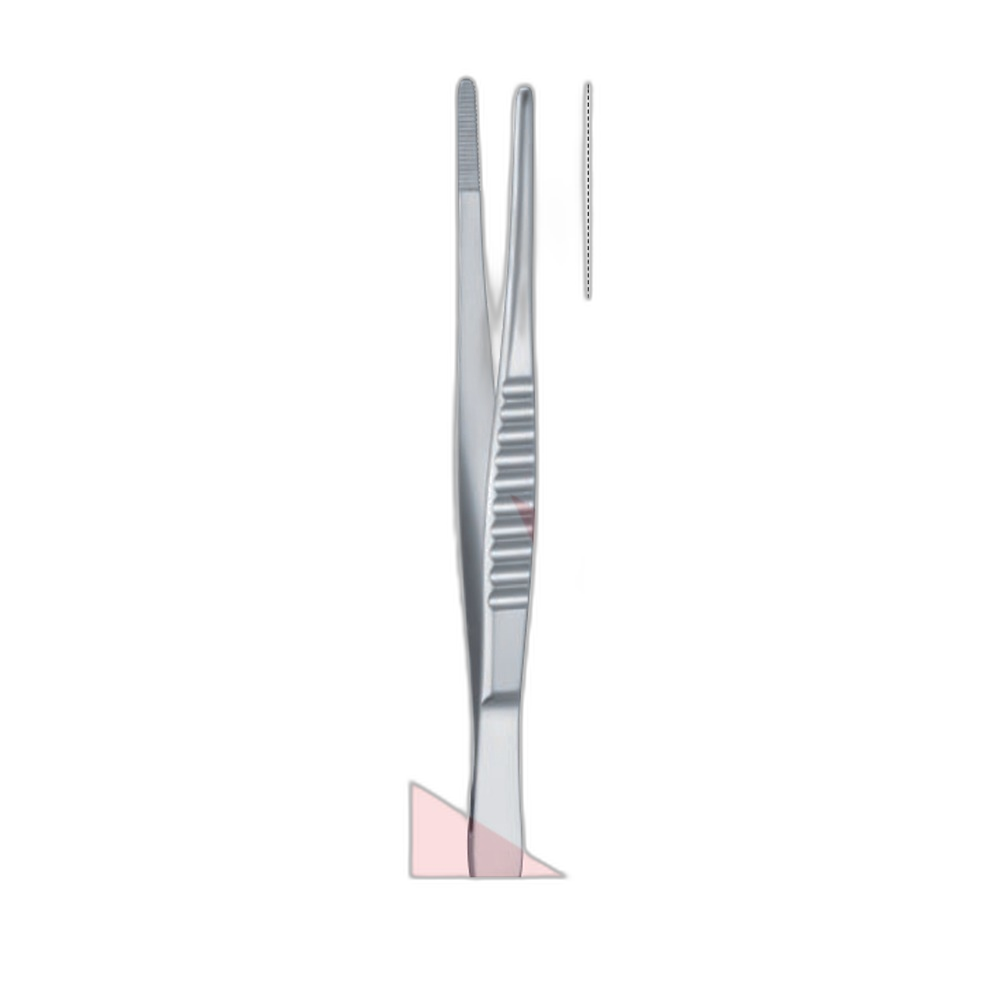
- DeBakey and Russian tissue forceps for atraumatic handling
The Anastomosis Group
Rejoining the bowel is the moment the whole set has been serving. There are two routes — hand-sewn and stapled — and a complete colectomy tray supports both, because a stapler can misfire and a hand-sewn backup must always be ready.
For hand-sewn anastomoses, the set carries fine tissue forceps, long needle holders with tungsten carbide inserts, and Allis and Babcock forceps to present the bowel ends. For stapled anastomoses, linear cutting staplers divide and seal, while a circular (EEA) stapler creates an end-to-end join — the anvil passed into one lumen and the body through the other, commonly per rectum in a low anterior resection.
- Mayo-Hegar needle holders, 18 cm and 20 cm, TC insert
- Allis, Babcock, and Lang-Stevenson tissue forceps
- Linear cutter and reloads
- Circular (EEA) stapler in the appropriate diameter
- Purse-string clamp and suture for the anvil
Building the Laparoscopic Colectomy Set
Minimally invasive colectomy has become the default for elective cases. The dissection moves to shafted energy and grasping instruments, but the resection principles are unchanged — and a specimen still has to leave the abdomen, usually through a small protected extraction incision.
- Optical and blunt trocars, 5 mm and 12 mm
- Atraumatic bowel graspers, long pattern
- Maryland dissector and laparoscopic curved scissors, 33–45 cm
- Laparoscopic linear stapler with vascular and tissue reloads
- Energy device (advanced bipolar or ultrasonic) for the mesentery
- Wound protector for specimen extraction and the anastomosis
- Suction-irrigation cannula
A full open conversion tray, including the intestinal clamp family, must stay sterile throughout. Adhesions, bleeding, or a difficult splenic flexure can force an open finish without warning.
Material and Manufacturing Standards
Bowel surgery is a contaminated, wet field — enteric contents, blood, and saline irrigation all attack the passive layer of stainless steel. Material choice is central to a set that lasts.
We forge the clamp bodies, retractors, and heavy forceps from AISI 410 and 420 martensitic stainless, hardened and tempered so the long Doyen blades keep their gentle, even occlusion and the retractors hold under load. Scissor cutting edges use 420 for edge retention. Atraumatic contact surfaces — Doyen jaws, DeBakey forceps tips — are made from austenitic 316L, whose higher chromium and molybdenum content resists the pitting corrosion that enteric contents can start. Needle holders and heavy scissors carry brazed tungsten carbide inserts for a longer working life.
Every instrument is passivated to rebuild the chromium-oxide layer after machining, and laser-marked for traceability so the identifier survives repeated autoclaving. Our steel meets ISO 7153-1, sets are produced under an ISO 13485 quality system, and instruments are CE marked under EU MDR. For the broader argument on when to choose reusable steel over disposables in high-volume GI surgery, see our surgical steel grades guide.
Set Configuration by Procedure
| Colectomy Type | Retraction Emphasis | Extra Items |
|---|---|---|
| Right hemicolectomy | Balfour + right-gutter blades | Ileocolic stapler reload |
| Left / sigmoid colectomy | Deep Deaver + pelvic blades | Circular stapler for LAR |
| Total colectomy | Bookwalter full frame | Extra bowel clamps, ileostomy set |
| Laparoscopic | Shafted graspers, wound protector | Open conversion tray on standby |
Care and Counting
Doyen clamps have long, thin, flexible blades that bend if mishandled — a warped blade no longer occludes evenly and becomes a spillage risk. Inspect them at reprocessing and retire any that have lost their line. Ratcheted clamps go into the autoclave on the first ratchet only. Count the many haemostats meticulously; a bowel case generates a crowded field, and small clamps are the classic retained item. A disciplined decontamination cycle, as described in our CSSD instrument processing guide, protects both the patient and the investment in the set.
Frequently Asked Questions
What are the essential instruments in a colectomy set?
The core is the intestinal clamp family — non-crushing Doyen clamps for the bowel that will be rejoined and crushing clamps such as the Payr for the specimen side. Around them the set carries self-retaining retraction, long Metzenbaum scissors and right-angle forceps for mesenteric dissection, plenty of haemostats, and an anastomosis group of needle holders, tissue forceps, and staplers.
Why are there two different types of bowel clamp?
Non-crushing clamps protect tissue that must heal, so they go on the bowel ends that will form the anastomosis. Crushing clamps deliberately damage and seal tissue, so they go on the specimen side being removed. Placing a crushing clamp on the anastomotic side would compromise healing, which is why the two families are kept clearly separated on the mayo stand.
Is a colectomy done open or laparoscopically?
Both. Laparoscopic colectomy is now the default for elective cases because of faster recovery, while open surgery remains standard for many emergencies, bulky tumours, and dense adhesions. A laparoscopic case always keeps a full open conversion tray sterile and ready, since conversion can be needed at any moment.
What steel is used for Doyen intestinal clamps?
The clamp body is martensitic 410/420 stainless, hardened so the long blades keep even occlusion. The atraumatic jaw surfaces are commonly austenitic 316L for maximum resistance to the pitting corrosion that enteric contents can cause. All instruments should be passivated and reprocessed carefully to preserve blade alignment.
Can Fizza Surgical supply custom colectomy sets?
Yes. We build bowel resection trays to a hospital’s preference card, matching the clamp complement, retractor system, and anastomosis group to the surgical team’s technique and the colectomy type. Sets are manufactured under ISO 13485, CE marked under EU MDR, and laser-marked for traceability. Send us your instrument list for a quotation.
A colectomy set is a discipline in bowel control: the right clamps in the right places, exposure that matches the segment, and an anastomosis group ready for both staple and suture. Browse our surgical instrument range or contact our team to configure a bowel resection set for your service.
Need precision surgical instruments?
Configure complete instrument sets with our team — ISO 13485 certified, CE marked, made in Sialkot since 1980.
Related Guides
View all articles →

Where We Serve
Fizza Surgical exports to 50+ countries. Browse our country-specific pages with local regulatory guidance and pricing: