Gastrectomy Instrument Set: Stomach Surgery Instruments Guide
Gastrectomy instruments compared across total, subtotal and sleeve procedures, with bowel clamps, staplers, bougie sizing and steel grades explained.
 Made in Sialkot · Since 1980
The word “gastrectomy” hides three quite different operations, and the instrument tray changes with each. Before the set is built, the scrub team needs to know which one is on the board.
| Procedure | What Is Removed | Reconstruction | Tray Emphasis |
|---|---|---|---|
| Total gastrectomy | Whole stomach | Roux-en-Y oesophagojejunostomy | Deep retraction, oesophageal access |
| Subtotal (partial) gastrectomy | Distal 60–80% | Billroth I or II, or Roux-en-Y | Bowel clamps, anastomosis set |
| Sleeve gastrectomy | Greater curve, ~75% | None (tubular stomach) | Laparoscopic staplers, bougie |
A cancer resection and a bariatric sleeve share almost no instruments beyond the basic laparotomy or laparoscopy backbone. This guide breaks the stomach surgery set into its functional parts and flags where the three procedures diverge, so a procurement lead can specify gastrectomy instruments that match the actual caseload rather than a generic pack.
The Open Gastric Resection Set
An open total or subtotal gastrectomy is upper-abdominal surgery at its most demanding. The stomach sits high under the costal margin, and reaching the oesophageal hiatus for a total resection means holding the liver and diaphragm out of a deep field.
Retraction
Fixed, self-retaining retraction is the difference between a controlled operation and a fight. An upper-hand or Bookwalter frame with a liver blade lifts the left lobe off the stomach, while Balfour and Deaver retractors manage the lateral walls. For the deep hiatal dissection in a total gastrectomy, long narrow blades are essential.
- Bookwalter or Thompson upper-abdominal frame with liver retractor
- Balfour self-retaining retractor
- Deaver retractors, 2.5 cm and 5 cm, for the hiatus
- Harrington sweetheart retractor for the liver edge
Our Bookwalter system guide covers configuring a ring for upper-abdominal work.
Gastric and Bowel Clamps
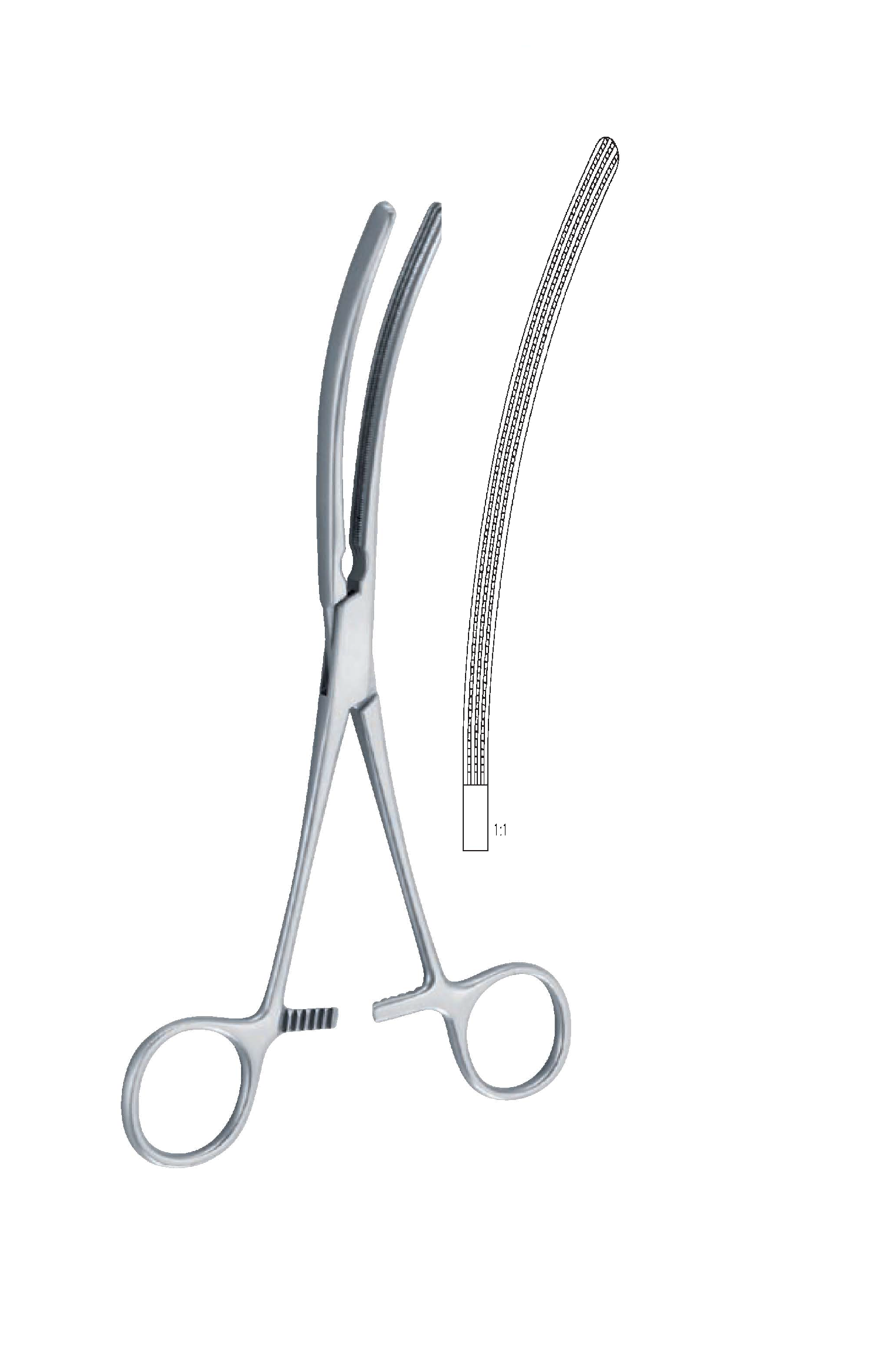
Controlling the stomach and jejunum without crushing the tissue that will form the anastomosis is the core skill. Non-crushing intestinal clamps (Doyen pattern) occlude the bowel atraumatically; crushing clamps (Payr, Kocher) secure the specimen side, which is being discarded. A generous supply of Rochester-Pean and Kelly haemostats controls the rich gastric blood supply along both curvatures.
- Doyen non-crushing intestinal clamps, straight and curved
- Payr crushing (pylorus) clamp for the specimen side
- Kocher toothed clamps for tough tissue
- Rochester-Pean and Kelly haemostats, 18+ per tray
- Right-angle Mixter forceps for the left gastric pedicle
Dissection and Anastomosis
Long Metzenbaum scissors handle the omental and pedicle dissection; Mayo scissors take the tougher planes. The reconstruction — whether a Billroth anastomosis or a Roux-en-Y — needs fine tissue forceps, long needle holders, and Allis and Babcock forceps to present the bowel. Many teams staple the anastomosis; the open tray still carries the hand-sewn backup.
- Long curved Metzenbaum scissors, 23 cm
- Mayo-Hegar needle holders, 20 cm, TC insert
- Allis and Babcock tissue forceps
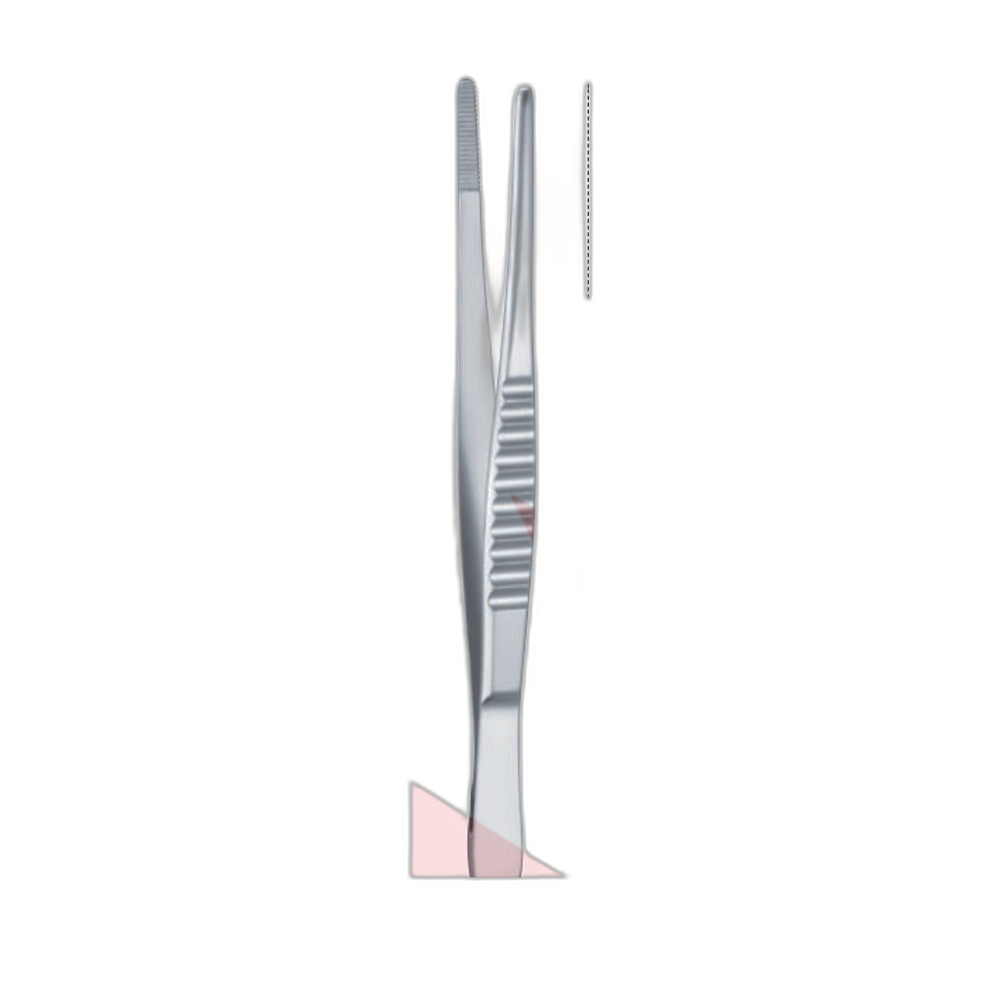
- DeBakey atraumatic forceps for handling bowel edges
- Linear and circular staplers with appropriate reloads
The Laparoscopic Sleeve Gastrectomy Set
Bariatric surgery is almost entirely stapled and laparoscopic, so the tray looks completely different. There is no anastomosis in a sleeve — the greater curvature is simply stapled off along a calibrating bougie.
- Bariatric-length trocars, 5 mm, 12 mm, and 15 mm
- Long shafted graspers: bowel, Yohan, Babcock patterns
- Maryland dissector and laparoscopic curved scissors, 45 cm
- Liver retractor (Nathanson or fan)
- Endoscopic linear stapler with green/black reloads
- Calibrating bougie (36–40 Fr) to size the sleeve
- Suction-irrigation cannula
The instrument architecture mirrors other advanced laparoscopic sets — the same backbone described in our cholecystectomy instrument set guide, lengthened for the bariatric patient. As always, a full open conversion tray stays sterile and reachable.
Vessel Control and Lymphadenectomy
A gastrectomy for cancer is as much a lymph node dissection as a resection. The stomach draws blood from the left and right gastric, left and right gastroepiploic, and short gastric vessels, and a proper oncologic clearance (a D2 lymphadenectomy) follows those vessels to their origins. That means the tray must handle vessel control along both curvatures and around the coeliac axis.
Right-angle Mixter forceps pass ties behind the left gastric pedicle; fine Lahey and tonsil forceps carry ligatures around the shorter, more fragile vessels. Many teams seal the gastroepiploic arcade and short gastrics with an energy device, but the open tray still needs enough haemostats and right-angle clamps to control the named vessels by hand if the energy platform fails. A vessel loop or two helps sling the splenic vessels out of harm during a total gastrectomy, where the tail of the pancreas and spleen sit close to the field.
For the specimen extraction and the deep hiatal exposure of a total resection, the same principles as other upper-GI sets apply — controlled retraction, long instruments, and an anastomosis group ready before the stomach is divided.
Care, Counting, and Reprocessing
Doyen bowel clamps carry long, thin, flexible blades that warp if mishandled; a bent blade no longer occludes evenly and becomes a spillage risk, so inspect them at every reprocessing cycle. Autoclave ratcheted clamps on the first ratchet only to spare the box joint. The rich vascular field of a gastrectomy generates many haemostats, so count them meticulously — small clamps are the classic retained item in upper-abdominal surgery. Ultrasonic-clean and lubricate the Mixter and needle-holder hinges; dried protein stiffens the action and shortens the instrument’s life.
Materials That Survive Gastric Surgery
Gastric contents are acidic, and the field is wet with irrigation. Corrosion resistance matters. We forge clamp bodies and retractors from AISI 410 and 420 martensitic stainless, hardened so the jaws hold their set; scissor edges run 420 for edge retention. Doyen and DeBakey jaws and other atraumatic tips that meet bowel and gastric mucosa are made from austenitic 316L for maximum pitting resistance, and needle holders carry brazed tungsten carbide inserts. Every instrument is passivated, laser-marked for traceability, produced under ISO 13485, and CE marked under EU MDR, with steel to ISO 7153-1.
Frequently Asked Questions
How does a total gastrectomy set differ from a sleeve gastrectomy set?
A total gastrectomy is usually open or hybrid and centres on deep retraction, non-crushing bowel clamps, and an anastomosis set for the Roux-en-Y reconstruction. A sleeve gastrectomy is laparoscopic and stapled with no anastomosis, so its tray is built around long trocars, shafted graspers, a liver retractor, an endoscopic stapler, and a calibrating bougie.
What is the difference between crushing and non-crushing bowel clamps?
Non-crushing clamps such as the Doyen pattern occlude the bowel or stomach gently to protect tissue that will form the anastomosis. Crushing clamps such as the Payr or Kocher are placed on the specimen side, which is being removed, where tissue damage does not matter. Both are needed in a gastric resection.
Why is a bougie included in a sleeve gastrectomy set?
The calibrating bougie, typically 36 to 40 French, is passed into the stomach so the surgeon staples the greater curvature along a consistent diameter. It sizes the residual sleeve and helps prevent both an over-tight stenosis and an over-loose pouch.
Which steel grade is used for gastric bowel clamps?
The clamp body is martensitic 410/420 for strength and jaw tension. Atraumatic contact surfaces such as Doyen and DeBakey jaws are made from austenitic 316L for superior corrosion resistance against acidic gastric contents and saline irrigation.
Know the operation, and the tray builds itself: deep retraction and bowel clamps for a resection, staplers and a bougie for a sleeve. Explore our full surgical instrument catalogue or contact us for a gastric set matched to your surgeons’ technique.
Need precision surgical instruments?
Configure complete instrument sets with our team — ISO 13485 certified, CE marked, made in Sialkot since 1980.
Related Guides
View all articles →
Where We Serve
Fizza Surgical exports to 50+ countries. Browse our country-specific pages with local regulatory guidance and pricing: