The reusable-vs-disposable debate has become one of the most contested procurement decisions in airway management. Manufacturers push disposable laryngoscopes as the infection-control solution; hospital finance teams push back when they see the per-use cost. Academic research has been published on both sides.
This analysis cuts through the marketing and looks at the real numbers: what each option actually costs per intubation, what clinical and operational factors tip the calculation, and how to model the decision for your own facility.
The headline numbers
Peer-reviewed cost analyses of reusable vs. disposable laryngoscope systems consistently find:
- Outpatient clinics: Reusable scopes averaged $66.02 per use vs. $152.55 per use for disposable
- Children’s hospitals: Reusable averaged $130.66 per use vs. $172.61 per use for disposable
- Large hospital systems (60,000 intubations/year): Disposable handles added $495,000–$604,000 annually vs. reusable. Disposable blades added $180,000–$265,000 annually
The reusable advantage widens in higher-volume settings. Reusable handles become more economical after just 4–5 uses; reusable blades after 5–7 uses. Quality stainless steel laryngoscope equipment is rated for thousands of uses, which is why the mathematics tilts strongly toward reusable for any high-throughput setting.
Where disposable wins
Despite the volume economics, disposable laryngoscopes have legitimate advantages in specific scenarios:
Infection control in high-risk patients
When intubating a patient with a known multi-drug-resistant organism, tuberculosis, hepatitis C, or other transmissible infection, disposable single-use equipment eliminates the cross-contamination risk entirely. This is the original clinical rationale for disposable airway equipment.
Low-volume settings
A facility that performs fewer than 5–10 intubations per month will likely find disposable more cost-effective than maintaining a sterilization capability for reusable equipment. Below breakeven volume, the overhead of CSSD operations (labor, equipment, supplies) exceeds per-unit disposable costs.
Field and emergency medicine
EMS paramedics, combat medics, and emergency responders often prefer disposable laryngoscopes because they eliminate the need for sterile equipment return to base. A disposable laryngoscope goes in the airway kit, is used, and is discarded at scene.
Pandemic response
During COVID-19, many hospitals shifted to disposable laryngoscopes to reduce respiratory virus transmission risk during intubation. This remains a legitimate consideration during any respiratory epidemic.
Where reusable wins
High-volume anesthesia departments
A 300-bed hospital performing 20–50 intubations per day will save substantial money with reusable equipment provided sterilization infrastructure exists. The breakeven on reusable happens within weeks, and the reusable equipment pays for itself many times over during its service life.
Clinical performance
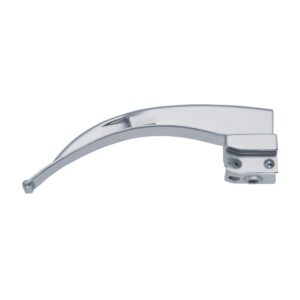
Clinicians consistently rate reusable metal blades as providing better control, better visualization, and better reliability than disposable plastic blades. For difficult airways or surgical procedures where airway control is critical, the quality of the tool matters.
Environmental impact
Life cycle assessment studies consistently find reusable laryngoscopes have lower environmental impact per use than disposable equivalents once cleaning/sterilization energy and water are factored in. For facilities tracking Scope 3 emissions, this is material.
Supply chain stability
During COVID-19 and subsequent supply disruptions, many facilities using disposable-only strategies faced shortages. Reusable laryngoscope equipment is insulated from these disruptions — once purchased, it’s available indefinitely.
The real cost breakdown
Reusable laryngoscope total cost per use
For a quality stainless steel reusable laryngoscope rated for 5,000 uses:
- Unit acquisition cost: $150 (blade) + $200 (handle) = $350, amortized across 5,000 uses = $0.07 per use
- Sterilization labor: 10 minutes @ $25/hr loaded rate = $4.17 per cycle
- Sterilization supplies: Enzymatic cleaner, deionized water, packaging = $0.50–$2.00 per cycle
- Equipment amortization: CSSD equipment overhead allocated per instrument = $1.00–$5.00 per cycle
- Battery replacement: Handle batteries last ~2 years = $0.05 per use
Total per-use cost: approximately $6–$12 in a well-run CSSD operation.
Disposable laryngoscope total cost per use
- Disposable blade: $3–$8 per unit depending on volume pricing and quality tier
- Disposable handle (if used): $4–$12 per unit
- Waste disposal: Medical waste disposal @ ~$0.50 per item
- Inventory management: Storage, stock rotation, expiry tracking = $0.25–$1.00 per use
Total per-use cost: $8–$22 depending on whether you’re using disposable blade only (more common) or disposable blade + disposable handle (less common).
Hybrid strategy — what most modern facilities actually do
Most facilities in 2026 use a hybrid approach:
- Reusable metal blades and handles for 90% of routine intubations
- Disposable blades and handles stocked for known infectious patients, difficult airways requiring immediate multiple-blade attempts, and field/EMS use
- Color-coded storage to prevent accidental reuse of disposable equipment
- Clear clinical protocols for when each type is used
This approach captures the cost advantage of reusable equipment for routine work while maintaining disposable availability for specific clinical scenarios.
Implementation checklist for the reusable path
If you’re evaluating a shift from disposable to reusable (or standing up a new facility), verify these capabilities:
- Central Sterile Services Department (CSSD) with autoclave capacity
- Sterile instrument tracking system
- Staff trained in laryngoscope-specific cleaning protocols
- Inventory of at least 2× the daily peak intubation count (for turnaround time)
- Quality reusable equipment sourcing — ISO 13485 certified manufacturer
- Battery replacement protocol and spare battery inventory
- Periodic inspection protocol for blade integrity, fiber bundle function, handle battery contacts
Sourcing quality reusable laryngoscopes
The economics of the reusable path depend on the equipment actually lasting thousands of uses. Cheap reusable laryngoscopes that fail after 200–500 uses eliminate the cost advantage. When evaluating suppliers:
- ISO 13485:2016 certification for the manufacturer
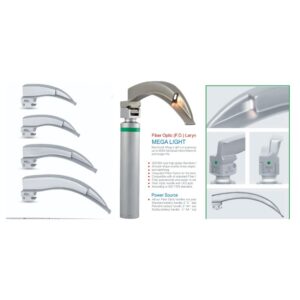
- ISO 7376 Green Spec compliance for fiber optic blades
- AISI 304 or 420 surgical stainless steel — not lower grades
- Sealed fiber bundle construction — prevents fluid intrusion
- Lifetime warranty on the blade body (standard for quality manufacturers)
- Sample unit availability for pre-purchase quality evaluation
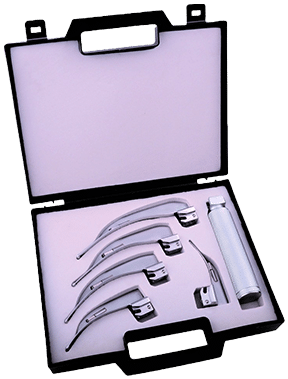
Fizza Surgical’s reusable laryngoscope range meets all of these criteria. As a direct manufacturer with 40 years of production experience, our fiber optic blades are rated for indefinite autoclave lifetime and carry full ISO compliance. Direct-from-factory pricing is 30–50% below branded equivalents.
Request a factory quote with your expected annual intubation volume, and we’ll help you model the cost comparison for your specific operation.
FAQ
Are reusable laryngoscopes as safe as disposable for standard patients?
Yes, provided your sterilization protocols meet standard CSSD practice (autoclaving at 134°C with validated cycles). Multiple peer-reviewed studies have found no difference in infection rates between properly sterilized reusable and disposable laryngoscopes for routine patients.
How long does a quality reusable laryngoscope blade last?
A quality AISI 420 stainless steel laryngoscope blade will last the lifetime of the instrument — typically thousands of sterilization cycles — provided it’s not dropped or physically damaged. The fiber bundle is the limiting component; quality sealed bundles maintain 90%+ of initial light output through 3,000–5,000 autoclave cycles.
What’s the minimum daily intubation volume where reusable makes sense?
Rough breakeven is around 5–10 intubations per day for a facility with existing CSSD infrastructure. Below that volume, disposable may be more cost-effective. Above that volume, reusable wins by increasing margins.
Do we need sterilization infrastructure to use reusable laryngoscopes?
Yes. Reusable laryngoscope blades must be cleaned, inspected, and autoclaved between uses. If your facility doesn’t have CSSD capability, either disposable is your answer, or you contract with a regional sterilization service.
Where We Serve
Fizza Surgical exports to 50+ countries. Browse our country-specific pages with local regulatory guidance and pricing: